Bibim Guksu (Spicy Korean Cold Noodles)
Prep 10 min · Cook 20 min · Serves 2 ·
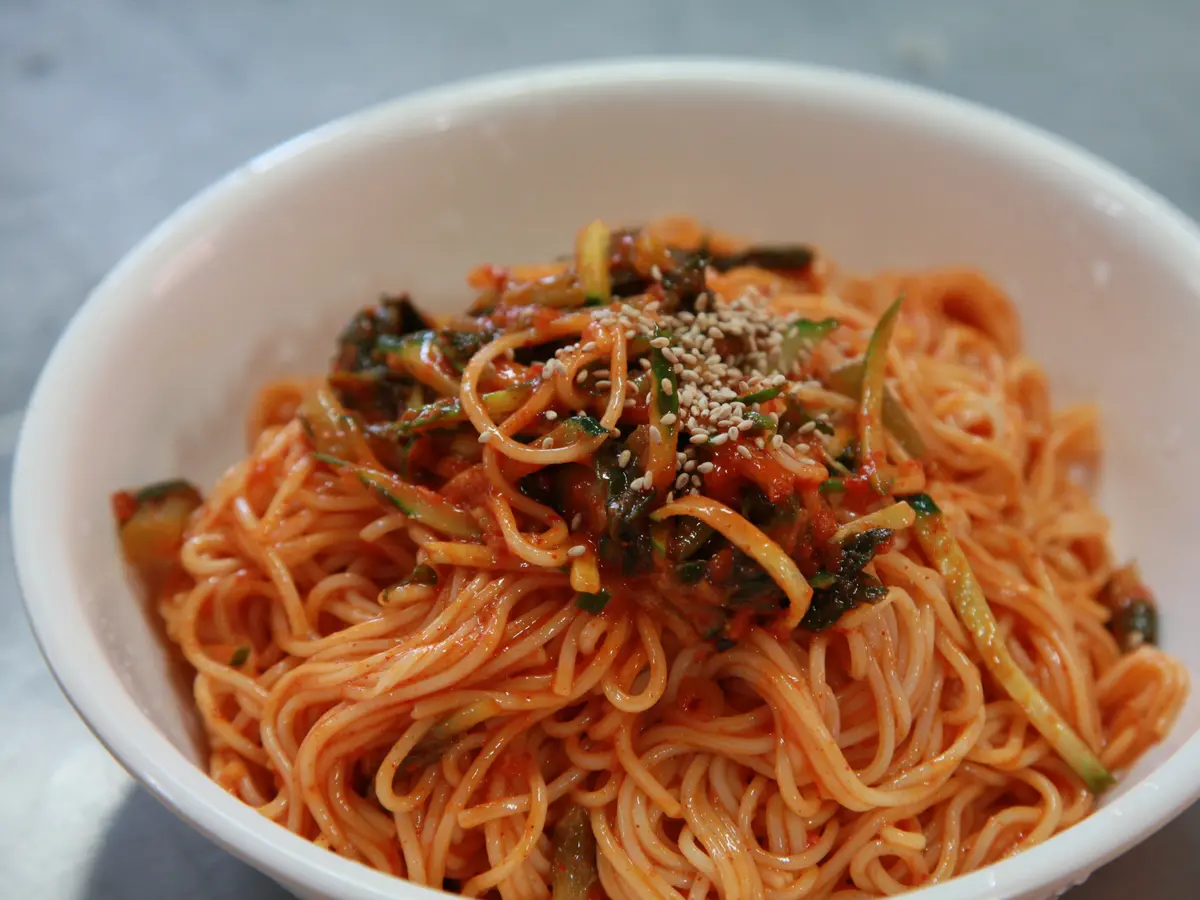
Bibim guksu (pronounced bee-bim kook-soo) is a quick Korean noodle bowl: very thin wheat noodles, boiled for a few minutes, chilled under cold water and tossed with a sweet, tangy and spicy sauce built on gochujang (Korean red chili paste). Bibim means mixed and guksu means noodles. There is no broth, so the sauce does all the work, while cool cucumber and a boiled egg balance the heat and a spoonful of sour kimchi is a common addition. It is a popular choice in hot weather and a good first Korean noodle dish, because the sauce is stirred together in one bowl and the noodles cook in a few minutes. The notes below explain the one step that decides whether the noodles come out silky or gluey, how to turn the heat up or down, and what to buy if you cannot find Korean noodles.
Recipe
Bibim Guksu (Spicy Korean Cold Noodles)
Prep 10 min · Cook 20 min · Serves 2
Ingredients
- 7 oz (200 g) dried somyeon or somen (very thin wheat noodles); Japanese somen is often tied in 50 g bundles, so use about 4 bundles
- 2 large eggs
- 1 Persian cucumber or about 1/4 of an English cucumber (about 100 g), cut into thin matchsticks
- 1/2 cup (about 75 g) well-fermented napa cabbage kimchi, chopped (optional, but recommended)
- 1 to 2 tsp kimchi juice from the jar, or cold water, for loosening the sauce (optional)
- 1 scallion (green onion), thinly sliced (optional)
- 1 sheet roasted seaweed (gim), crumbled or cut into thin strips (optional)
- 2 tbsp (about 40 g) gochujang (Korean red chili paste), for the sauce
- 2 tsp (about 4 g) gochugaru (Korean chili flakes), for the sauce, or to taste
- 1 tbsp (15 ml) soy sauce, for the sauce
- 2 tbsp (30 ml) unseasoned rice vinegar or apple cider vinegar, for the sauce
- 1 tbsp (about 12 g) granulated sugar, for the sauce
- 1 tbsp (about 20 g) corn syrup, rice syrup or honey, for the sauce
- 2 garlic cloves (about 6 g), finely minced or grated, for the sauce
- 1 tbsp (15 ml) toasted sesame oil, for the sauce
- 1 tbsp (about 8 g) toasted sesame seeds, divided: half for the sauce, half for topping
Instructions
- 1Put a large pot with at least 2 quarts (2 liters) of water over high heat and bring it to a boil; this one pot will cook both the eggs and the noodles. While it heats, make the sauce: in a small bowl, stir together the gochujang, gochugaru, soy sauce, vinegar, sugar, syrup, garlic, sesame oil and half of the sesame seeds (1 1/2 tsp) until smooth and the sugar has dissolved, about 1 minute. Taste a dab on a spoon. It should taste boldly sweet, tangy and spicy, almost too strong to eat on its own, because the noodles will dilute it. Set it aside so the chili flakes can soften.
- 2When the water is at a full rolling boil, lower the eggs in gently with a large spoon and boil them for 10 minutes. Set a timer.
- 3While the eggs boil, prepare the toppings. Cut the cucumber into 3-inch (7.5 cm) lengths, slice each piece into thin planks, stack the planks and cut them into matchsticks about 1/8 inch (3 mm) wide, skipping any big, watery seed core. Chop the kimchi (if using) into small pieces and squeeze it lightly over a bowl to save the juice. Slice the scallion and crumble the seaweed (if using). Fill a small bowl with cold water for the eggs. For extra bouncy noodles, also fill a large bowl with ice water (optional).
- 4When the timer rings, lift the eggs out with a slotted spoon into the small bowl of cold water and leave them there while you cook the noodles. Keep the pot of water at a boil.
- 5Add the noodles to the boiling water and stir right away with chopsticks or tongs so the strands separate. Do not add salt, because dried somyeon and somen already contain some. Cook for the time on the package, usually 2 to 5 minutes depending on the brand, stirring now and then. If the pot starts to foam over, lower the heat or splash in a little cold water. Taste a strand 30 seconds before the package time is up: it should be tender, with no hard white center.
- 6Drain the noodles in a colander and rinse them right away under cold running water for about 1 minute. Rub and squeeze the strands gently between your hands, lifting and turning them, until the water runs clear and the noodles feel cool and no longer slippery. This washes off the surface starch that makes noodles gummy. For extra bounce, dunk the rinsed noodles in the bowl of ice water for 30 seconds (if using), then lift them out.
- 7Drain the noodles very well: shake the colander firmly, then press small handfuls gently between your palms to squeeze out water. Leave them in the colander for another minute while you peel the eggs and cut them in half. Water left on the noodles waters down the sauce.
- 8Put the noodles in a large bowl and pour in the sauce. Toss with chopsticks or tongs, lifting the noodles from the bottom and folding them over, or use clean hands (wear food-safe gloves if you like, because gochugaru and garlic can sting). Keep going for about 1 minute, until every strand is evenly red. If the sauce is too thick to spread, stir in 1 to 2 tsp of kimchi juice or cold water. Taste a few strands and adjust the flavor (see the notes below).
- 9Divide the noodles between two wide bowls, twirling them into mounds. Top each bowl with half of the cucumber, half of the kimchi (if using) and one egg cut in half, cut side up, then sprinkle with the scallion, the remaining sesame seeds and the seaweed (if using). Serve right away, and mix everything together at the table so every bite has some sauce, crunch and kimchi.
Why noodles turn gummy, and how to stop it: Dried wheat noodles shed starch as they boil, and that starch turns sticky as the noodles cool. Four habits keep them silky. Use plenty of water (at least 2 quarts / 2 liters for 7 oz / 200 g of noodles) and stir for the first 30 seconds so the strands do not stick together. Cook them only until just tender, because very thin noodles go from perfect to soft in under a minute, so taste early. Rinse thoroughly under cold running water, rubbing the noodles gently between your hands until the water runs clear; skipping this is a common reason home versions taste gluey. And drain them well, since water left on the noodles dilutes the sauce and leaves the dish pale and bland.
Toss at the last minute: The noodles keep absorbing the sauce, so toss them only when you are ready to eat. If you need to wait more than 10 minutes, leave the rinsed noodles plain in the colander and keep the sauce in its bowl. If the noodles have clumped by then, dunk them in cold water for a few seconds, loosen them with your fingers, drain them again and toss them with 1 tsp of sesame oil before adding the sauce. Do not leave cooked noodles out for more than 2 hours (1 hour above 90 F / 32 C); cover and refrigerate them if you need to wait longer.
Fixing the sauce: Taste the sauce before it meets the noodles, since it is easier to fix in the bowl. If it tastes too sharp, stir in 1 tsp of sugar or syrup. If it is too sweet, add 1 tsp of vinegar. If it tastes flat, add a splash of soy sauce rather than plain salt. If it is too hot, add 1 tsp each of sugar and sesame oil and pile on extra cucumber; the egg yolk helps too. Gochujang is already salty and brands vary a lot, so add soy sauce a little at a time.
Spice level: As written, the sauce is medium: warm and noticeable, but not painful. Gochujang brands range from mild to quite hot, so taste a small dab first. For a milder bowl, leave out the gochugaru, use 1 1/2 tbsp of gochujang and add 1 extra tsp of syrup. If you are feeding someone who is wary of chili, serve the sauce in a small bowl on the side. For a hotter bowl, add up to 1 more tbsp of gochugaru or a thinly sliced fresh green chili. Do not swap in regular crushed red pepper flakes for gochugaru, since they are much hotter; if you have no gochugaru, leave it out and use 2 1/2 tbsp of gochujang. Gochujang is sold in tubs in the Asian aisle of many large supermarkets and online, and it has no true substitute here.
Choosing noodles: Look for somyeon at Korean and other Asian grocery stores. Japanese somen is a very similar noodle, is sold in many supermarkets and works well, but check the package time because brands differ. In a pinch, use thin spaghetti, angel hair or capellini: cook it until just tender and rinse it well. The texture will be firmer and less delicate. For a chewier bowl, try jjolmyeon (thick, chewy wheat noodles sold at Korean markets) or udon, and follow their package times. Naengmyeon noodles are a different kind of noodle (chewier, made from buckwheat or starch) and cook differently, so use their own package directions if you try them. The same thin wheat noodles are used for janchi guksu, often translated as banquet noodles, which is served in a warm anchovy broth.
About the kimchi: Well-fermented, sour kimchi suits this sauce best, because its tang matches the vinegar. Fresh kimchi works too, but it tastes milder and crunchier. If you have made our Easy Kimchi, use a batch that has turned clearly sour, and save any extra for Kimchi Fried Rice. The kimchi is optional; the noodles are good with just cucumber and egg.
Dietary notes: As written, this recipe contains wheat (the noodles, the soy sauce and, in many brands, the gochujang), egg, soy and sesame. It is vegetarian only if the labels on your kimchi and gochujang list no fish, shellfish or meat, because many kimchi brands contain fish sauce or salted shrimp. For a vegan bowl, also skip the eggs, use maple syrup or agave instead of honey, and check the kimchi label for fish, shellfish and meat. Somyeon, somen, udon and spaghetti are all made with wheat, so this is not a gluten-free dish as written. If you avoid gluten, look for noodles labeled gluten-free (some rice noodles qualify, but many soba and other buckwheat noodles contain wheat flour), use tamari or a soy sauce labeled gluten-free, and read the gochujang and kimchi labels for wheat and barley.
Make ahead and storage: The sauce keeps in a covered jar in the fridge for up to 1 week; stir it before using. Eggs can be boiled up to 2 days ahead and kept unpeeled in the fridge. For 4 servings, double everything and cook the noodles in 4 quarts (4 liters) of water in a pot of at least 6 quarts (6 liters), or in two batches. The finished noodles are best eaten right away. If you have leftovers, refrigerate them within 2 hours (1 hour above 90 F / 32 C) and eat them the next day; the noodles will be firmer and the cucumber watery, so loosen them with a splash of cold water and add fresh cucumber. Freezing is not recommended. For a packed lunch, carry the plain rinsed noodles and the sauce in separate containers, keep them cold with an ice pack, and toss just before eating; if they cannot be kept cold, eat them within 2 hours (1 hour above 90 F / 32 C).
Variations: For a kimchi-forward bowl, double the kimchi to 1 cup (about 150 g) and stir 1 tbsp of its juice into the sauce. For a version with no chili, skip the gochujang and gochugaru and toss the noodles with 3 tbsp soy sauce, 1 tbsp sugar, 1 tbsp sesame oil, 1 tsp vinegar and the garlic; taste, and add 1 tbsp cold water if it is too salty. For a heartier meal, add shredded poached chicken or thin slices of boiled pork. Lettuce, perilla (kkaennip) leaves and carrot matchsticks are easy extra vegetables, and a spoonful of Kongnamul Muchim or Korean Spinach Side Dish on top adds a seasoned vegetable without extra work. A halved egg from our Mayak Eggs recipe can replace the plain boiled egg. Grating 2 tbsp of apple or Asian pear into the sauce adds a fresh sweetness. The photo on this page shows a bowl topped with cucumber, chopped dark greens and sesame seeds, without the boiled egg that the recipe above uses.
What to serve with it: Bibim guksu is a light meal by itself, but something mild and savory balances the heat. Gyeran Mari (rolled omelette) and Pajeon (scallion pancake) are easy choices, and Kimbap makes it a fuller lunch. If you like the sweet-spicy gochujang flavor here, try Tteokbokki or Jeyuk Bokkeum next, and for a noodle dish with no chili at all, try Japchae.
Related Recipes
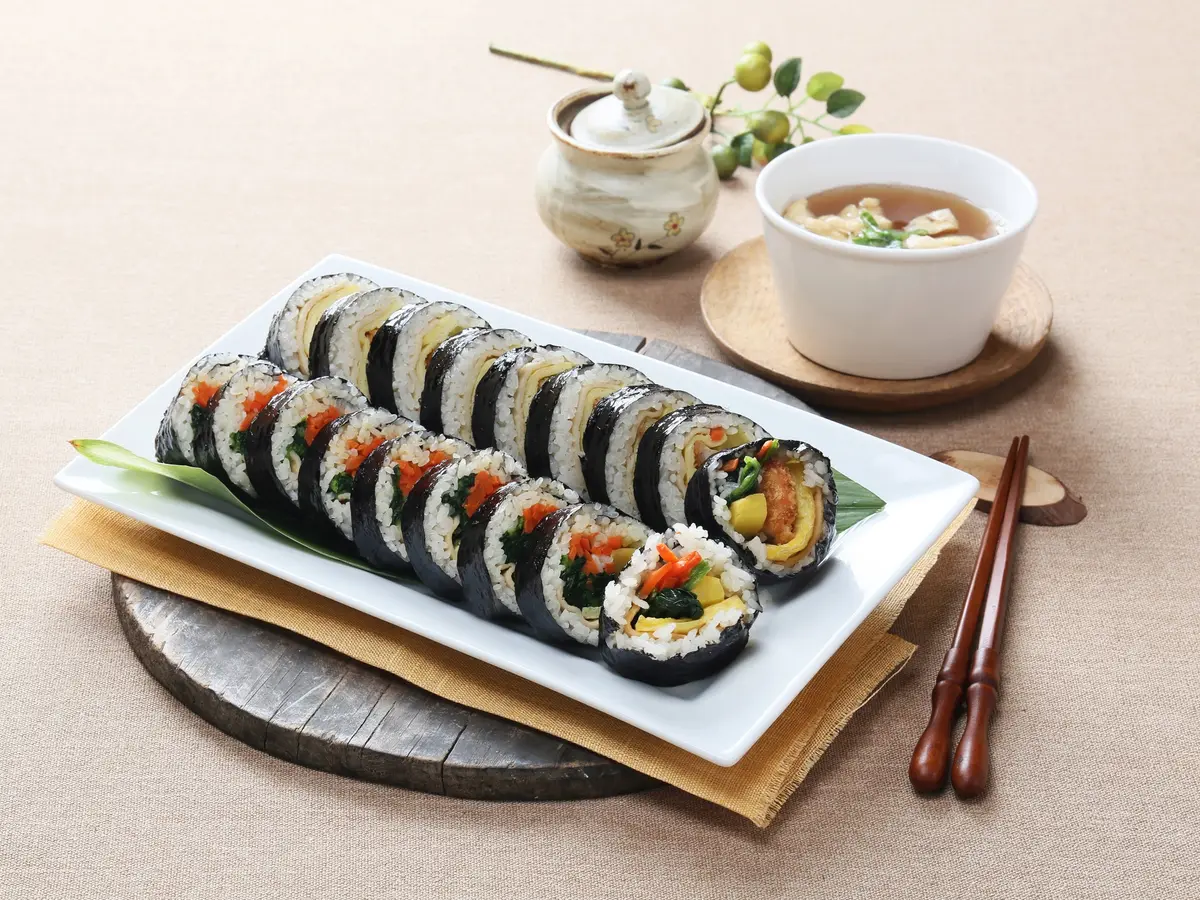
Easy Kimbap Recipe (Korean Seaweed Rice Rolls)
An easy kimbap recipe for beginners: seaweed rolls filled with sesame rice, egg, spinach, carrot and pickled radish, plus tips to stop them falling apart.
55 min
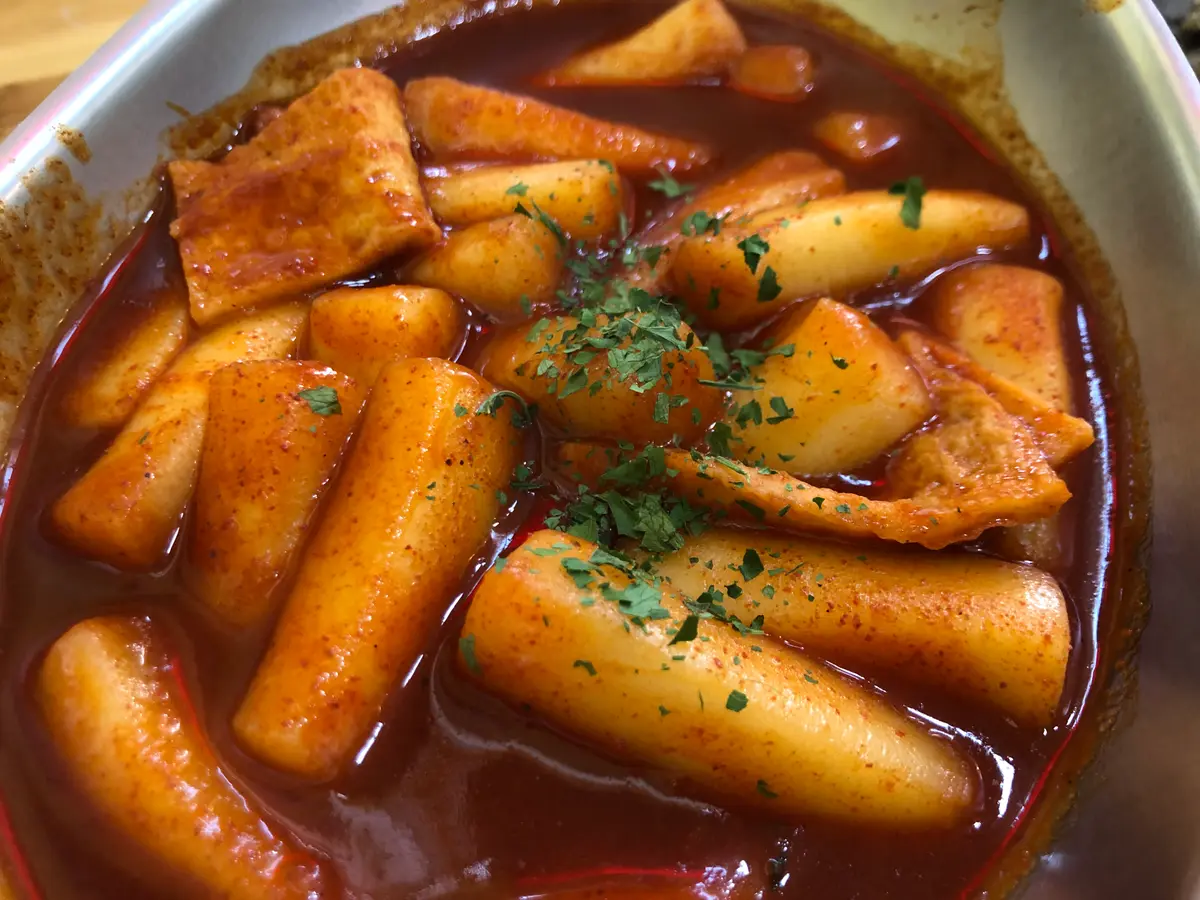
Tteokbokki (Spicy Korean Rice Cakes)
An easy tteokbokki recipe: chewy Korean rice cakes and fish cakes simmered in a sweet, spicy gochujang sauce, with tips on buying rice cakes and a mild option.
40 min
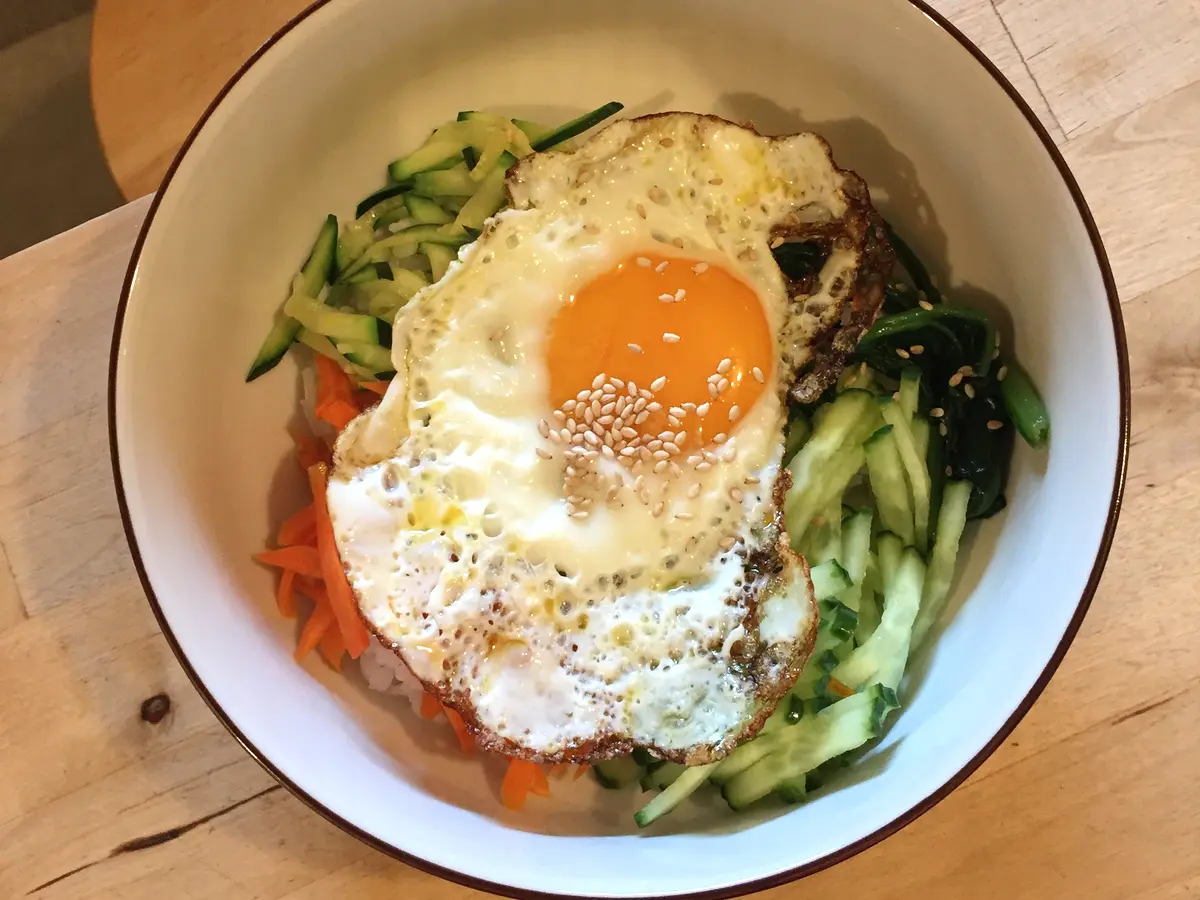
Easy Bibimbap at Home (Korean Mixed Rice Bowl)
An easy bibimbap recipe for beginners: warm rice topped with seasoned vegetables, beef, a fried egg and sweet-spicy gochujang sauce. Ready in about 45 minutes.
45 min