Easy Kimbap Recipe (Korean Seaweed Rice Rolls)
Prep 35 min · Cook 20 min · Serves 4 ·
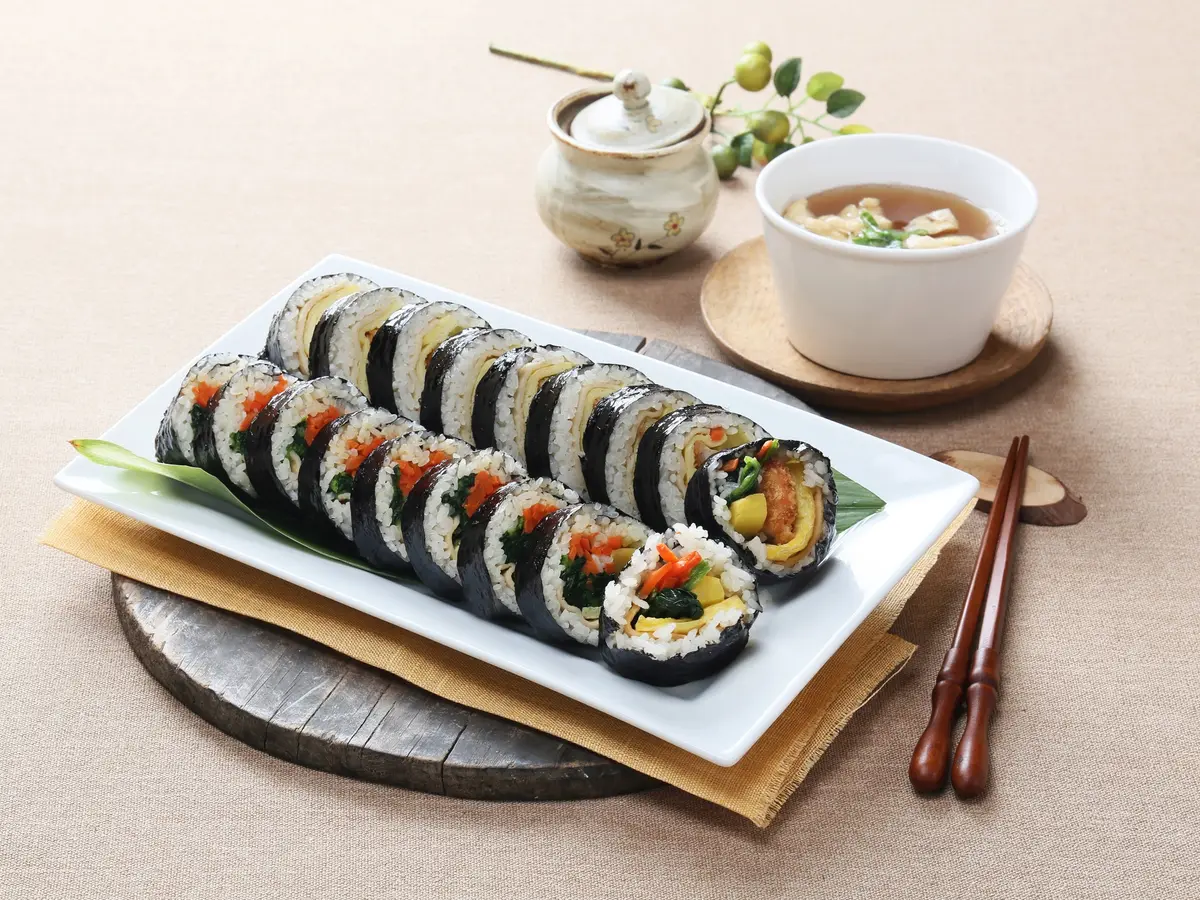
Kimbap (also spelled gimbap, pronounced geem-bahp) gets its name from its two main parts: gim, sheets of dried seaweed, and bap, cooked rice. It looks a lot like a sushi roll, but it tastes different. The rice is seasoned with toasted sesame oil and salt instead of vinegar and sugar, and the fillings are usually cooked or pickled rather than raw fish. A classic roll holds strips of egg omelet, seasoned spinach, carrot, savory fish cake and danmuji, a crunchy yellow pickled radish. Many Koreans connect kimbap with school picnics and road trips, because a whole roll packs neatly into a lunchbox and is eaten at room temperature. Rolling takes a little practice, but the first one usually holds together, and the steps below explain why rolls burst or unravel so you can fix it on the second.
Recipe
Easy Kimbap Recipe (Korean Seaweed Rice Rolls)
Prep 35 min · Cook 20 min · Serves 4
Ingredients
- 4 cups (about 700 g) cooked short-grain white rice, still warm (from about 1 1/2 cups / 300 g uncooked rice)
- 4 full-size sheets gim (roasted seaweed for kimbap or sushi nori), unseasoned, about 7.5 x 8 inches (19 x 21 cm)
- 3 tbsp (45 ml) toasted sesame oil, divided (2 tbsp for the rice, 1 tsp for the spinach, 2 tsp for brushing)
- 1 1/4 tsp (about 7 g) fine salt, divided
- 4 tsp (about 11 g) toasted sesame seeds, divided
- 3 large eggs
- 5 oz (150 g) fresh spinach (about 4 packed cups)
- 1 medium carrot (about 60 g), cut into thin matchsticks
- 4 strips danmuji (yellow pickled radish), each about as long as the seaweed sheet
- 2 sheets flat Korean fish cake (eomuk), about 3 oz (90 g), or 4 imitation crab sticks
- 2 tsp (10 ml) soy sauce, for the fish cake
- 1 tsp (4 g) sugar, for the fish cake
- 1 tbsp (15 ml) water, for the fish cake
- 1 tbsp (15 ml) neutral cooking oil, such as canola or vegetable, divided
Instructions
- 1Season the rice: put the warm rice in a wide bowl and add 2 tbsp sesame oil, 3/4 tsp salt and 1 tbsp sesame seeds. Fold gently with a rice paddle or spatula, cutting through the rice rather than mashing it. Taste a few grains: they should be lightly salty on their own. Spread the rice out and let it cool until it is just warm, not steaming.
- 2Make the egg strips: beat the eggs with a pinch of salt. Heat 1 tsp neutral oil in a nonstick skillet over low heat, pour in the eggs and tilt the pan so they spread into an even layer. Cook for 2 to 3 minutes, until the top is almost set, then flip and cook for 30 seconds more. Slide it onto a cutting board, let it cool and cut it into long strips about 1/2 inch (1 cm) wide.
- 3Bring a medium pot of water to a boil. Add the spinach and cook for about 30 seconds, just until it wilts. Drain, rinse under cold water, then squeeze it very firmly with your hands until no more water drips out.
- 4Loosen the squeezed spinach with your fingers and toss it with 1/4 tsp salt and 1 tsp sesame oil. Keep the strands long so they lie neatly in the roll.
- 5Wipe out the skillet, add 1 tsp neutral oil and stir-fry the carrot over medium-high heat with a small pinch of salt for 1 to 2 minutes, until it is slightly softened but still bright orange. Move it to a plate.
- 6Cut the fish cake into strips about 1/2 inch (1 cm) wide. Add the last 1 tsp neutral oil to the skillet and stir-fry the strips over medium heat for 1 minute. Add 2 tsp soy sauce, 1 tsp sugar and 1 tbsp water and cook, stirring, for 1 to 2 minutes, until the liquid is absorbed and the strips look glossy. If you are using imitation crab instead, skip this step and simply pull each stick in half lengthwise.
- 7Pat the danmuji strips dry with a paper towel. Set out all the fillings on a tray or plate, along with a small bowl of water for your fingers. Every filling should be dry and no warmer than room temperature before you start rolling.
- 8Place a bamboo rolling mat on the counter (or see the notes for rolling without one). Lay one gim sheet on top, shiny side down and rough side up. Wet your fingertips and spread about 1 cup (175 g) of rice over the sheet in a thin, even layer, leaving a strip about 1 1/2 inches (4 cm) wide bare along the edge farthest from you. Press the rice lightly so it sticks; you should be able to see a little seaweed through it in places.
- 9Lay one quarter of each filling in a tight bundle across the rice, about one third of the way up from the edge closest to you: egg, danmuji, fish cake, carrot and spinach, side by side and running the full width of the sheet.
- 10Lift the edge of the mat closest to you with your thumbs while holding the fillings in place with your fingertips. Roll the mat forward so the rice edge folds over the fillings and lands on the rice on the other side, then squeeze along the whole length to tighten it.
- 11Keep rolling forward, lifting the edge of the mat as you go so it does not get rolled inside. Just before you reach the bare strip of seaweed, dab it with a little water, then finish rolling. Squeeze the whole roll gently through the mat once more.
- 12Set the roll seam-side down on a plate and repeat with the remaining seaweed, rice and fillings. Let each roll rest for 2 to 3 minutes so the seam seals.
- 13Brush the outside of each roll with about 1/2 tsp sesame oil and sprinkle with the remaining 1 tsp sesame seeds.
- 14Wipe a sharp knife with a damp towel (or a drop of sesame oil) and slice each roll into 8 to 10 pieces about 3/4 inch (2 cm) thick, using a gentle sawing motion instead of pressing straight down. Wipe the blade clean every two or three cuts. Serve at room temperature.
Why rolls fall apart: Most failed rolls come from one of four things. Too much rice makes the roll too fat to close, so the seaweed splits along the seam; a thin layer you can almost see through is right. Too many fillings do the same thing, so keep the bundle no wider than about 2 inches (5 cm). Wet fillings, especially spinach that was not squeezed hard enough, soak the seaweed until it tears. And a dull knife crushes the roll instead of cutting it. If your first roll is loose, squeeze harder at step 10, when the rice edge first meets the rice on the other side; that first tuck sets how tight the whole roll will be.
Rice temperature matters: Use rice that is warm, not hot and not cold. Steaming-hot rice makes the seaweed shrink and wrinkle as soon as it touches it, and rice straight from the fridge is too hard to spread and will not stick. If you are cooking rice just for kimbap, use slightly less water than usual so the grains stay a little firmer and hold their shape when you fold in the sesame oil.
Finding the ingredients: Look for gim sold for kimbap or sushi in packs of full-size sheets. Do not use the small, oily seasoned seaweed snack packs; they are too small and too greasy to roll. Danmuji is sold in Korean and other Asian grocery stores, often already cut into long strips in a pack labeled for kimbap, sometimes together with seasoned burdock root (ueong), which you can add as a sixth filling. If you cannot find danmuji, cucumber strips with the seeds removed will give you crunch, though not the sweet-sour flavor. Korean fish cake comes in thin flat sheets in the refrigerated or frozen section. Imitation crab or thin strips of ham are common swaps.
No bamboo mat? You can roll kimbap on a sheet of parchment paper or a clean, thin kitchen towel, using it the same way you would use the mat to lift and push the roll forward. Rolling with just your hands works too: lift the near edge of the seaweed, tuck it tightly over the fillings and roll, squeezing with your palms as you go.
Dietary notes: For vegetarian kimbap, replace the fish cake with strips of firm tofu pan-fried until golden in the same soy sauce and sugar mixture, or with extra egg. Many store-bought fish cakes and imitation crab contain wheat, and some danmuji and ham products contain added flavorings, so if you avoid gluten, fish or meat, check every package label, and use tamari or a soy sauce labeled gluten-free.
Making it spicy: Classic kimbap is not spicy at all, which makes it a good match for spicy dishes; in Korea it is often eaten alongside tteokbokki. To add heat to the roll itself, use well-drained, finely chopped kimchi as a filling (squeeze it hard first, like the spinach), or mix canned tuna with mayonnaise and a pinch of gochugaru (Korean chili flakes) and spread it over the other fillings. Start with 1/4 tsp of gochugaru for the whole batch of tuna and taste before adding more.
Storage: Kimbap is best eaten the day it is made. Packed in a lunchbox, it should not sit out for more than 2 hours (1 hour on a hot day above 90°F / 32°C) because of the cooked rice and egg, so use an ice pack if it will be a while before lunch. You can refrigerate leftover rolls, wrapped tightly in plastic wrap, for up to 1 day, but the rice turns hard and dry in the cold. To bring them back, dip the slices in beaten egg and pan-fry them over medium heat for 1 to 2 minutes per side until golden, a common Korean way to use up day-old kimbap. Microwaving a few slices for 15 to 20 seconds also softens the rice, though the seaweed will get chewier.
About frozen kimbap: Frozen kimbap from the store is made to be frozen and then microwaved. Rolls made at home can be frozen too, wrapped individually and uncut, for up to 1 month, but expect softer, slightly watery vegetables after thawing. Microwave a frozen roll, covered, until heated through, then let it rest a minute before slicing.
Variations: For bulgogi kimbap, swap the fish cake for cooked, well-drained meat from our Beef Bulgogi recipe. Tuna mayo kimbap uses the tuna mixture above with a few leaves of lettuce or perilla (kkaennip) laid under it to keep the mayonnaise from soaking the rice. Cucumber strips, cooked spinach and pickled radish alone make a simple, fresh roll for hot days. For a full Korean picnic spread, serve kimbap with Easy Kimchi or Korean Cucumber Salad on the side.
Related Recipes
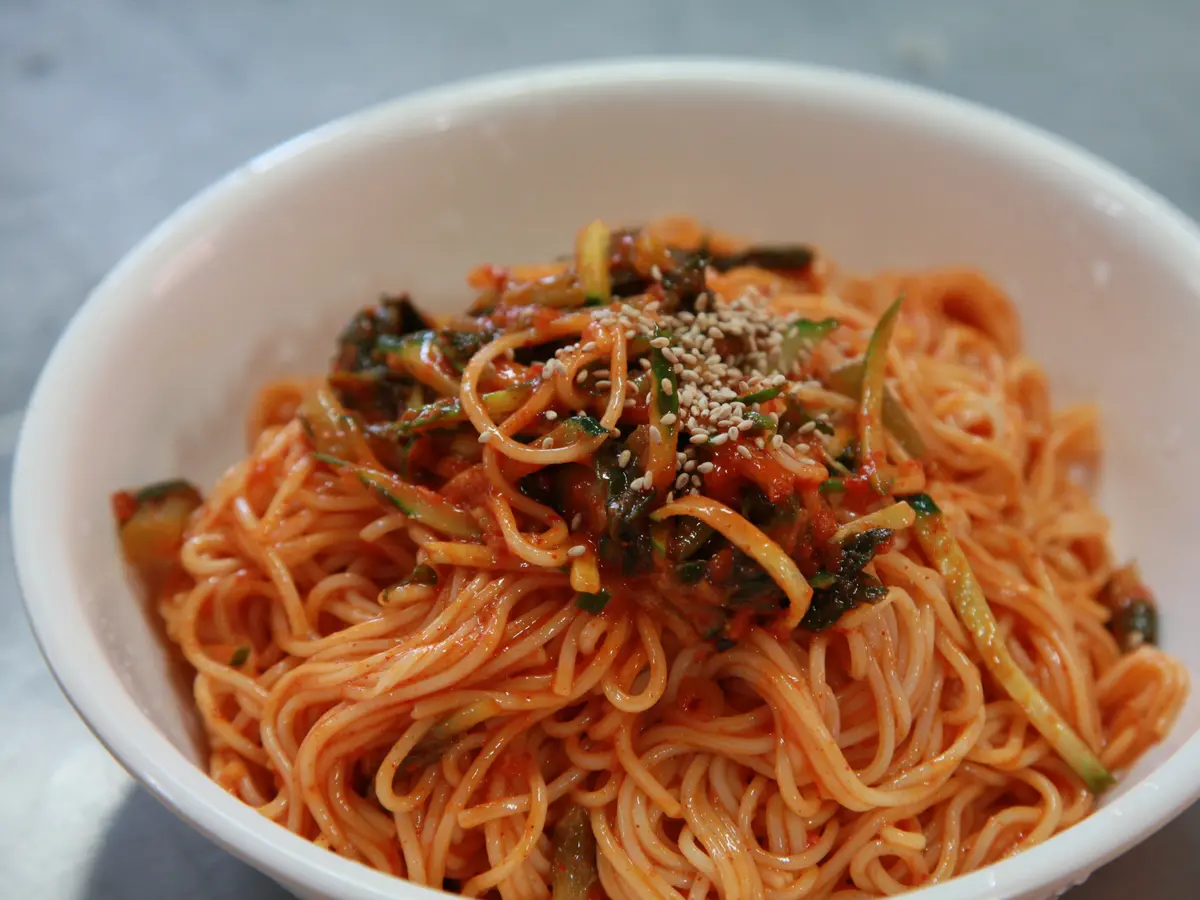
Bibim Guksu (Spicy Korean Cold Noodles)
Easy bibim guksu recipe: thin wheat noodles tossed in a sweet, tangy gochujang sauce with cucumber and egg. About 30 minutes, with mild and hot options.
30 min
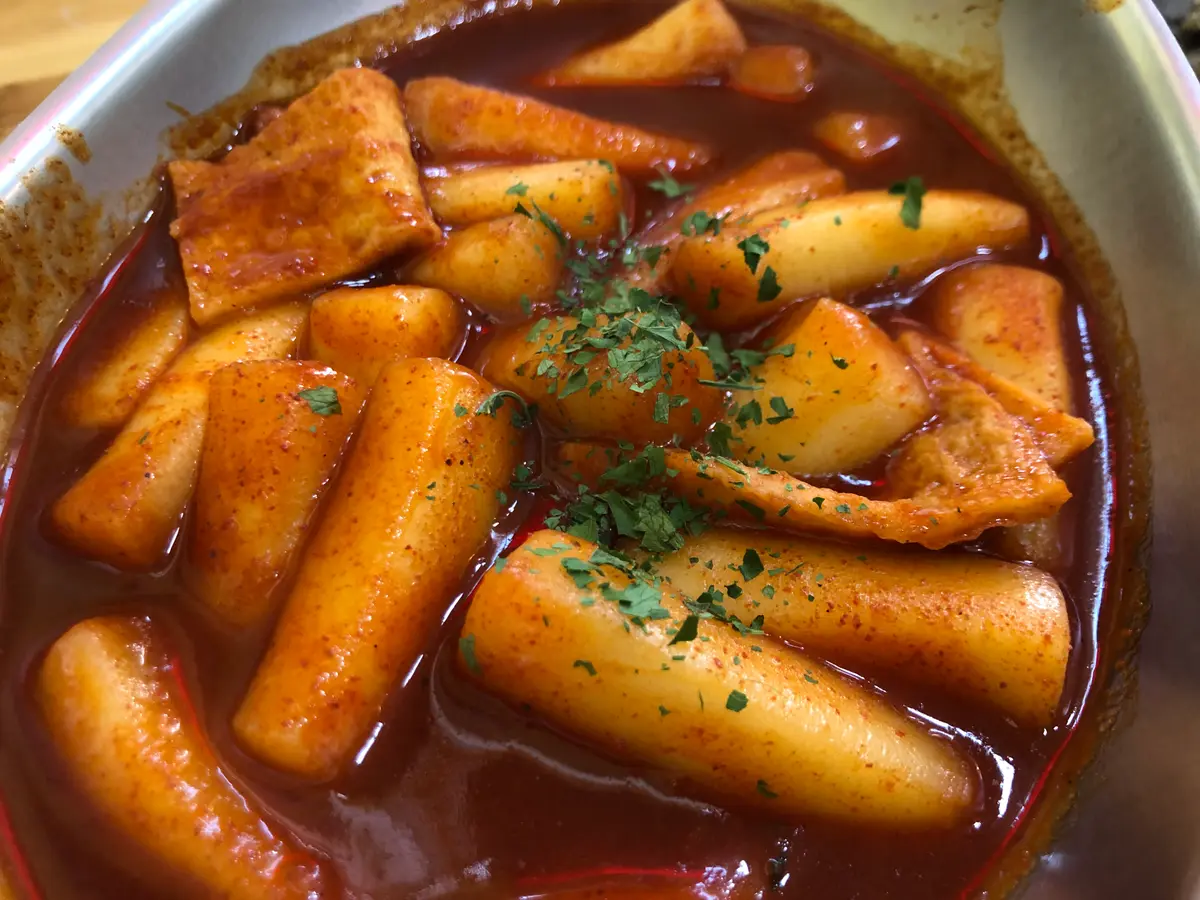
Tteokbokki (Spicy Korean Rice Cakes)
An easy tteokbokki recipe: chewy Korean rice cakes and fish cakes simmered in a sweet, spicy gochujang sauce, with tips on buying rice cakes and a mild option.
40 min
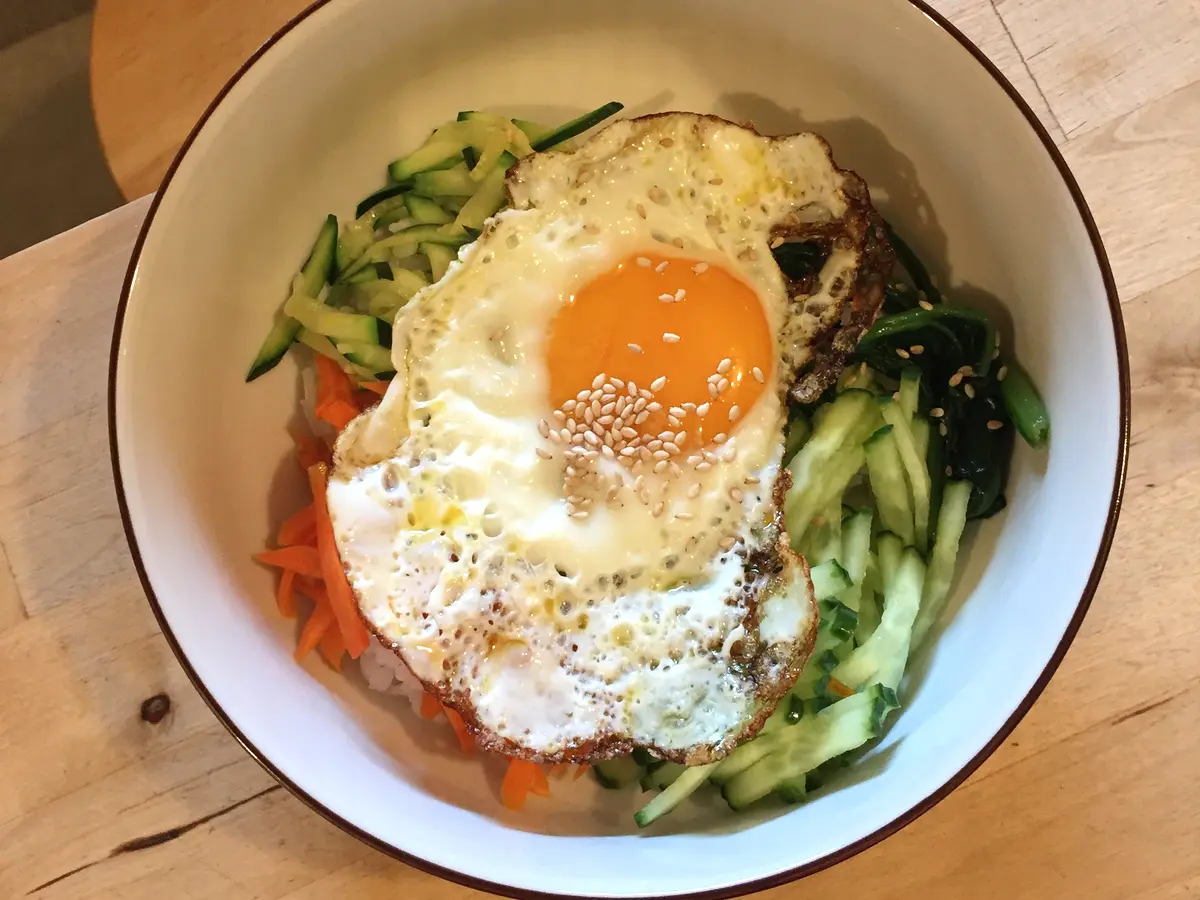
Easy Bibimbap at Home (Korean Mixed Rice Bowl)
An easy bibimbap recipe for beginners: warm rice topped with seasoned vegetables, beef, a fried egg and sweet-spicy gochujang sauce. Ready in about 45 minutes.
45 min