Budae Jjigae (Korean Army Stew with Spam, Ramen and Cheese)
Prep 20 min · Cook 20 min · Serves 4 ·
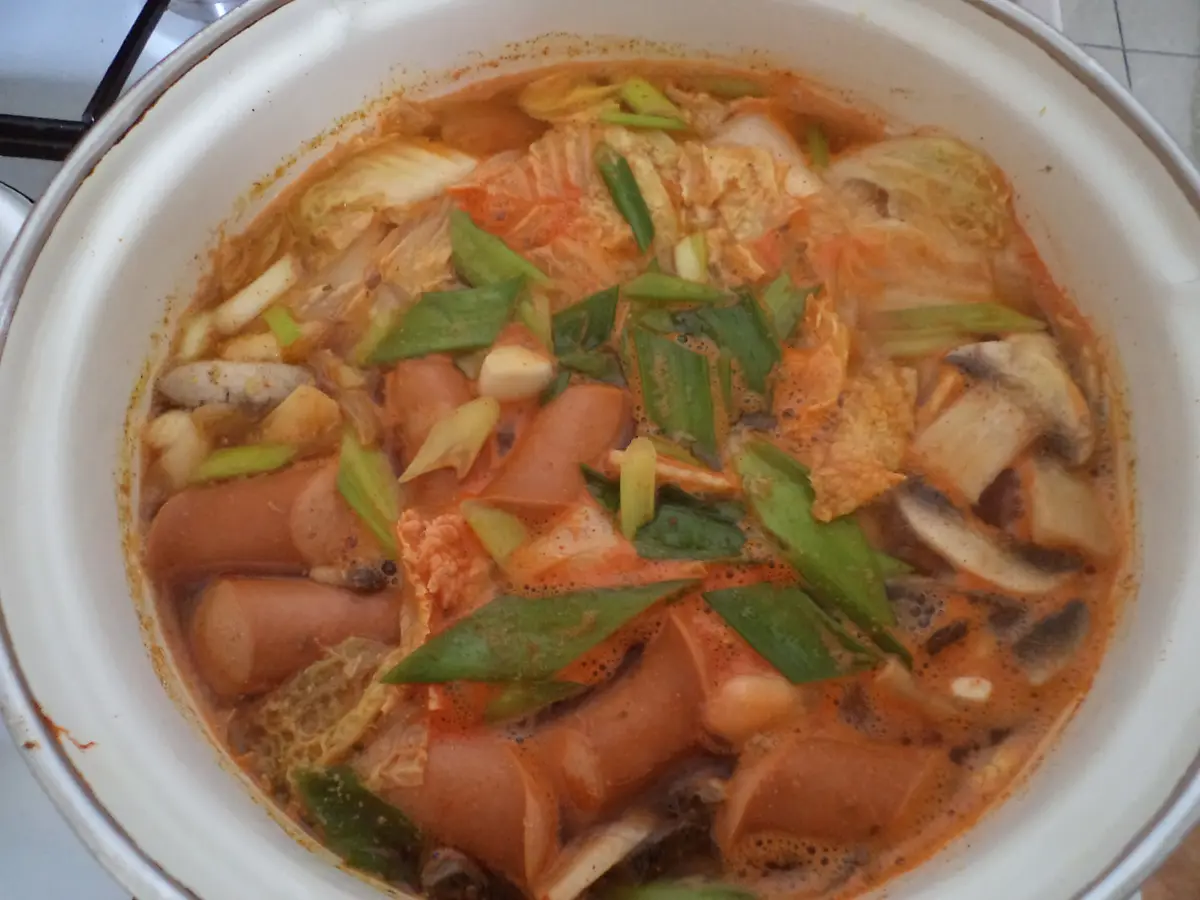
Budae jjigae (pronounced boo-deh jee-gay) means "army base stew," and it is a big, bubbling pot of spicy broth, sour kimchi, Spam, sausages, tofu, instant ramen noodles and melted cheese on top. It is usually described as a dish that grew out of the years after the Korean War, when some cooks are said to have made use of canned and processed foods that came from nearby U.S. military bases. That was a period of real hardship, and many Koreans still see the stew as a reminder of it. Today it is a social comfort food that people cook in the middle of the table and share. Almost everything comes from a regular supermarket. The notes below explain how to build a broth that tastes like more than salty Spam, how to keep the noodles from turning mushy, and how to adjust the heat.
Recipe
Budae Jjigae (Korean Army Stew with Spam, Ramen and Cheese)
Prep 20 min · Cook 20 min · Serves 4
Ingredients
- 3 cups (720 ml) anchovy stock, chicken stock or water (see notes)
- 1 cup (about 170 g) well-fermented, sour kimchi, chopped, plus 1/4 cup (60 ml) of its juice
- 1/2 can (about 6 oz / 170 g) Spam or other canned luncheon meat, cut into 1/4-inch (6 mm) slices
- 4 hot dogs or smoked sausages (about 6 oz / 170 g), sliced diagonally
- 1/2 block (about 7 oz / 200 g) firm tofu, cut into 1/2-inch (1 cm) slabs
- 1/2 medium yellow onion (about 80 g), sliced
- 1 cup (about 100 g) sliced shiitake or button mushrooms, or 1 small bunch enoki mushrooms (about 100 g)
- 2 scallions, cut into 2-inch (5 cm) lengths
- 1/2 cup (about 120 g) canned baked beans, optional
- 1/2 cup (about 75 g) cylinder-shaped Korean rice cakes (tteok), optional
- 1 package (about 3 oz / 85 g) instant ramen noodles, seasoning packet set aside
- 2 slices American cheese
- 2 tbsp (about 12 g) gochugaru (Korean chili flakes), or 1 tbsp for a milder stew
- 1 tbsp (about 20 g) gochujang (Korean red chili paste)
- 1 tbsp (15 ml) soy sauce
- 1 tbsp (12 g) sugar
- 1 tbsp (about 10 g) minced garlic (about 3 cloves)
- 1/4 tsp ground black pepper
Instructions
- 1In a small bowl, mix the gochugaru, gochujang, soy sauce, sugar, garlic, black pepper and the kimchi juice into a loose red paste. This is your seasoning sauce, and mixing it first means it spreads evenly in the pot.
- 2If you are using rice cakes that are hard or frozen, soak them in warm water for 10 minutes, then drain.
- 3Choose a wide, shallow pot or deep skillet, about 11 to 12 inches (28 to 30 cm) across. Lay the onion and mushrooms in the bottom. Arrange the kimchi, Spam, sausages, tofu, baked beans and rice cakes around the pot in separate piles, like spokes on a wheel. Put the scallions in the center.
- 4Spoon the seasoning sauce over the middle of the pile, then pour the stock down the side of the pot so you do not wash the sauce away.
- 5Bring to a boil over medium-high heat, which takes about 5 minutes, then reduce to medium and simmer for 8 minutes, uncovered. The kimchi should soften and the broth should turn deep red and taste rounded, not just salty.
- 6Taste the broth. If it is too sharp, add a pinch of sugar. If it is too salty, add 1/2 cup (120 ml) of water. If it tastes flat, add 1 tsp of soy sauce. Do not add the ramen seasoning packet yet.
- 7Add the ramen noodles on top, pushing them gently into the broth. Cook for 2 to 3 minutes, or 1 minute less than the package says, turning them once with chopsticks. They will keep softening in the hot broth at the table.
- 8Lay the cheese slices on top and cover the pot for 30 seconds, until they begin to melt. Serve right away, straight from the pot, with bowls of steamed short-grain rice.
Building the broth: The most common problem is a stew that tastes only of salt. Spam, sausage and kimchi are all salty, so you do not need much soy sauce. A light anchovy stock gives more depth than water. To make it, simmer a handful of dried anchovies (heads and guts removed) in 4 cups of water for 10 minutes, adding a piece of kombu for the last 5 minutes, then strain. Chicken stock is a fine substitute. If you use store-bought stock, choose a low-sodium one.
Why sour kimchi matters: Fresh kimchi makes a flat, one-note broth. Kimchi that has fermented for a few weeks, and tastes tangy when you eat it plain, gives the stew its savory sourness. If your kimchi is fresh, add 1 tsp of rice vinegar at the end and simmer for a minute. Cooking the kimchi for the full 8 minutes before the noodles go in also takes the raw edge off.
Keeping the noodles from getting mushy: Ramen goes in last for a reason. Add it only when everyone is ready to eat, and cook it a little under the time on the package. Do not store leftover stew with the noodles still in it, because they absorb the broth and turn soft.
Spice level: As written, the stew is medium-spicy. For mild, use 1 tbsp of gochugaru, skip the gochujang, and add 1 extra tbsp of kimchi juice for flavor. For hot, add 1 to 2 sliced fresh chilies or 1 more tbsp of gochugaru. If you add the ramen seasoning packet, it brings both heat and salt, so add a little at a time and taste.
Ingredient swaps: No Spam? Use any canned luncheon meat, or thick-sliced ham. No tofu? Add more mushrooms or a handful of sliced zucchini. No rice cakes? Skip them or add cooked udon in the last 2 minutes. Cheddar or mozzarella can replace American cheese, but American cheese melts smoothly and is the usual choice. Toppings vary a lot from restaurant to restaurant and home to home, so treat the list as a starting point.
Dietary notes: This is not a vegetarian or gluten-free dish as written. Kimchi, gochujang and soy sauce can contain fish or shellfish extracts, or wheat and barley, depending on the brand, and instant ramen usually contains wheat. For a vegetarian version, replace the Spam and sausages with extra tofu and mushrooms, use water or a vegetable stock, and check the labels of the kimchi, gochujang and ramen for fish, shellfish and meat ingredients. For gluten-free, check labels for wheat and barley and use rice noodles instead of ramen.
Storage and reheating: Leftover broth, meat and vegetables keep in an airtight container in the fridge for up to 3 days, without the noodles and cheese. Reheat in a pot over medium heat until steaming hot all the way through, adding a splash of water if the broth has reduced. Cook fresh noodles when you reheat. Do not freeze the stew, since tofu turns spongy.
How to serve it: Put the pot in the middle of the table on a portable burner if you have one, and let people add noodles and cheese as they eat. Plain rice is a must. Cold side dishes help balance the salty, spicy broth, such as Korean Cucumber Salad or Kongnamul Muchim. For other Korean stews, try Doenjang Jjigae for a savory, milder soybean stew or Sundubu Jjigae for a silky tofu stew. After the stew is gone, Kimchi Fried Rice makes a good second meal.
Related Recipes
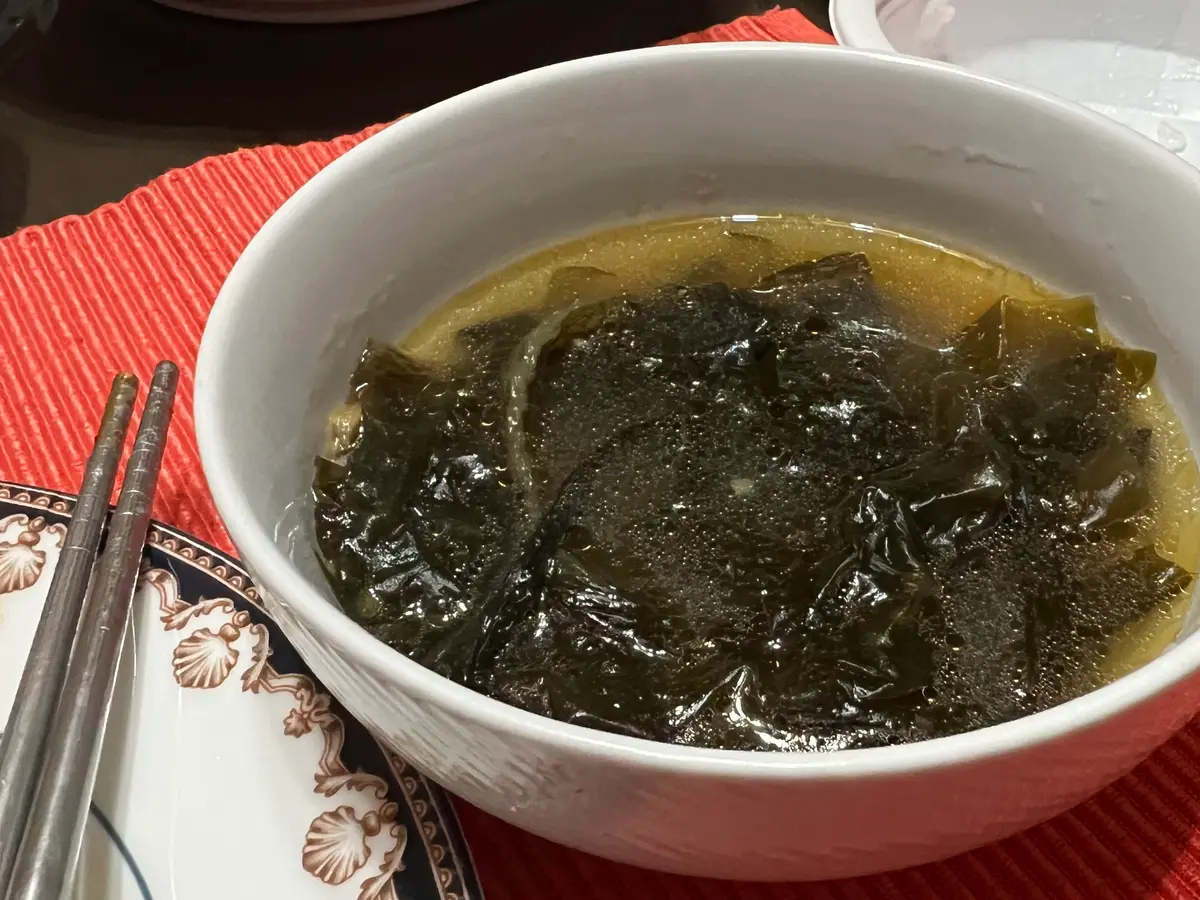
Miyeok Guk (Korean Seaweed Soup)
Miyeok guk recipe for beginners: Korean seaweed soup with beef, sesame oil and garlic. Learn to soak dried wakame, why it is a birthday soup, and easy swaps.
75 min
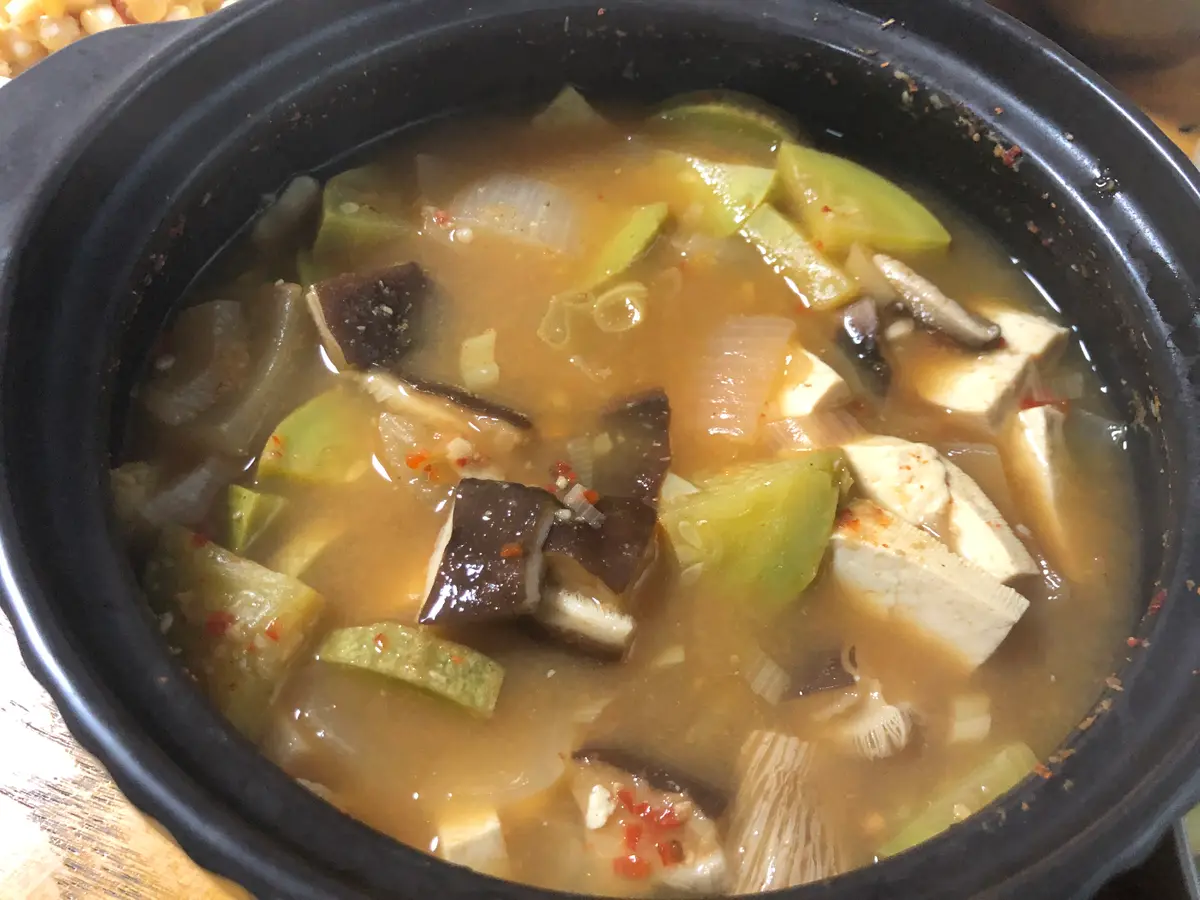
Doenjang Jjigae (Korean Soybean Paste Stew)
Doenjang jjigae recipe for beginners: tofu, potato and zucchini in a savory Korean soybean paste broth, with doenjang vs. miso tips and a vegan version.
55 min
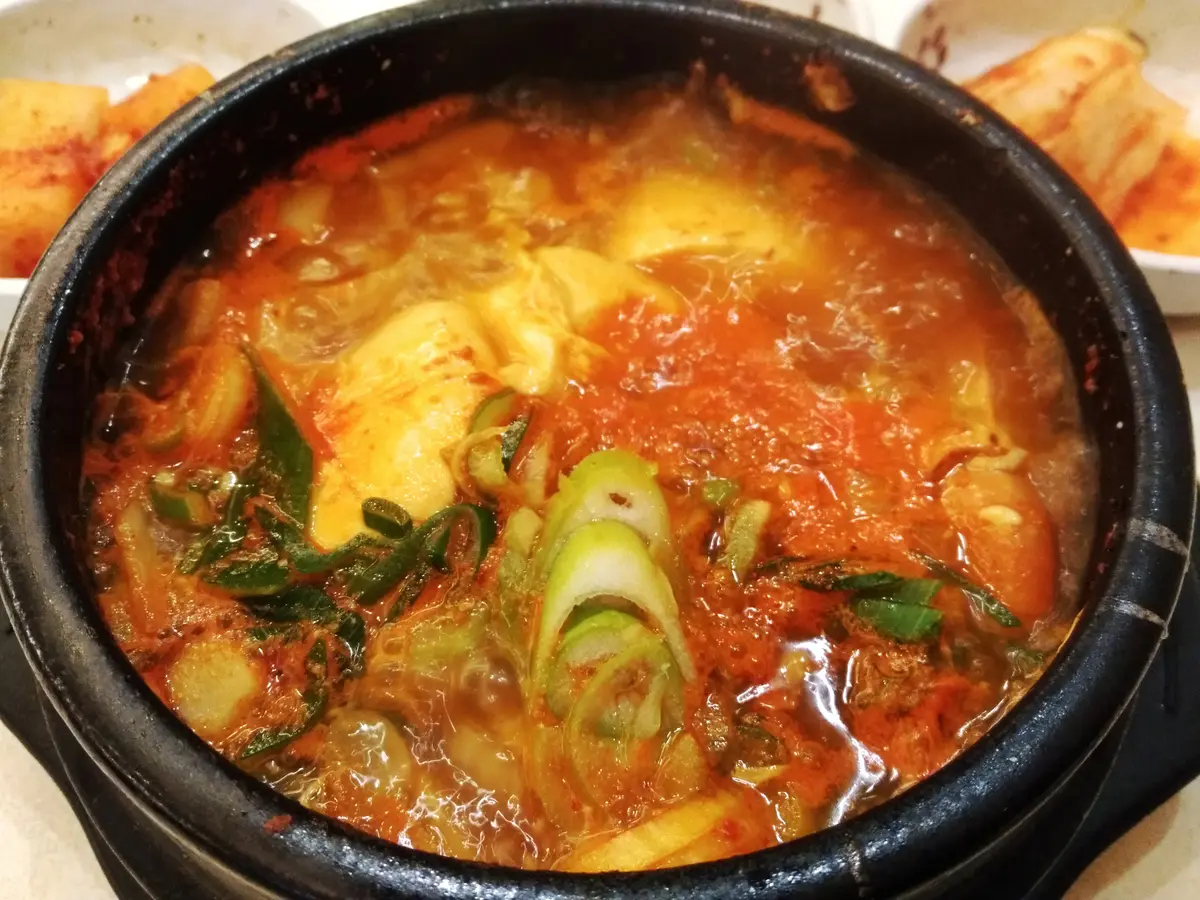
Sundubu Jjigae (Korean Soft Tofu Stew)
Easy sundubu jjigae recipe: silky soft tofu in a spicy red broth with pork and an egg cracked in at the end. Seafood, vegetarian and mild options included.
40 min