Dakdoritang (Spicy Korean Braised Chicken)
Prep 25 min · Cook 50 min · Serves 4 ·
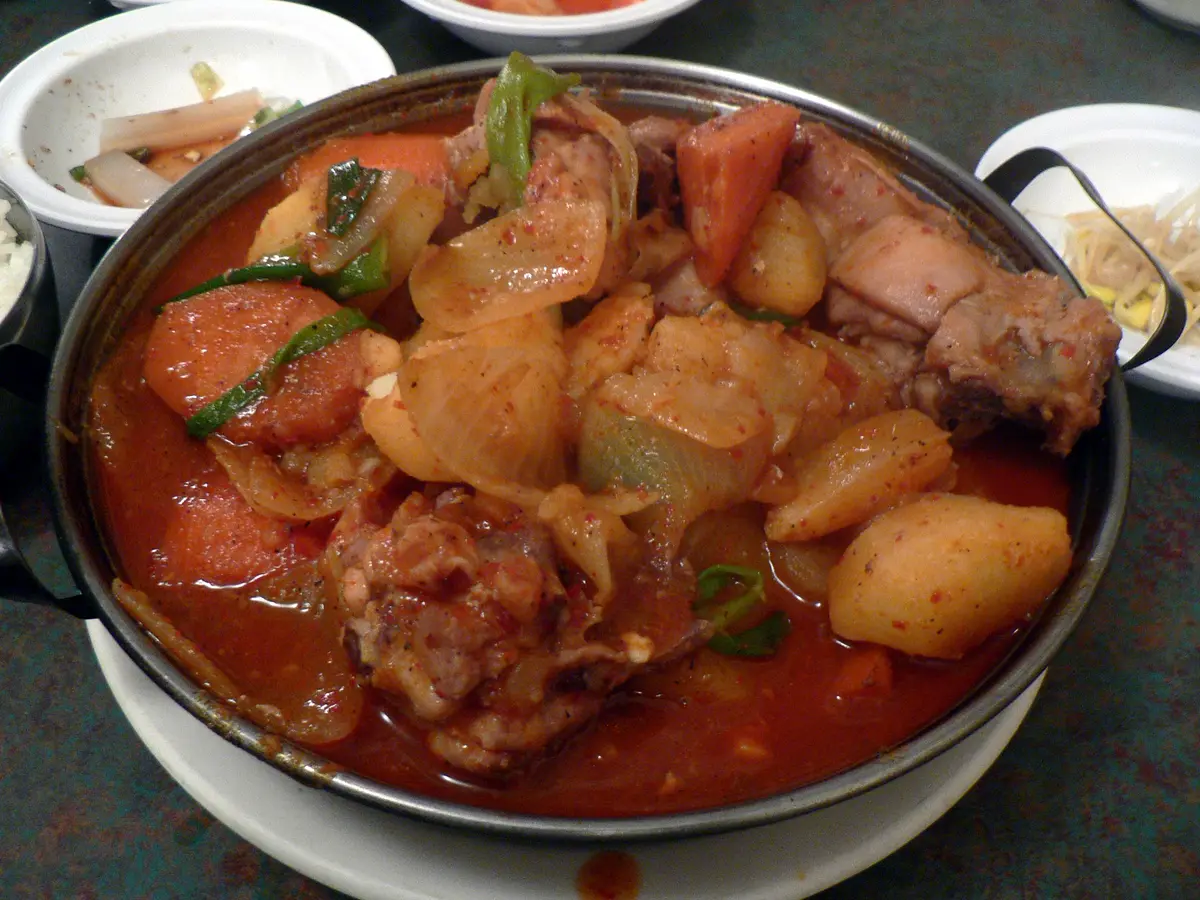
Dakdoritang (pronounced dahk-doh-ree-tahng) is Korean spicy braised chicken: bone-in chicken pieces, potatoes, carrots and onion simmered in a red sauce of gochujang (Korean red chili paste), gochugaru (Korean chili flakes), soy sauce and garlic until the sauce is thick enough to cling to everything. Dak means chicken and tang means soup or stew. The same dish is also called dakbokkeumtang (dahk-bok-keum-tahng), the name that Korea's National Institute of Korean Language recommends, and you will see both names on menus and recipe sites. It is a one-pot dinner that feeds four with steamed rice, and the potatoes soak up the sauce. This version parboils the chicken first and removes the skin, so the stew comes out cleaner and less greasy. The notes below cover thin sauce, hard potatoes, how to adjust the heat, and how dakdoritang differs from dakgalbi.
Recipe
Dakdoritang (Spicy Korean Braised Chicken)
Prep 25 min · Cook 50 min · Serves 4
Ingredients
- 3 lb (1.35 kg) bone-in chicken thighs and drumsticks (about 8 to 10 pieces), or a small whole chicken cut into 10 to 12 pieces
- About 8 cups (2 L) water, for parboiling the chicken
- 1 lb (450 g) yellow or waxy potatoes (2 to 3 medium), peeled and cut into 1 1/2- to 2-inch (4 to 5 cm) chunks
- 2 medium carrots (about 120 g), peeled and cut into 3/4-inch (2 cm) thick rounds
- 1 medium yellow onion (about 150 g), cut into 8 wedges
- 3 scallions (green onions, about 45 g), cut into 2-inch (5 cm) lengths
- 1 to 2 fresh green chilies, such as Korean cheongyang chilies or jalapenos, sliced, optional
- 2 tbsp (about 40 g) gochujang (Korean red chili paste)
- 3 tbsp (about 18 g) gochugaru (Korean chili flakes), or 1 to 2 tbsp for a milder stew
- 3 tbsp (45 ml) soy sauce (all-purpose, not dark soy sauce)
- 2 tbsp (25 g) sugar
- 2 tbsp (30 ml) mirin or rice wine
- 2 tbsp (about 20 g) minced garlic (about 6 cloves)
- 1 tsp (5 g) grated fresh ginger
- 1/2 tsp (about 1 g) ground black pepper
- 3 cups (720 ml) water, for the stew (1/2 cup for the sauce and 2 1/2 cups for the pot)
- 1 tsp toasted sesame seeds, for garnish, optional
- Cooked short-grain rice, for serving
Instructions
- 1Make the sauce and cut the vegetables before you touch the raw chicken. In a medium bowl, whisk the gochujang, gochugaru, soy sauce, sugar, mirin, garlic, ginger and black pepper with 1/2 cup (120 ml) of the stew water until smooth, then set it aside so the chili flakes can soften. Peel the potatoes and cut them into 1 1/2- to 2-inch (4 to 5 cm) chunks. Peel the carrots and cut them into 3/4-inch (2 cm) thick rounds. Cut the onion into 8 wedges through the root end, so the layers stay together. Cut the scallions into 2-inch (5 cm) lengths and slice the chilies if using. Keep the onion, scallions and chilies in a separate bowl, because they go in later.
- 2Pour about 8 cups (2 L) of water into a wide, heavy pot, Dutch oven or deep skillet with a lid (at least 5 quarts / 5 L) and bring it to a boil over high heat, which takes about 8 to 10 minutes. You will use the same pot for the stew. Prepare the chicken in the next step while the water heats.
- 3Prepare the chicken. Pull the skin off each piece (a paper towel gives a better grip) and trim away any large lumps of fat. Make two or three slashes about 1/2 inch (1 cm) deep in the thickest part of each thigh and drumstick, so the sauce can get in and the meat cooks evenly. There is no need to rinse the raw chicken, because the parboil in the next step removes impurities and rinsing raw chicken in the sink can spread bacteria. Wash your hands, the knife and the cutting board with hot, soapy water right away.
- 4When the water is at a full boil, lower the chicken in carefully with tongs, a few pieces at a time, so the hot water does not splash. Let the water come back to a boil and boil for 5 minutes. Gray foam will rise to the top, so turn the heat down a little if it climbs close to the rim. The chicken is not cooked through at this point and finishes cooking in the sauce, so go straight to the next step.
- 5Turn off the heat. With tongs, move the chicken to a colander in the sink and rinse the pieces under running water for about 1 minute in total to wash off the foam. Rinsing is fine at this point, unlike with raw chicken, because the surface of the pieces has just boiled. Carefully pour the hot water out of the pot, rinse the pot, and put the chicken back in. Wash your hands afterward.
- 6Add the potatoes and carrots to the pot. Scrape in the sauce, pour in the remaining 2 1/2 cups (600 ml) of water and stir until the sauce is mixed in. The liquid should come about halfway up the ingredients. That is right, because the chicken and vegetables release more liquid as they cook. Bring to a boil over high heat, which takes about 5 minutes.
- 7Turn the heat down to medium-low, so the liquid keeps bubbling steadily but gently, and put the lid on with a small gap. Simmer for 15 minutes, lifting the lid carefully every 5 minutes (the steam is hot) to stir gently from the bottom, so the chicken cooks evenly and the sauce does not stick. Skim off any foam or orange fat that collects on the surface with a spoon.
- 8Add the onion wedges, pushing them down into the sauce, and cook uncovered for 10 to 12 minutes, stirring gently every 3 to 4 minutes with a wooden spoon or silicone spatula so the potatoes do not break. The sauce is ready when it has reduced by about a third, coats the back of a spoon and clings to the chicken, the tip of a knife slides easily into the largest potato chunk, and the meat is starting to pull away from the bone. If the sauce starts to stick, add 1/4 cup (60 ml) of water and turn the heat down a little.
- 9Check the chicken: push an instant-read thermometer into the thickest part of a thigh without touching the bone. It must read at least 165 F (74 C). Do not go by color, because fully cooked chicken can still look pink near the bone. If the temperature is lower, keep simmering and check again in 3 minutes. Dark meat gets more tender as it goes past 165 F, so if the meat still feels tight on the bone, simmer a few more minutes.
- 10Add the scallions and the chilies (if using) and simmer for 2 minutes, until the scallions are bright green and just soft. Taste a piece of potato with some sauce on it, because the sauce is meant to season plain potato and should taste bold on its own. If it needs salt, stir in 1 tsp of soy sauce at a time. If it tastes sharp, stir in a pinch of sugar.
- 11Turn off the heat and let the pot stand uncovered for 5 minutes, so the sauce thickens a little and the potatoes soak up more flavor. Sprinkle with the sesame seeds if using. Serve hot from the pot with steamed rice, and spoon extra sauce over the rice.
Which chicken to buy: Bone-in thighs and drumsticks work best, because they stay juicy through the braise and the bones give the sauce more body. If you cut up a whole chicken, the breast and wing pieces cook faster than the legs, so lift them out when they reach 165 F (74 C) and put them back for the last 2 minutes. If your pieces are smaller than those described here, such as chicken already cut for stew, check the chicken a few minutes early, since smaller pieces cook faster. Boneless skinless breast is the least forgiving choice, because it turns dry and stringy in a braise.
If you only have boneless thighs: Use 2 lb (900 g), cut into 2-inch (5 cm) pieces, and skip the slashing and the parboil. Bring the potatoes, carrots, sauce and water to a boil, then simmer covered for 10 minutes. Add the chicken and the onion and cook uncovered for 15 to 18 minutes, until the chicken reaches 165 F (74 C) in the center and the sauce has thickened. The sauce will have a little less body than it does with bone-in chicken.
Why parboil, and how to cut the grease: Boiling the chicken for 5 minutes first lifts impurities and surface fat out as gray foam, which you pour off, so the sauce looks clearer and tastes cleaner. Pulling off the skin removes most of the remaining grease, and any orange oil that still collects on top can be skimmed off with a spoon or a folded paper towel. To skip the parboil, remove the skin, trim the fat, add the raw chicken straight to the pot with the sauce, and skim the foam and fat during the first 10 minutes. The stew will be a little cloudier and oilier. Do not parboil chicken ahead of time and refrigerate it to finish later, because partly cooked chicken should be cooked through right away.
Fixing the sauce: If the sauce is thin when the potatoes are done, keep the pot uncovered over medium-high heat and stir gently for 3 to 5 minutes. Mashing one or two potato chunks against the side of the pot thickens it faster. A tall, narrow pot reduces more slowly than a wide one, so add 5 to 10 minutes to the uncovered step. If the sauce is thick or sticking, stir in 1/4 cup (60 ml) of water. If it is too salty, add 1/4 cup (60 ml) of water and a pinch of sugar and simmer for 2 minutes. If you smell something burnt or see black bits on the bottom, do not scrape them up. Ladle the stew into a clean pot, leave the scorched layer behind, and add 1/2 cup (120 ml) of water.
Potatoes: Yellow or waxy potatoes, such as Yukon Gold or red potatoes, hold their shape best. Russets are starchier, so they break down more and thicken the sauce. Cut them a little larger and check them 5 minutes early. If the potatoes are tender before the chicken is done, lift them out with a slotted spoon and add them back for the last 2 minutes. If they are still hard when the sauce is already thick, add 1/2 cup (120 ml) of water, cover the pot and simmer for 5 more minutes.
Spice level: As written, the stew is medium-spicy, and the potatoes and the sugar help take the edge off the heat. Gochujang and gochugaru differ a lot by brand, and the sauce tastes hotter as it reduces, so judge the heat near the end rather than at the start. For a milder stew, use 1 to 2 tbsp of gochugaru, leave out the fresh chilies and add 1 tsp more sugar. For a hotter stew, add 1 to 2 tbsp more gochugaru, or use Korean cheongyang chilies, which are usually hotter than jalapenos. If your gochugaru is a fine powder, start with 2 tbsp and add more at the end. Regular crushed red pepper flakes are much hotter than gochugaru, so do not use them in the same amount.
Swaps and add-ins: Gochujang is the base of the sauce and has no real substitute. Look for it in the Asian aisle of large supermarkets or online. No gochugaru? Use 2 tbsp of sweet paprika plus 1/4 to 1/2 tsp of cayenne, adding the cayenne a little at a time. The color will be close, but the flavor will be less fruity and rounded. No mirin or rice wine? Use dry white wine or dry sherry and add 1/2 tsp more sugar. Sweet potato can replace half of the potatoes; it breaks down a little at the edges and sweetens the sauce. About 1 cup (150 g) of cylinder-shaped Korean rice cakes (tteok) can go in with the onion. Soak hard or frozen ones in warm water for 10 minutes first, add 1/2 cup (120 ml) of water because they soak up sauce, and stir often so they do not stick.
Dakdoritang vs dakgalbi: Both are red, gochujang-based chicken dishes, but they cook differently. Dakgalbi is stir-fried with little liquid, usually with boneless chicken, cabbage and sweet potato, and ends up thick and sticky. Dakdoritang is braised in much more liquid with bone-in chicken, potatoes and carrots, and ends up as a saucy stew meant to be eaten with rice. See Dakgalbi if you want the drier, stir-fried one.
Dietary notes: This dish contains chicken and soy, and sesame if you use the garnish. Soy sauce usually contains wheat, and many gochujang brands contain wheat or barley malt too. If you avoid gluten, check the soy sauce and gochujang labels for wheat and barley, and use tamari or a soy sauce labeled gluten-free. If you avoid fish or shellfish, check the gochujang and soy sauce labels for fish, shellfish and meat ingredients.
Storage and reheating: Put leftovers in shallow containers and refrigerate them within 2 hours of cooking (within 1 hour if the room is hotter than 90 F / 32 C), since a big pot cools too slowly to leave on the stove. They keep for 3 to 4 days. Any fat hardens on top in the fridge and can be lifted off. Reheat in a pot over medium-low heat with a splash of water, covered, until the chicken is steaming hot and reaches 165 F (74 C). Freezing is not ideal, because thawed potatoes turn grainy. To freeze it, pick out the potatoes, freeze the chicken in its sauce for up to 2 months, thaw it overnight in the fridge, and add freshly boiled potatoes when you reheat. To get ahead, cut the vegetables and stir the sauce together up to 1 day before and keep them covered in the fridge.
How to serve it: Put the pot in the middle of the table, with a bowl of plain steamed short-grain rice for each person and a small empty bowl for the bones. Eat a piece of chicken or potato with a spoonful of sauce and rice, and spoon extra sauce over the rice. Because the stew is spicy, cool or mild sides help: Korean Cucumber Salad, Kongnamul Muchim, Korean Spinach Side Dish, or Gyeran Jjim, a mild, soft steamed egg dish. Easy Kimchi adds a tangy crunch. For another potato dish with a milder, sweet-salty flavor, try Gamja Jorim.
Variations: For a stew with no chili, leave out the gochujang, gochugaru and fresh chilies, use 5 tbsp (75 ml) of soy sauce and 3 tbsp (about 38 g) of sugar, and keep everything else the same. The result is a sweet-savory soy braise, similar in spirit to jjimdak, another Korean braised chicken dish. Taste at the end and add 2 tbsp of water if it is too salty. The photo on this page shows the stew served in a shallow metal pan with small side dishes and rice around it, rather than in the deep pot used in the recipe above.
Related Recipes
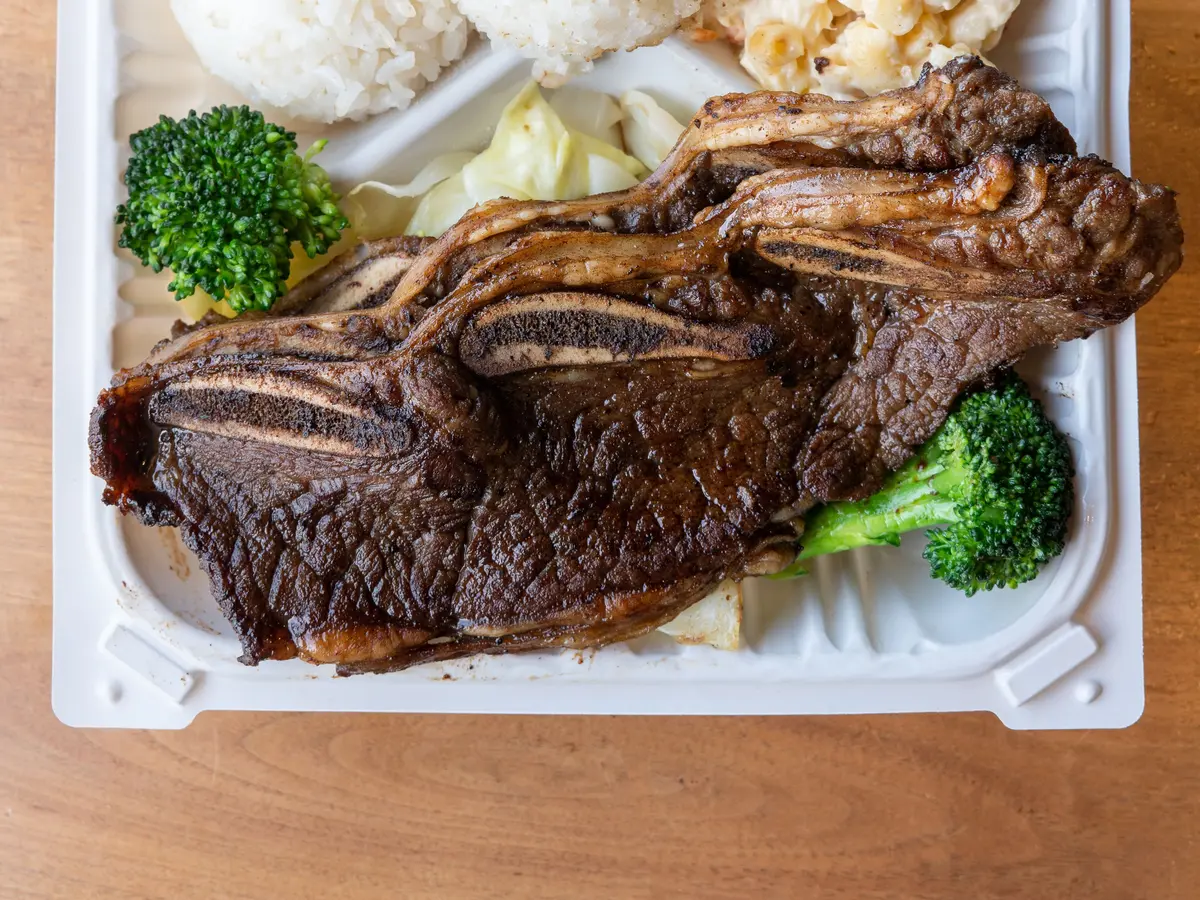
LA Galbi (Korean BBQ Short Ribs)
Korean short ribs recipe (LA galbi): flanken-cut beef in a sweet soy, garlic and pear marinade, cooked on a grill, pan or broiler. Buying and doneness tips.
290 min
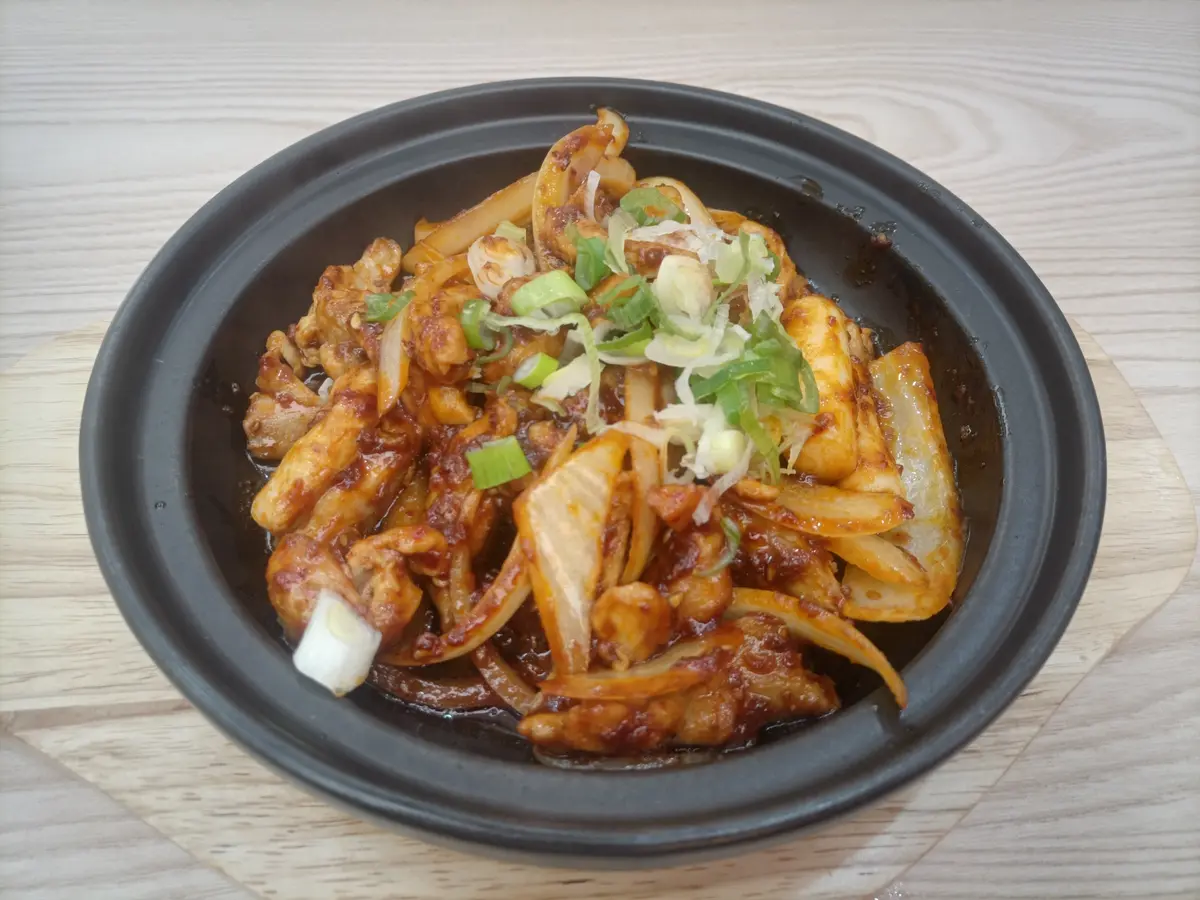
Dakgalbi (Spicy Korean Stir-Fried Chicken)
Make dakgalbi, spicy Korean stir-fried chicken thighs with gochujang, cabbage and sweet potato, all in one pan. Easy steps, heat control and fried rice finish.
40 min
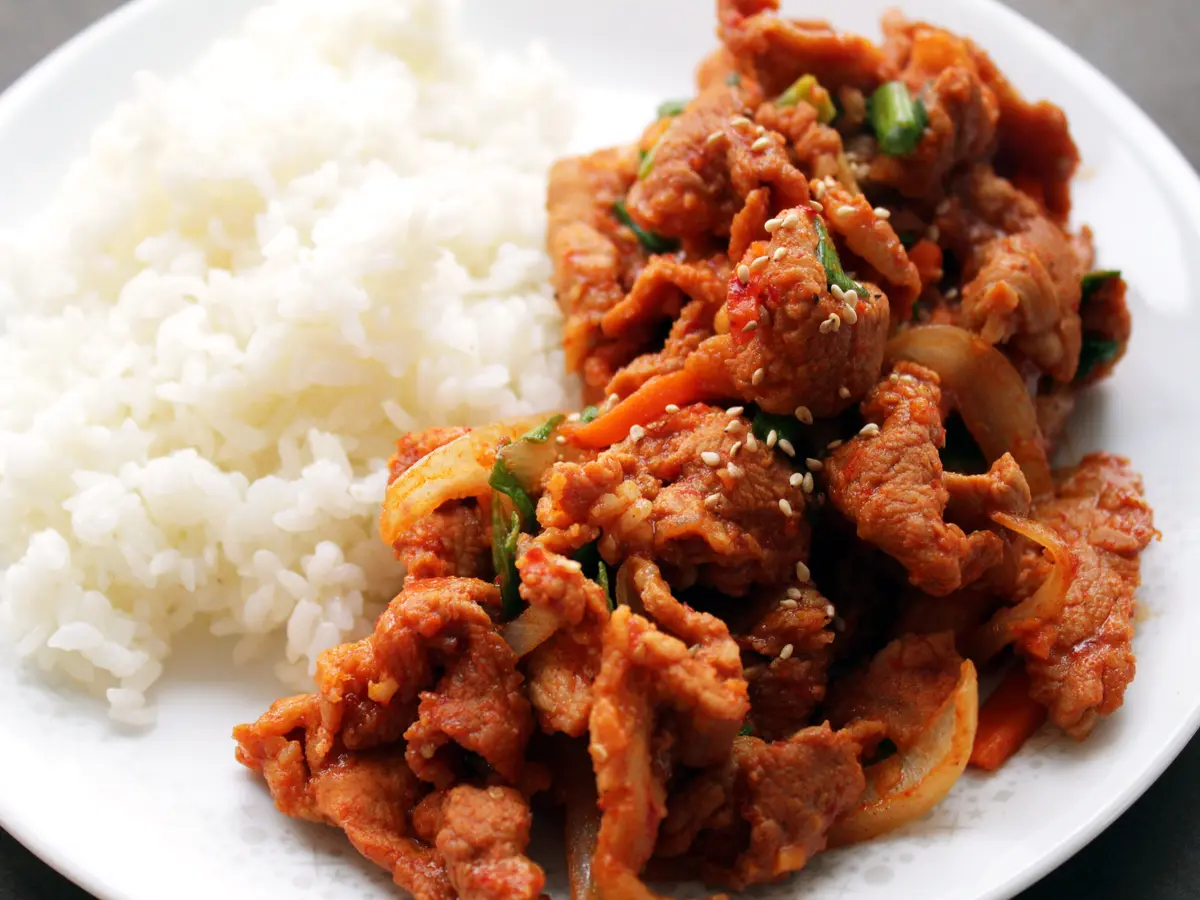
Jeyuk Bokkeum (Spicy Korean Pork Stir-Fry)
Spicy Korean pork stir-fry (jeyuk bokkeum): pork shoulder seared for char, then glazed in gochujang sauce. With tips on cuts, slicing and a milder version.
35 min