Samgyeopsal at Home (Korean BBQ Pork Belly)
Prep 25 min · Cook 30 min · Serves 4 ·
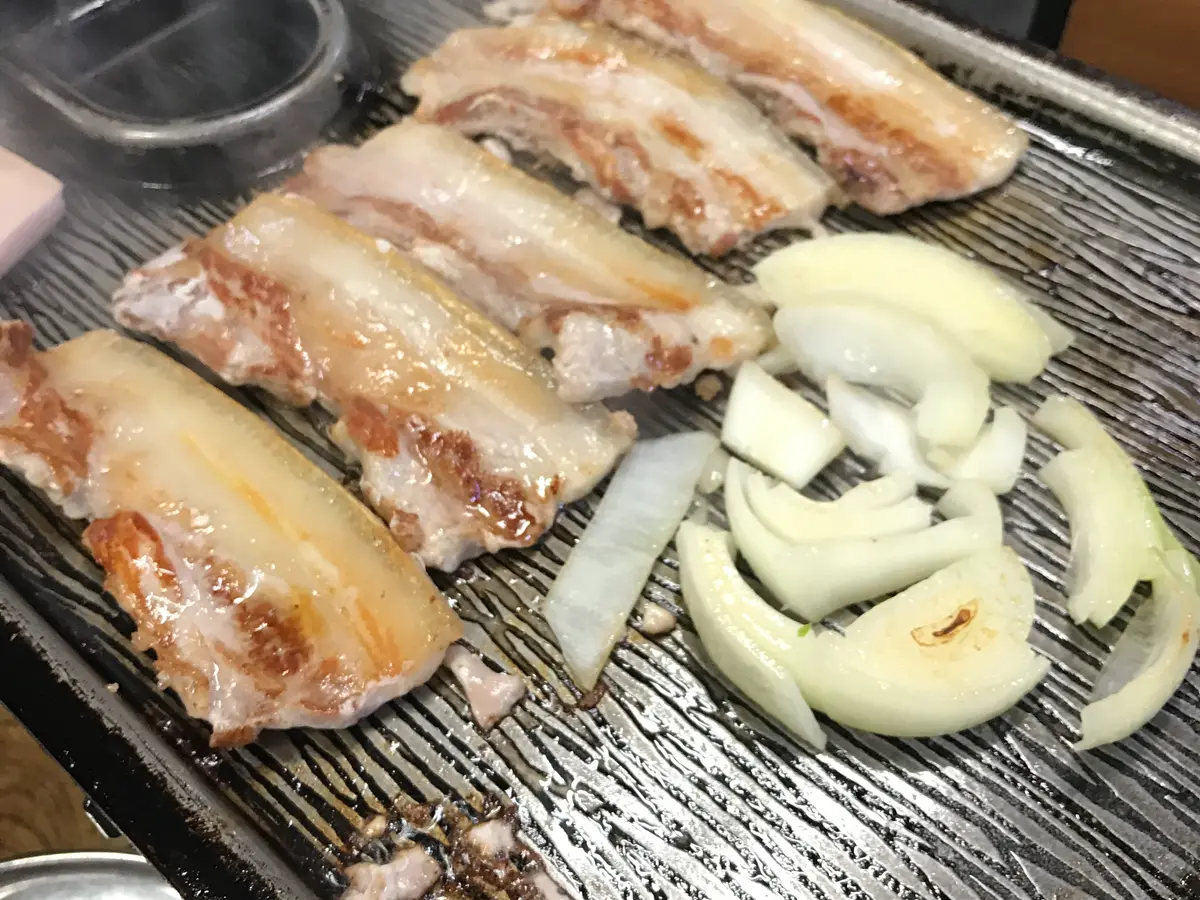
Samgyeopsal (pronounced sahm-gyuhp-sahl, meaning "three-layer meat") is the pork belly at the center of Korean barbecue: skinless slices 1/4 to 3/8 inch (6 to 10 mm) thick, cooked until the fat melts and the edges turn golden and crisp. The seasoning comes at the table, from a sesame oil dip, ssamjang (a thick paste of doenjang, fermented soybean paste, and gochujang, red chili paste) and a lettuce leaf wrapped around each bite with rice and raw garlic. You do not need a tabletop grill to make samgyeopsal at home. A heavy skillet, the oven or an air fryer all work, and this recipe covers each one, plus how to keep smoke and grease splatter under control. Plan on 25 minutes of prep and about 30 minutes of cooking, plus 30 to 45 minutes of freezer time if you slice the belly yourself.
Recipe
Samgyeopsal at Home (Korean BBQ Pork Belly)
Prep 25 min · Cook 30 min · Serves 4
Ingredients
- 1 1/2 lb (680 g) skinless pork belly, sliced 1/4 to 3/8 inch (6 to 10 mm) thick
- 6 garlic cloves (about 20 g), peeled and thinly sliced lengthwise
- 1 garlic clove (about 3 g), minced, for the ssamjang
- 2 tbsp (30 ml) toasted sesame oil, for the sesame oil dip
- 1/2 tsp (3 g) fine salt, for the sesame oil dip
- 1/2 tsp (1 g) ground black pepper, for the sesame oil dip
- 2 tbsp (about 35 g) doenjang (Korean fermented soybean paste)
- 1 tbsp (about 20 g) gochujang (Korean red chili paste)
- 2 tsp (10 ml) toasted sesame oil, for the ssamjang
- 1 tsp (about 7 g) honey, or 1 tsp (4 g) sugar
- 1 scallion (about 15 g), finely chopped
- 1 tsp toasted sesame seeds
- 1 tbsp (15 ml) water, plus more if needed to loosen the ssamjang
- 1 large head leaf lettuce or 2 small heads butter lettuce, washed and dried
- 10 to 12 perilla leaves (kkaennip, also sold as sesame leaves), optional
- 1 to 2 green chilies, such as jalapeno or cheongyang, thinly sliced, optional
- 1 cup (about 150 g) well-fermented kimchi, for grilling or serving, optional
- 4 cups (about 700 g) cooked short-grain rice, for serving
Instructions
- 1If you are slicing a whole slab of belly yourself, wrap it and freeze it for 30 to 45 minutes, until it is firm on the outside but not frozen solid. Make the dips and the wrap platter (the next two steps) while it chills. If your belly is already sliced, skip the freezer, but if it came frozen, thaw it in the fridge overnight first, not on the counter.
- 2Make the dips. For the sesame oil dip (gireumjang), stir the 2 tbsp (30 ml) of sesame oil, the salt and the black pepper together in a small dish. For the ssamjang, stir the doenjang, gochujang, the 2 tsp (10 ml) of sesame oil, the honey, minced garlic, scallion and sesame seeds together in a small bowl, then stir in 1 tbsp (15 ml) of water. If the paste is too thick to spread, add more water 1 tsp at a time. Taste a dab: it should be salty, slightly sweet and nutty, with a gentle kick.
- 3Build the wrap platter. Wash the lettuce and dry the leaves well, so they do not turn soggy, and pile them on a platter with the perilla leaves (if using). Put half of the sliced garlic in a small bowl for the table, and set out the chilies (if using), the kimchi (if using) and the rice in separate bowls. Keep the other half of the garlic by the stove for the pan. Set the platter away from the raw pork. Next to the stove, put out kitchen scissors, a heatproof bowl or metal can for the pork fat, a clean plate for the cooked pork and two pairs of tongs.
- 4Slice and dry the pork. If you froze a slab, cut it crosswise, straight across the stripes of fat and lean, into slices 1/4 to 3/8 inch (6 to 10 mm) thick, and cut any slice longer than about 6 inches (15 cm) in half so it fits the pan. Pat all the slices dry with paper towels, because wet pork spits in the pan and steams instead of browning. Do not rinse raw pork, which only splashes bacteria around the sink. Then wash the knife, the board and your hands with hot, soapy water.
- 5Turn the range hood fan on high and open a window before you heat anything. Keep a lid that is big enough to cover the pan within reach: if grease ever catches fire, turn off the heat and slide the lid over the pan, leave it on until the pan has cooled, and do not use water. Skillet or grill pan: heat a 12-inch (30 cm) cast-iron, carbon steel or heavy stainless pan over medium-high heat for 2 to 3 minutes, with no oil, because the belly makes its own fat. In a nonstick pan, use medium heat and do not preheat the empty pan on high; browning takes a little longer. Oven: set a rack in the middle (or two racks, in the upper and lower thirds, if you will use two pans) and heat the oven to 400 F (200 C), which takes 10 to 15 minutes, so you can switch it on while you make the dips. Line a rimmed baking sheet with foil and set an oven-safe wire rack on top. Air fryer: heat it to 400 F (200 C) for 3 minutes.
- 6Cook the pork in a single layer with about 1/2 inch (1 cm) between the slices, so they brown instead of steaming. Use one pair of tongs to place and turn the raw slices and keep the second, clean pair only for lifting the cooked slices out. Skillet or grill pan: lay the first batch in the hot pan (usually 5 or 6 slices in a 12-inch skillet) and cook 3 to 4 minutes per side for 1/4-inch (6 mm) slices, or 4 to 5 minutes per side for 3/8-inch (10 mm) slices, until deep golden brown with crisp edges. If the slices curl up, press them flat with the tongs for the first 30 seconds. Oven: lay as many slices on the rack as fit in one layer, using a second pan if needed, and roast 20 to 25 minutes for 1/4-inch slices or 25 to 35 minutes for 3/8-inch slices, flipping once halfway (and swapping the two pans between racks if you use two). Air fryer: lay one layer in the basket and cook 10 to 14 minutes for 1/4-inch slices or 12 to 18 minutes for 3/8-inch slices, flipping once halfway, and do not stack or overlap the slices. Ovens and air fryers vary, so start checking a few minutes before the low end of the range.
- 7Manage the fat as you go. In a skillet, when melted fat starts to pool around the slices, carefully spoon the extra into the heatproof bowl or metal can; do not pour it into the sink. In the last 1 to 2 minutes of the second side, tuck the garlic you kept by the stove into the gaps and cook it until golden at the edges. Burnt garlic tastes bitter, so lift it out as soon as it takes color. In the oven or air fryer, serve all of the garlic raw. In the oven, leave the fat in the pan and let the pan cool until the fat has stopped sizzling and the pan is only warm before you move it. In the air fryer, carefully pull out the drawer between rounds and pour the fat into the heatproof bowl or can.
- 8Check the thickest slice in each batch. Push the tip of a thin-tipped instant-read thermometer through the edge of the slice so it sits in the middle. It should read at least 145 F (63 C), which is USDA's safe minimum for whole cuts of pork, and slices that are browned and crisp at the edges are usually well past it. If the reading is lower, cook another 1 to 2 minutes and check again. If your thermometer is too thick for slices this size, or you do not have one, cut the thickest slice open instead: it should be hot all the way through, with no raw-looking, translucent gray-pink areas, and the fat should look golden or clear, not white and soft. When in doubt, cook it a minute longer.
- 9With the clean tongs, move the cooked slices to a clean plate, not the one that held the raw pork, and let them rest for 3 minutes, which is the rest time USDA recommends for whole cuts of pork. If there is another batch, start it right away, so the rest passes while it cooks. Cook the rest of the pork the same way: 1 1/2 lb (680 g) usually takes 3 or 4 batches in a 12-inch skillet. If you are using the kimchi, cook it while the last batch rests. Leave about 1 tbsp of the pork fat in the skillet (or put 1 tbsp of the spooned-off fat in a clean skillet), add the kimchi and cook over medium heat for 3 to 4 minutes, stirring once or twice, until hot and a little browned at the edges.
- 10Cut the rested pork into bite-size pieces with kitchen scissors on a clean plate or board, as Korean restaurants do, or serve the slices whole and let everyone cut their own. Use scissors that have been washed since they last touched raw pork. Serve right away, while the pork is hot.
- 11Eat it as a wrap (ssam). Lay a lettuce leaf in your palm, add a perilla leaf if using, a spoonful of rice, a piece or two of pork, a slice of garlic (raw or grilled) and a dab of ssamjang. Add a slice of chili or a little kimchi if you like. Fold the leaf into a bundle and eat it in one bite. Dip any plain slices into the sesame oil dip.
What to buy: Look for fresh pork belly (uncured and unsmoked) with the skin removed. Korean and other Asian grocery stores usually sell it sliced for grilling, often labeled samgyeopsal, and many butchers will slice a slab if you ask. Choose belly with even stripes of lean meat and fat, because a good balance of the two gives juicy meat and crisp edges. Skin-on belly, sold in Korea as ogyeopsal ("five-layer meat"), is chewier and harder to slice at home. Bacon is not a substitute, because it is cured, smoked and much saltier. Plan on about 6 oz (170 g) per person with rice and side dishes, or 8 oz (225 g) for big appetites. Paper-thin belly, such as the slices sold for hot pot or the shaved belly Koreans call daepae samgyeopsal, cooks in a minute or two and turns crisp rather than juicy. Slices thicker than 3/8 inch (10 mm) can burn outside before the middle is cooked, so use the oven and add time.
Why there is no marinade: Samgyeopsal is usually cooked plain, so the seasoning is added at the table. Gireumjang (gee-reum-jahng, "oil sauce") is toasted sesame oil with salt and pepper, and a plain slice dipped in it tastes nutty and clean. Ssamjang ("wrap sauce") goes inside the wrap, where its salty doenjang, sweet-spicy gochujang, sesame oil and garlic cut through the fat. For pork in a sticky red sauce instead, see Jeyuk Bokkeum, which works with belly too. In Korea, March 3 (3/3) is informally called Samgyeopsal Day, because sam means three.
Smoke and splatter: Melting pork fat sizzles, spits and smokes more than most foods cooked indoors. Run the range hood on high before you start (ideally one that vents outside) and open a window. Keep the heat at medium to medium-high, because the highest setting makes the fat smoke and burns the outside of the slices. On an electric stove, lift the pan off the burner if the fat starts to smoke, because the burner stays hot. Wet pork and deep pools of fat spit the most, so pat the slices dry and spoon off extra fat. Let spooned-off fat cool and harden before you throw it away, because it clogs pipes when poured down the sink. A splatter screen catches much of the spray and lets steam out; a solid lid makes the slices soggy, so keep it for emergencies. Keep children and pets away from the stove.
Fire and carbon monoxide safety: If grease catches fire in a pan, turn off the heat and slide a lid over the pan; do not throw water on it, and keep the lid on until the pan has cooled. If fat catches fire in the oven or air fryer, turn it off and keep the door or drawer closed. If a fire does not go out right away, or you are not sure you can handle it, get everyone out and call emergency services. Charcoal grills and portable gas burners can release carbon monoxide: do not use a charcoal grill indoors, and use a gas burner only if it is labeled for indoor cooking, with a window open and the manual's pan-size limit followed.
Skillet, oven or air fryer: A cast-iron skillet gives deep browning and good control, but it usually makes more smoke and splatter than the oven. A ridged grill pan lets fat run away from the slices and leaves grill marks. In the oven, slices on a rack over a foil-lined, rimmed pan brown on both sides at once, and two pans cover a crowd; if the pan smokes, lower the temperature to 375 F (190 C). An air fryer is fast and crisp but holds one layer at a time, so the full amount takes several rounds and it suits one or two servings. Fat can drip into the drawer and smoke, so pour it off between rounds, and do not run the air fryer with loose parchment or foil that could lift into the heating element. The photo on this page shows slices on a ridged tabletop grill plate with sliced onion (not part of this recipe), as at many Korean barbecue restaurants, and browned more lightly than the recipe asks for.
Why it came out gray, greasy or tough: Gray, soggy slices mean the pork was wet, the pan was crowded or the pan was not hot enough, so pat the slices dry, leave space between them and wait until the pan is hot. Greasy slices sat in pooled fat, so spoon it off. Tough, dry slices come from slicing too thin, cooking too long or buying a lean cut, since belly needs its fat. Bitter garlic was added too early or cooked on too-high heat, so add it only for the last 1 to 2 minutes.
Doneness and food safety: USDA's safe minimum for whole cuts of pork is 145 F (63 C), measured with a food thermometer, followed by a 3-minute rest. Thin belly slices that are browned and crisp at the edges are usually well past that, but color alone is not a reliable sign of doneness, so check with a thin-tipped instant-read thermometer pushed through the edge of the thickest slice. Keep raw pork in the fridge until you cook it, and keep it and its plate away from the lettuce and other foods that will be eaten raw. Wash your hands, the knife, the board and the scissors with hot, soapy water after they touch raw pork.
Ssamjang, wraps and swaps: Ready-made ssamjang is sold in tubs at Korean grocery stores and some supermarkets; taste it first, because brands differ in saltiness and sweetness. The pork itself is not spicy. The heat comes from the gochujang, the fresh chilies and the kimchi, so each person can adjust it. For a milder ssamjang, use 1 1/2 tsp of gochujang; for a hotter one, add a chopped green chili. Miso is only a rough stand-in for doenjang, because it is milder and sweeter. Choose red or mixed miso, leave out the honey and taste before you serve. Steamed cabbage leaves are another common Korean wrap.
Dietary notes: This recipe contains pork, soy and sesame. Doenjang, gochujang and ready-made ssamjang can contain wheat or barley, and some brands add anchovy, other fish, shellfish or meat extracts. If you avoid gluten, check the labels for wheat and barley, and look for products labeled gluten-free. If you avoid fish or shellfish, check the labels for fish, shellfish and meat extracts, including on the kimchi, which often contains fish sauce or salted shrimp.
Storage and make-ahead: Refrigerate leftovers in shallow containers within 2 hours of cooking (within 1 hour if the room is hotter than 90 F / 32 C) and eat them within 3 to 4 days. Reheat slices in a hot dry skillet or the air fryer for 2 to 4 minutes, until steaming hot all the way through, at least 165 F (74 C). Cooked belly loses its crispness in the freezer, so freeze raw sliced belly instead, spread flat in a freezer bag, for up to 3 months, and thaw it in the fridge overnight, not on the counter. The ssamjang keeps in a covered container in the fridge for up to 1 week.
How to serve it: Put the pork in the middle of the table with the lettuce, perilla, garlic, chilies, both dips, rice and a few side dishes, and let everyone build their own wraps. Kimchi is the classic partner, grilled in the pork fat or served as Easy Kimchi on the side. Cool, light sides cut through the richness, such as Korean Cucumber Salad, Kongnamul Muchim and Korean Spinach Side Dish. Gyeran Jjim, a soft steamed egg dish, and Korean Corn Cheese are popular barbecue-table sides. For a bigger spread, add LA Galbi or Beef Bulgogi. A common way to finish a Korean barbecue meal is a bowl of Doenjang Jjigae with rice. Chopped leftover pork is good in Kimchi Fried Rice.
Related Recipes
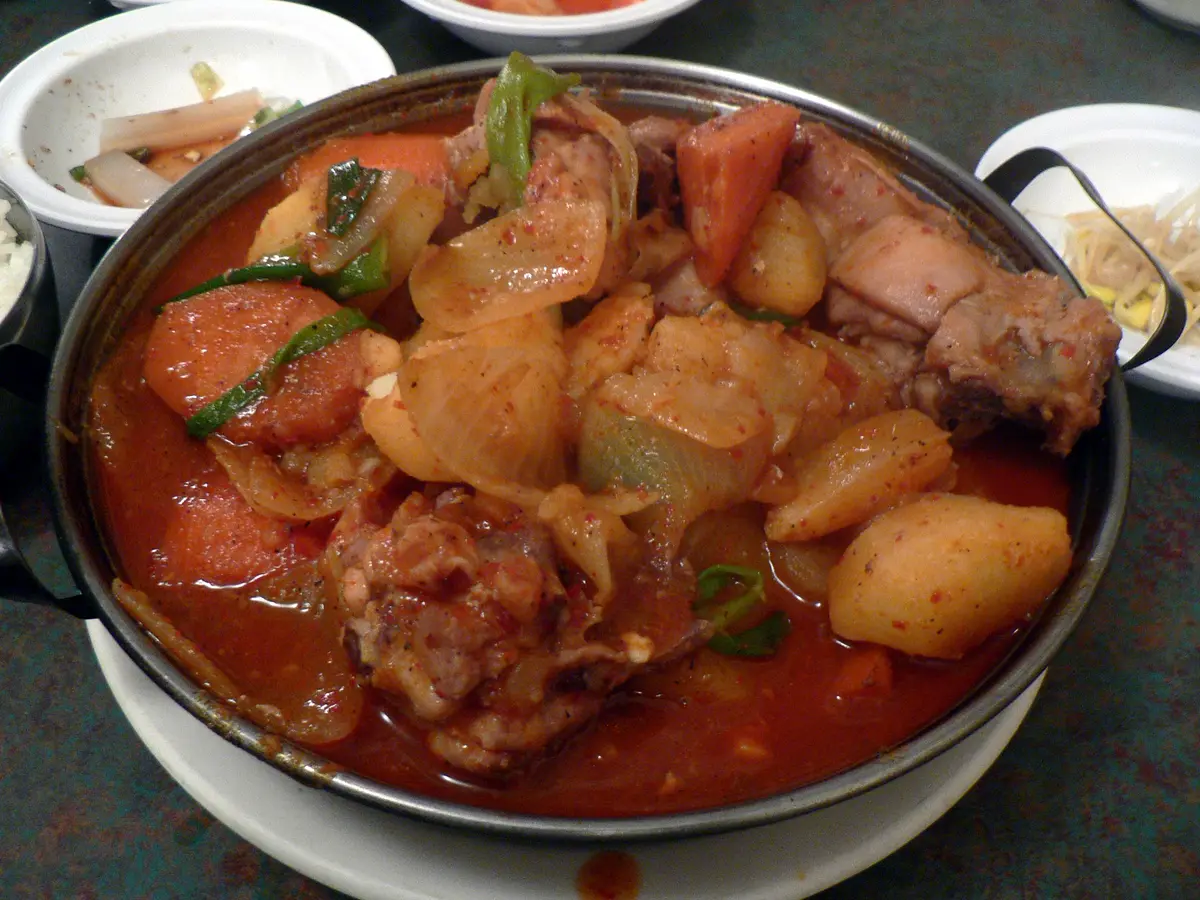
Dakdoritang (Spicy Korean Braised Chicken)
Make dakdoritang (dakbokkeumtang), Korean spicy braised chicken with potatoes in gochujang sauce. One pot, about 75 minutes, plus fixes for greasy sauce.
75 min
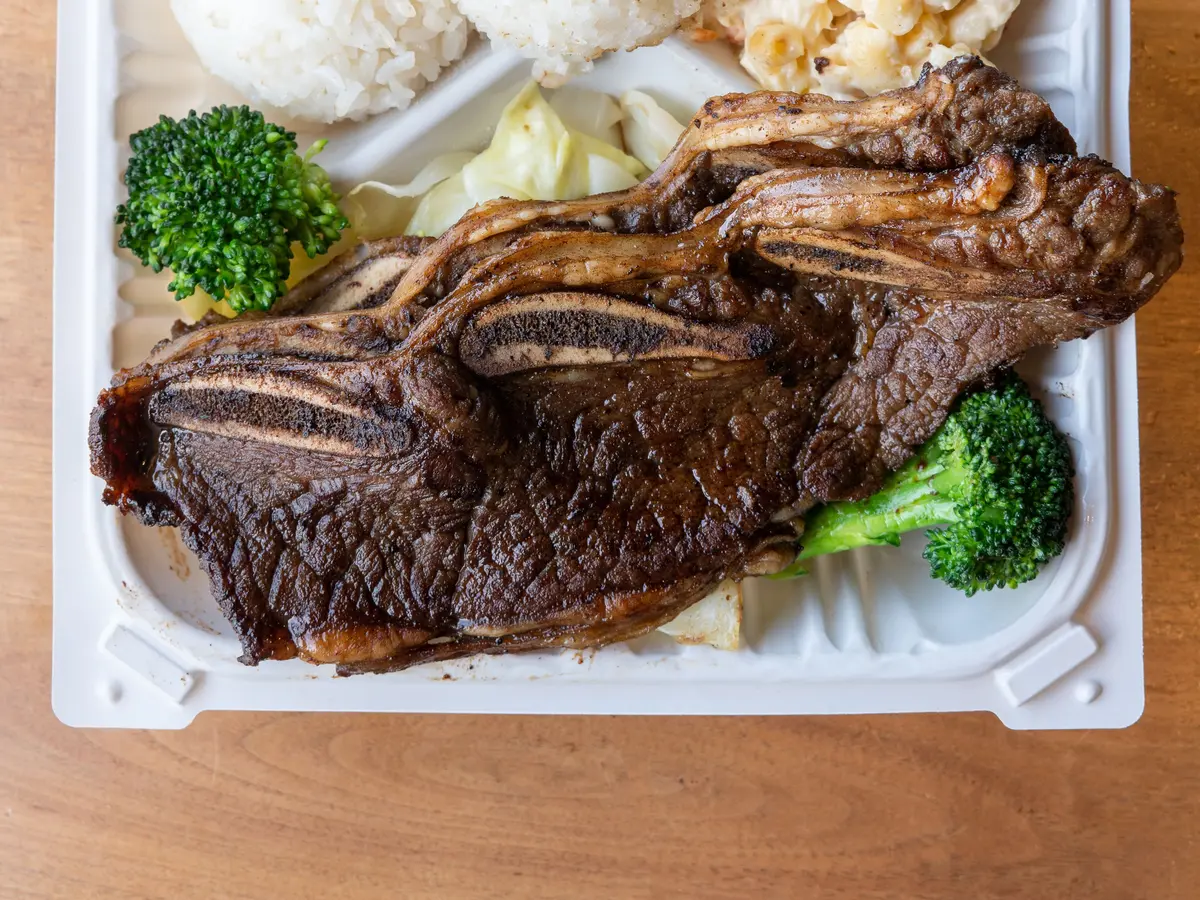
LA Galbi (Korean BBQ Short Ribs)
Korean short ribs recipe (LA galbi): flanken-cut beef in a sweet soy, garlic and pear marinade, cooked on a grill, pan or broiler. Buying and doneness tips.
290 min
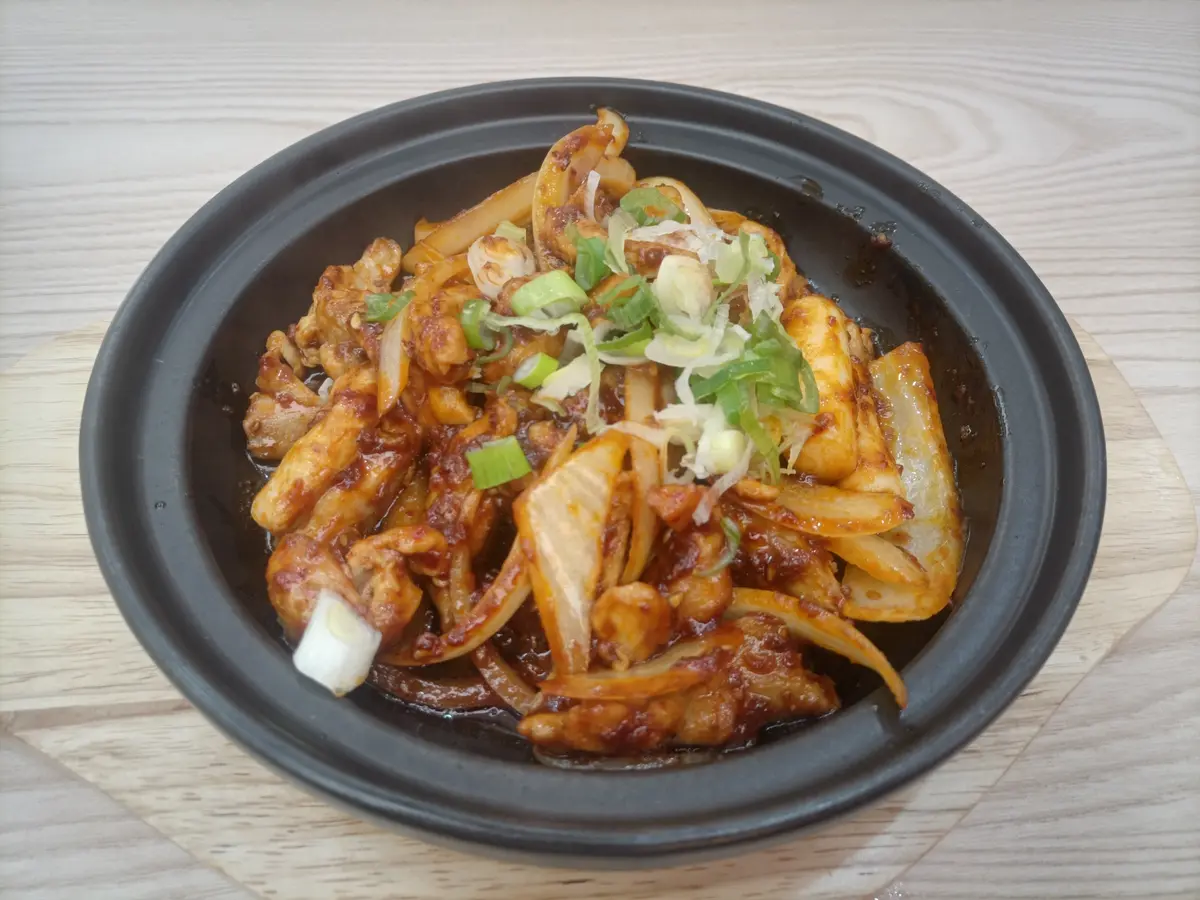
Dakgalbi (Spicy Korean Stir-Fried Chicken)
Make dakgalbi, spicy Korean stir-fried chicken thighs with gochujang, cabbage and sweet potato, all in one pan. Easy steps, heat control and fried rice finish.
40 min