LA Galbi (Korean BBQ Short Ribs)
Prep 260 min · Cook 30 min · Serves 4 ·
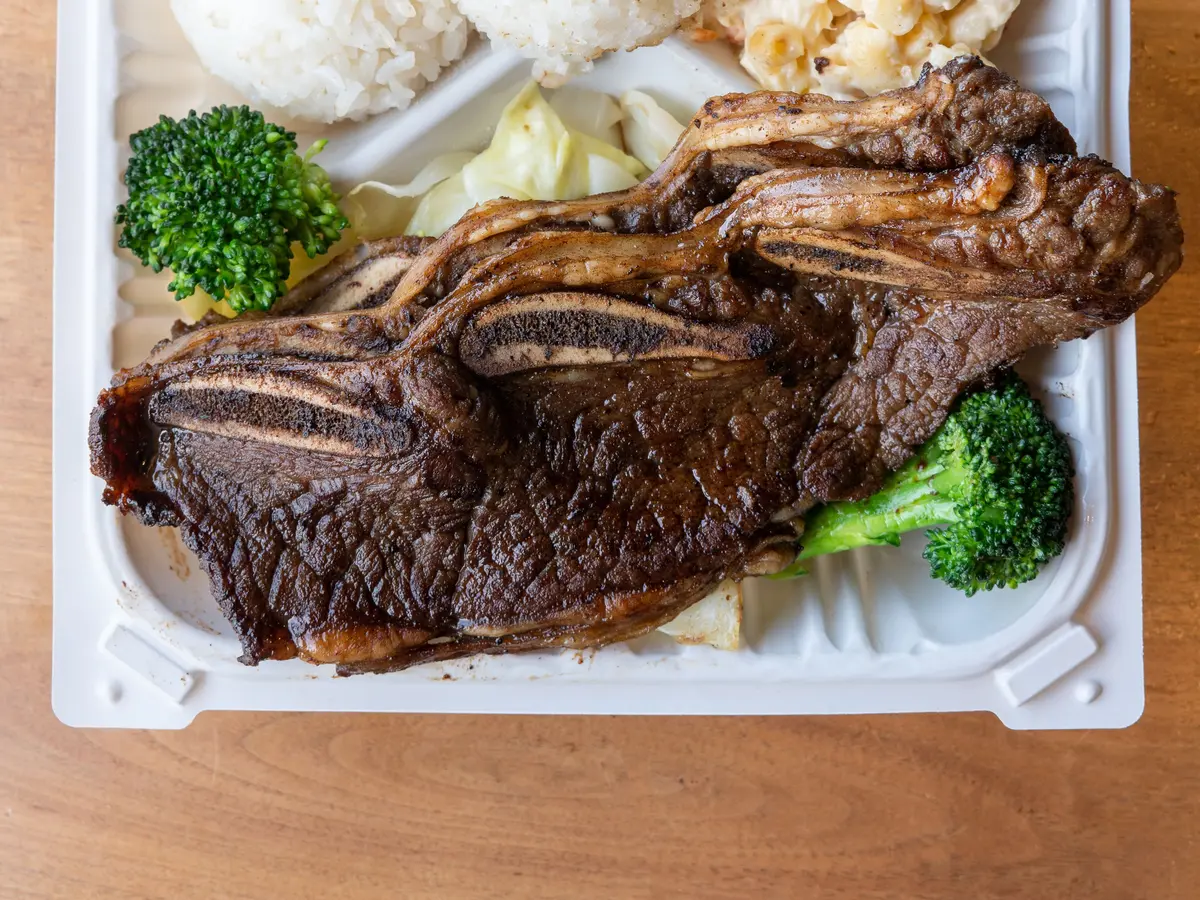
LA galbi (pronounced el-ay gahl-bee, also spelled LA kalbi) is Korean barbecue short ribs: beef short ribs cut into thin strips across the bones, soaked in a sweet soy, garlic and pear marinade, then cooked hot until the edges caramelize. Galbi means "rib" in Korean. The name is usually explained as a nod to Los Angeles and its Korean-American community, where this cross-cut, known to butchers as the flanken cut, is said to have become popular, though stories about its exact origin vary. Because the strips are thin, they cook in minutes, so this is one of the easiest ways to bring a Korean barbecue night home. Plan on about 20 minutes of hands-on prep, at least 4 hours of marinating (overnight is even better) and about 30 minutes of cooking in batches.
Recipe
LA Galbi (Korean BBQ Short Ribs)
Prep 260 min · Cook 30 min · Serves 4
Ingredients
- 3 lb (1.4 kg) flanken-cut beef short ribs, 1/4 to 1/2 inch (6 to 12 mm) thick
- 1/2 cup (120 ml) soy sauce
- 1/4 cup (50 g) sugar
- 3 tbsp (45 ml) mirin or rice wine
- 2 tbsp (30 ml) toasted sesame oil
- 3/4 cup (about 180 g) grated Asian pear
- 1 small yellow onion (about 100 g), grated
- 3 tbsp (about 30 g) minced garlic (about 8 cloves)
- 2 tsp (10 g) grated fresh ginger
- 1/2 tsp (1 g) ground black pepper
- 1 tbsp (15 ml) neutral oil, for the grill grates or pan
- 2 scallions, thinly sliced, for garnish (optional)
- 1 tbsp (about 9 g) toasted sesame seeds, for garnish (optional)
- Lettuce, steamed short-grain rice and ssamjang (dipping paste), for serving
Instructions
- 1Peel and core the pear (you need about half of a large Asian pear). Grate the pear and the onion on the fine holes of a box grater into a large bowl, so the juice goes in too. Add the soy sauce, sugar, mirin, sesame oil, garlic, ginger and black pepper, and stir until the sugar dissolves.
- 2Pat the ribs dry with paper towels, which also wipes off any bone dust or small bone chips left by the saw. Trim off any large, hard pieces of fat, but leave the thin streaks of fat in the meat.
- 3Put the ribs in a large (gallon-size) zip-top bag or a wide, shallow dish. Pour in the marinade and turn the ribs until every strip is coated. If you use a bag, press out the air, seal it and set it on a plate to catch any leaks.
- 4Refrigerate on the bottom shelf, away from ready-to-eat foods, for at least 4 hours and up to 12 hours, turning the bag or dish once or twice. Overnight (8 to 12 hours) is ideal. Do not go past 12 hours, because the fruit in the marinade can turn the beef soft and mushy.
- 5When the marinating time is almost up, get your cooking surface hot while the ribs are still in the fridge. On a grill: heat a gas grill to medium-high (about 450°F / 230°C) for about 10 minutes, or let charcoal burn until the coals are covered with gray ash. Scrape the grates clean and wipe them with a folded paper towel dipped in the oil, held with tongs. Leave one area without flame or coals underneath as a cooler zone for flare-ups. On the stove: heat a heavy cast-iron skillet or grill pan over medium-high heat for about 3 minutes, and open a window or turn on the vent hood. Under the broiler: set an oven rack so the ribs will sit about 6 inches (15 cm) from the heat, put a wire rack on a foil-lined rimmed baking sheet, and heat the broiler on high for 5 minutes.
- 6When the surface is hot, lift the ribs out of the marinade, let the extra drip off and lay them on a clean tray. Throw the leftover marinade away: it has touched raw meat, so do not reuse it, baste with it or serve it as a sauce. Wash your hands.
- 7Cook in batches, with the ribs in a single layer and a little space between them, because a crowded pan steams the meat and turns it gray. Use one pair of tongs to put the raw ribs on the heat and a second, clean pair to turn and remove them. On the stove, lightly brush the pan with some of the oil before each batch; under the broiler, lay the ribs on the wire rack. Cook for 2 to 3 minutes per side on the grill, 3 to 4 minutes per side in a skillet or grill pan, or 4 to 5 minutes per side under the broiler, until the ribs are deeply browned with dark, caramelized edges. Strips closer to 1/2 inch (12 mm) thick need about 1 minute more per side. If flames flare up on the grill, move the ribs to the cooler zone until they settle.
- 8Check the thickest strip in each batch. USDA recommends cooking whole cuts of beef to 145°F (63°C), then resting them for 3 minutes. Slide the tip of an instant-read thermometer into the side of the thickest part of the meat, away from the bone. If it reads lower, cook for another minute per side and check again.
- 9With the clean tongs, move the cooked ribs to a clean plate, not the tray that held the raw ribs, and let them rest for 3 minutes. Cook the remaining batches the same way. If sticky black bits build up and start to smoke, scrape the grates with a grill scraper, or carefully wipe the pan with a damp paper towel held in tongs, between batches.
- 10Cut the meat off the bones with kitchen scissors or a knife, or serve the strips whole and let everyone cut their own. Sprinkle with the scallions and sesame seeds, if using, and serve hot with rice, lettuce leaves and ssamjang.
What to buy: Ask for flanken-cut beef short ribs: thin strips sliced across the bones, each with a row of small bone sections. About 1/3 inch (8 mm) thick is ideal, but 1/4 to 1/2 inch (6 to 12 mm) works. Flanken is the butcher's name for this cut and is not the same thing as flank steak. Korean and other Asian grocery stores often sell it as LA galbi or LA kalbi, and some butcher counters and warehouse stores carry it too. Plan on about 3/4 lb (340 g) of bone-in ribs per person, since the bones make up a good share of the weight. Thick, chunky short ribs cut between the bones (English-cut) are for slow braising and will not work here. If the strips are thicker than 1/2 inch (12 mm), ask the butcher to re-cut them, because they can burn outside before the center is cooked. Boneless short rib sliced about 1/3 inch (8 mm) thick also works.
How it differs from other galbi: Traditional galbi is usually cut along the bone, so each piece is a thicker chunk of meat on a single bone, often scored or opened up so it cooks evenly. Galbi jjim is a different dish: bone-in short ribs simmered slowly in a soy-based sauce with radish and carrots until the meat is tender enough to fall off the bone. LA galbi is the quick, grill-friendly version, with thin strips, a sweet marinade and quick, hot cooking.
The marinade and the fruit: Grated Asian pear (also sold as Korean pear or nashi) adds sweetness and juice, and Korean cooks often use it to help soften beef. More is not better. Too much fruit, or marinating for longer than 12 hours, can leave the ribs soft and mushy instead of tender, while marinating for less than 4 hours gives a milder flavor. Kiwi, fresh pineapple and papaya are also used by some cooks as tenderizers, but they can soften beef much faster than pear. If you try one in place of the pear, use only a small amount and marinate for no more than an hour or two.
Swaps: A ripe Bosc pear or a sweet apple, such as Fuji or Gala, can replace the Asian pear. Light brown sugar can replace the white sugar and gives a deeper flavor. For a less sweet marinade, use 3 tbsp (38 g) of sugar. No mirin? Use dry sherry, or skip it and add 1 tbsp more sugar. Use regular all-purpose soy sauce rather than dark soy sauce.
Burnt sugar, gray meat and smoke: The sugar in the marinade scorches fast, and a bitter, burnt taste is a common LA galbi problem. Let the extra marinade drip off before the ribs hit the heat, cook over medium-high rather than the highest setting on the grill or stove, and move the ribs to a cooler spot, or lower the heat, if the outside blackens before the inside is done. Deep brown, slightly charred edges are what you want; black patches with a sharp smell are burnt sugar. If the ribs sit in a puddle of liquid and turn gray instead of sizzling, the pan was too full or not hot enough, so cook fewer ribs at a time. Chewy ribs usually mean the strips were cut too thick or cooked too long. Indoors, the marinade makes a lot of smoke, and under the broiler the sugar can go from browned to burnt in under a minute, so stay close.
Doneness and food safety: The 145°F (63°C) target comes from USDA guidance for whole cuts of beef. Strips this thin are easy to misjudge by eye, and color alone is not a reliable sign, so use a thin-tipped instant-read thermometer and treat the cooking times as a guide. Raw beef and its marinade can spread bacteria. Rinsing raw meat can splash those bacteria around the sink, so this recipe pats the ribs dry instead of soaking or rinsing them to draw out blood, as some recipes do. Always marinate in the fridge, never on the counter. Use separate tongs and plates for raw and cooked ribs, and wash your hands, the tray, the tongs and any surface that touched the raw meat with hot, soapy water. Never serve or reuse marinade that touched raw beef.
Spice and variations: Classic LA galbi is sweet and savory, not spicy, so it suits children and spice-shy guests. For some heat, stir 1 to 2 tsp of gochugaru (Korean chili flakes) into the marinade, or serve the ribs with sliced fresh chilies. If you cannot find flanken-cut ribs, the thin-sliced beef in our Beef Bulgogi uses a very similar marinade and cooks in minutes.
Dietary notes: Soy sauce usually contains wheat, and some mirin and rice wines contain it too. If you avoid gluten, check the labels of the soy sauce and mirin for wheat and barley, and look for products labeled gluten-free. The recipe contains soy and sesame. Mirin and rice wine contain alcohol; if you avoid it, leave the mirin out and add 1 tbsp more sugar.
Storage and make-ahead: Refrigerate leftover cooked ribs within 2 hours of cooking (within 1 hour if the room is above 90°F / 32°C) and keep them in an airtight container for up to 3 days. Reheat them in a hot skillet with a splash of water until steaming hot all the way through (165°F / 74°C). To get ahead, freeze raw, unmarinated ribs flat in a freezer bag for up to 3 months, thaw them overnight in the fridge (not on the counter) and marinate as usual.
How to serve it: Eat it Korean barbecue style. Cut the meat off the bones with scissors, then wrap a bite in a lettuce leaf with a little rice and a dab of ssamjang, a thick Korean dipping paste made from fermented soybean paste (doenjang) and red chili paste (gochujang). Perilla leaves (kkaennip, sometimes labeled sesame leaves) make a good second wrapper. Cool, fresh side dishes balance the rich, sweet beef, such as Korean Cucumber Salad, Kongnamul Muchim or Korean Spinach Side Dish, plus a bowl of kimchi. Japchae makes it a feast. A common way to finish a Korean barbecue meal is a bowl of Doenjang Jjigae and rice. Leftover meat, cut off the bones, is good stirred into Kimchi Fried Rice the next day.
Related Recipes
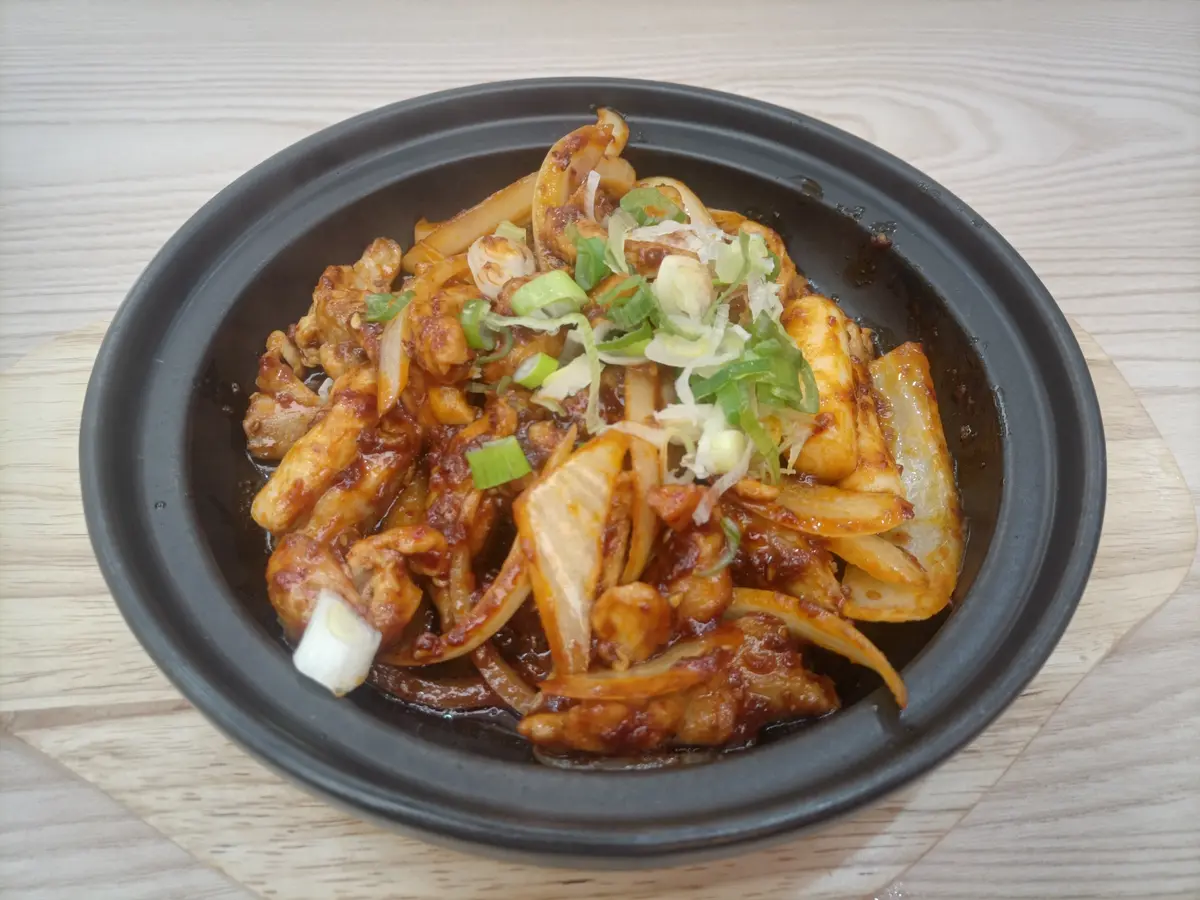
Dakgalbi (Spicy Korean Stir-Fried Chicken)
Make dakgalbi, spicy Korean stir-fried chicken thighs with gochujang, cabbage and sweet potato, all in one pan. Easy steps, heat control and fried rice finish.
40 min
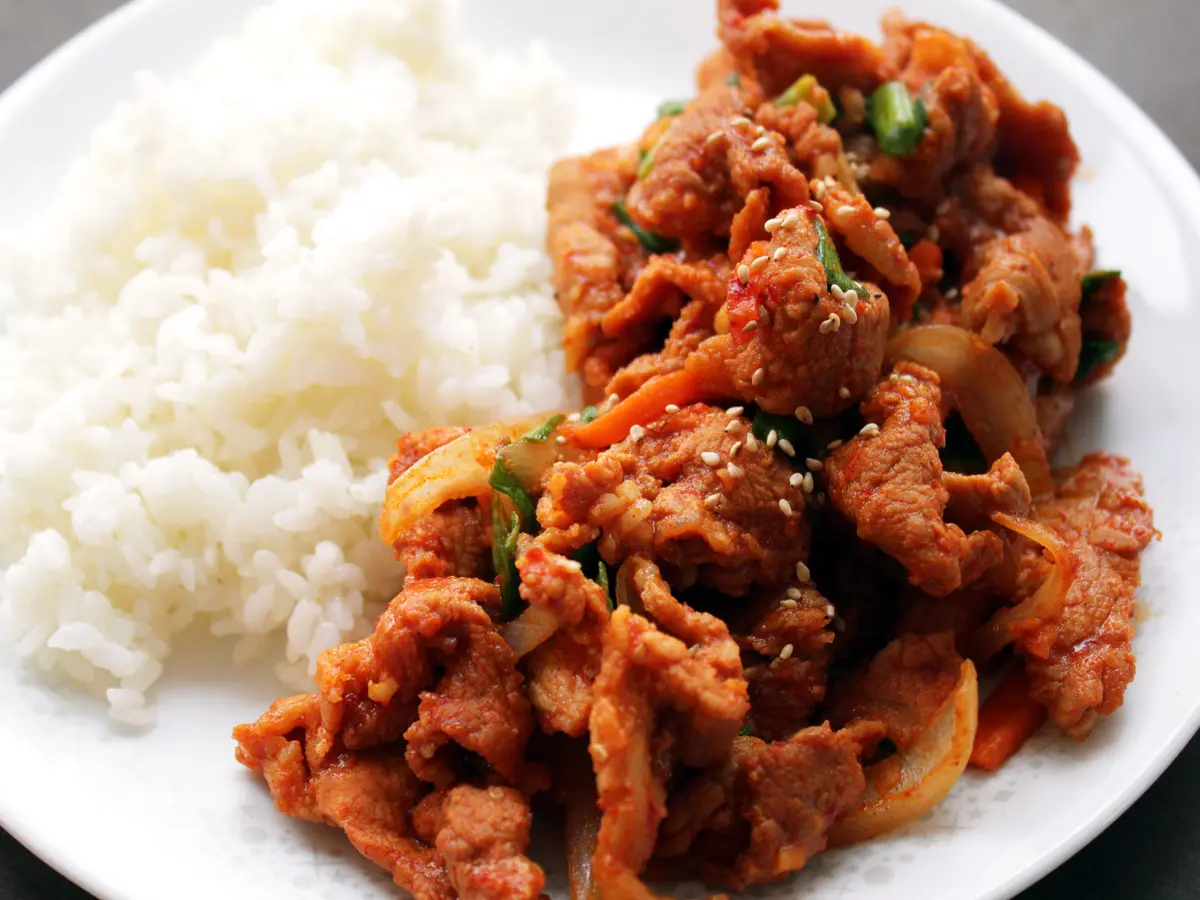
Jeyuk Bokkeum (Spicy Korean Pork Stir-Fry)
Spicy Korean pork stir-fry (jeyuk bokkeum): pork shoulder seared for char, then glazed in gochujang sauce. With tips on cuts, slicing and a milder version.
35 min
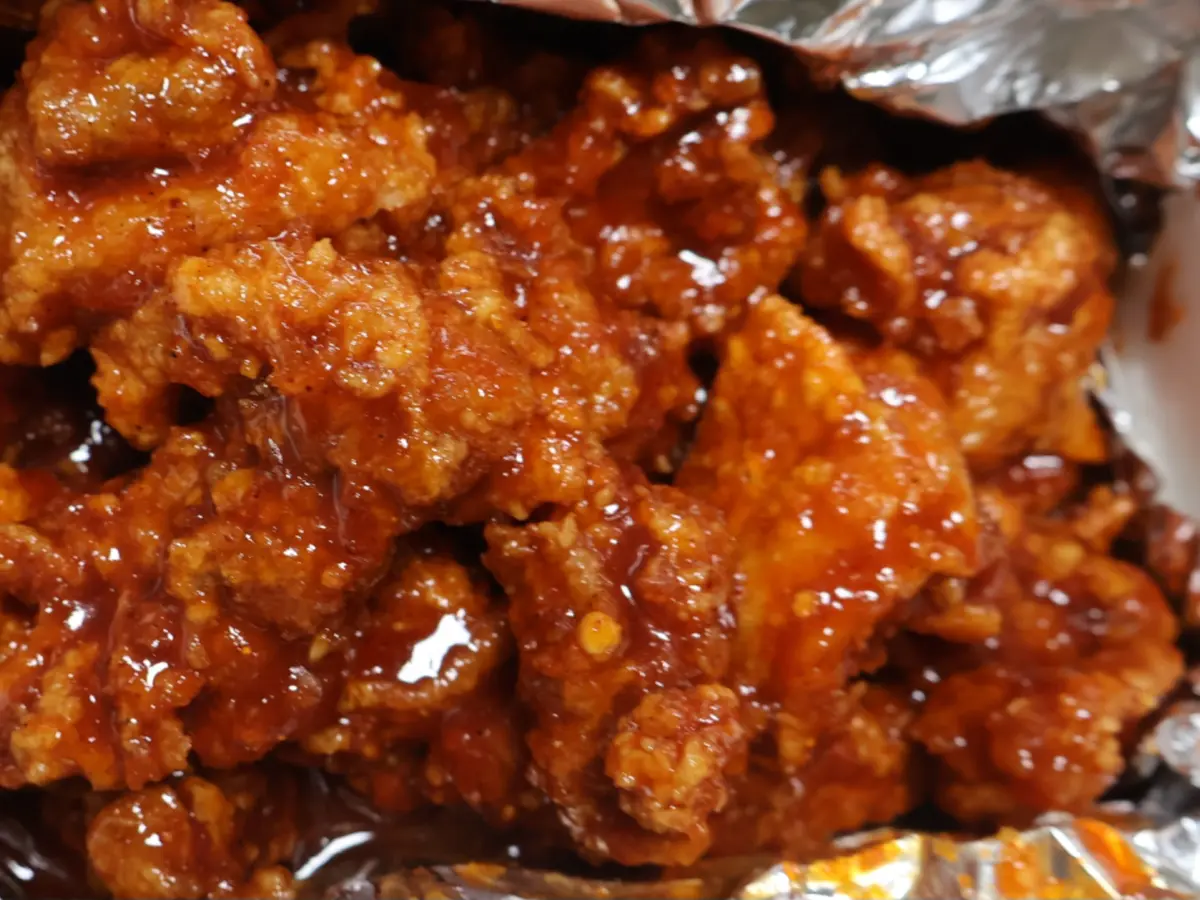
Crispy Korean Fried Chicken (Yangnyeom Chicken)
A Korean fried chicken recipe for home cooks: double-fried wings or thighs in a sweet, spicy gochujang glaze, with safe frying tips and a less-spicy option.
85 min