Doenjang Jjigae (Korean Soybean Paste Stew)
Prep 15 min · Cook 40 min · Serves 3 ·
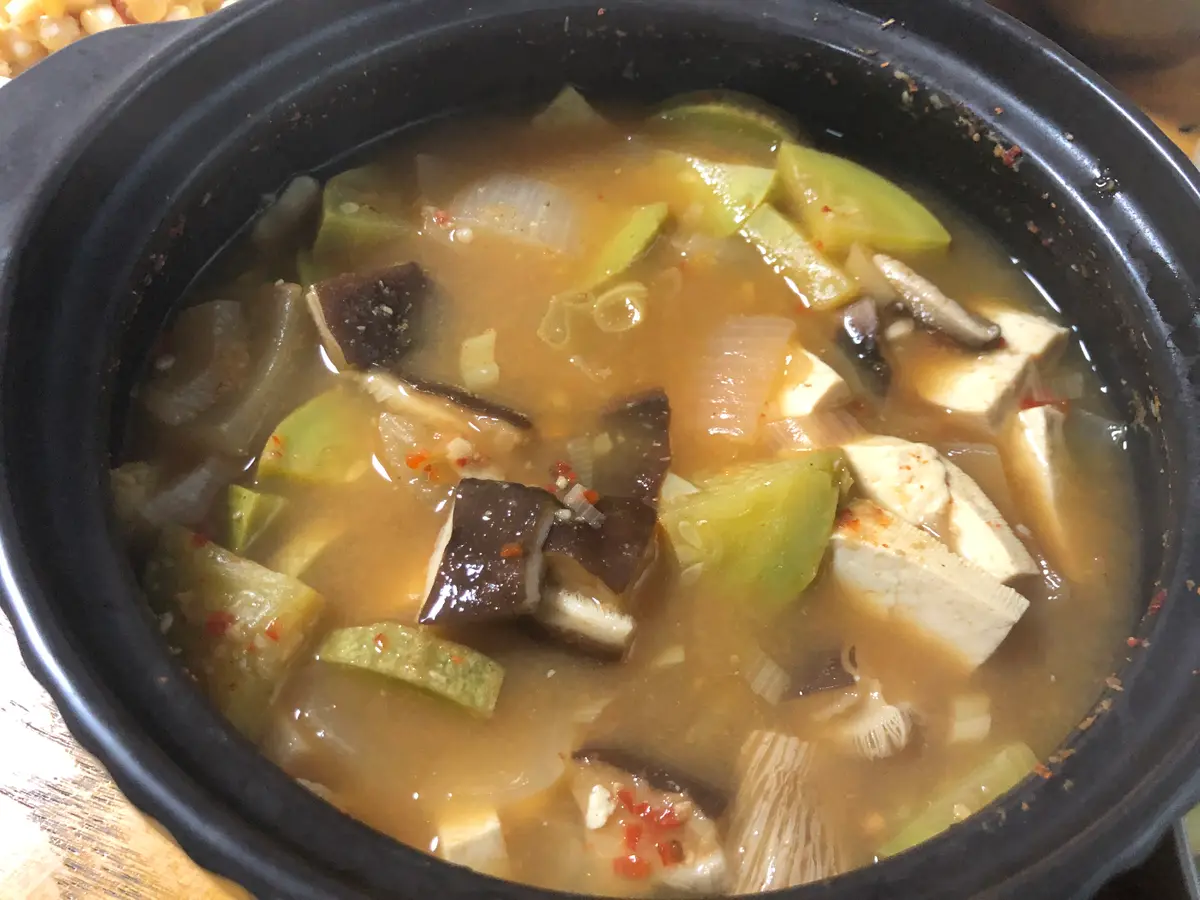
Doenjang jjigae (pronounced dwen-jahng jee-geh) is the everyday stew of many Korean homes: a pot of tofu, potato, zucchini and onion simmered in a broth seasoned with doenjang, Korea's fermented soybean paste. Doenjang tastes deep, salty and earthy, more rustic and pungent than Japanese miso, and a couple of spoonfuls turn a light stock into something rich and savory. Jjigae, Korean for stew, is less brothy and more boldly seasoned than a soup, and it is meant to be eaten with rice. Unlike Kimchi Jjigae or Sundubu Jjigae, the classic version is not red or fiery; any noticeable heat comes from an optional fresh chili. This doenjang jjigae recipe starts with a quick anchovy-kelp stock and takes a little under an hour, mostly simmering. The notes cover which doenjang to buy, whether miso can stand in, and versions with beef, pork, clams or no meat.
Recipe
Doenjang Jjigae (Korean Soybean Paste Stew)
Prep 15 min · Cook 40 min · Serves 3
Ingredients
- 10 large dried anchovies, the kind sold for stock (about 10 to 15 g)
- 1 piece dried kelp (dashima or kombu), about 4 inches (10 cm) square
- 3 cups (720 ml) water, or rice-rinsing water (see the notes)
- 2 to 3 tbsp (35 to 50 g) Korean doenjang (fermented soybean paste), depending on the brand
- 1 tsp (about 7 g) gochujang (Korean chili paste), optional
- 1 small Yukon Gold or other all-purpose potato (about 4 oz / 115 g), peeled and cubed (optional, but it gives the broth more body)
- 1/2 medium yellow onion (about 80 g), cut into small pieces
- 1/2 medium zucchini (about 3.5 oz / 100 g), or the same weight of Korean zucchini (aehobak)
- 3 to 4 fresh shiitake or button mushrooms (about 2 oz / 60 g), sliced
- 1/2 block medium-firm or firm tofu (about 7 oz / 200 g), cubed
- 2 garlic cloves, minced
- 1 fresh hot chili, green or red, such as Korean cheongyang, jalapeño or serrano, thinly sliced or finely chopped (optional)
- 1 scallion (green onion, about 15 g), sliced on the diagonal
- Fine salt, to taste (only if needed)
Instructions
- 1Pull the heads off the anchovies, then split each body open with your fingers and pick out the dark innards, which can make the stock bitter. Put the cleaned anchovies in a medium saucepan or pot (about 2 to 3 quarts / 2 to 3 liters) and toast them over medium heat, stirring, for about 1 minute, until they smell toasty. This takes away some of the fishy edge.
- 2Add the water and the kelp (don't rinse the kelp; the white powder on it is natural and adds flavor). Bring the water to a boil over medium-high heat, then turn the heat down to medium and simmer, uncovered, for 10 minutes. Lift out the kelp after the first 5 minutes, because kelp that boils longer can make the stock slimy.
- 3While the stock simmers, prepare everything else. Peel the potato (if using) and cut it into 1/2-inch (1 cm) cubes, and cut the onion into pieces about the same size. Quarter the zucchini lengthwise, then cut it crosswise into 1/2-inch (1 cm) slices. Cut the stems off the shiitake (button mushrooms can keep theirs) and slice the mushrooms. Cut the tofu into 3/4-inch (2 cm) cubes. Mince the garlic, slice the chili (if using) into thin rounds or chop it finely, and slice the scallion on the diagonal.
- 4Scoop out and discard the anchovies with a slotted spoon or small strainer. You should have about 2 1/2 cups (600 ml) of stock; if you have much less, top it up with water.
- 5Put 2 tbsp of the doenjang and the gochujang (if using) in a small mesh strainer and lower it into the stock. Press and stir the paste with the back of a spoon until it dissolves, then tip any soybean bits left in the strainer into the pot. No strainer? Stir the paste into a ladle of hot stock in a small bowl until smooth, then pour it back into the pot.
- 6Add the potato (if using) and onion. Return the stew to a boil over medium-high heat, then reduce the heat to medium and simmer for 5 minutes.
- 7Add the zucchini, mushrooms and garlic, and simmer for 5 minutes more, until a potato cube (if using) is almost tender when pierced with a knife.
- 8Add the tofu and the chili (if using). Gently push the tofu down into the broth with a spoon instead of stirring, so the cubes stay whole, and simmer for 3 to 4 minutes, until the tofu is heated through and the potato (if using) is completely tender.
- 9Taste the broth. It should taste deeply savory and a little saltier than a soup, because it is eaten with plain rice. If it tastes flat, mix more doenjang into a spoonful of the broth and stir it in, 1 tsp at a time, up to 1 tbsp more. If it is still flat after that, add a pinch of salt. If it is too salty, add a splash of water.
- 10Scatter the scallion over the stew, let it bubble for 30 seconds and turn off the heat. Serve hot with bowls of steamed rice, either straight from the pot in the middle of the table, as many Korean families do, or ladled into individual bowls. If the pot goes to the table, set it on a trivet or folded towel; it stays very hot for a while.
Which doenjang to buy: Doenjang, whose name literally means thick sauce, comes in plastic tubs at Korean and other Asian grocery stores and online, usually shelved near the gochujang. Look for doenjang or Korean soybean paste on the label. Everyday brands are fairly smooth and mild; pastes labeled traditional-style are often chunkier, saltier and more pungent, so start with the smaller amount. Don't confuse it with ssamjang, a sweeter dipping paste made from doenjang and gochujang, or with cheonggukjang, a quick-fermented soybean paste with a much stronger smell. Tubs made for stews often have anchovy, clam or beef flavorings added; with those, plain water can replace the stock. Once opened, it keeps in the fridge for months.
Can you use miso instead? Miso is easier to find, but it is only a rough stand-in. Traditional doenjang is the mashed solids left after meju, blocks of fermented soybeans, have soaked in salty brine; the liquid becomes Korean soup soy sauce. Miso is made with koji (rice, barley or soybeans cultured with a mold), and most kinds taste smoother, milder and sweeter than earthy, funky doenjang. With miso, the stew ends up closer to miso soup than to doenjang jjigae. If that is all you have, pick red or mixed (awase) miso over sweet white miso, start with the same amount, and stir it in once the vegetables are tender, because miso loses its aroma if it boils for long.
If it doesn't taste right: Doenjang brands vary a lot in saltiness, so the recipe starts with 2 tbsp and adds more only after tasting. A flat-tasting stew usually needs a little more paste, or it was made with plain water and no meat (see the stock choices below). Too salty? Add a splash of water and a few more cubes of tofu. A bitter edge usually comes from anchovies that weren't gutted or that simmered much longer than 15 minutes. Mushy zucchini or broken tofu means they went in too early or got stirred too hard.
Stock and broth choices: Buy the large dried anchovies sold for stock, not the tiny ones used for side dishes. Ready-made anchovy stock bags from Korean grocery stores also work: simmer one in the water for 10 to 15 minutes instead of the anchovies and kelp. Many Korean cooks use rice-rinsing water (ssal-tteumul) in place of plain water: rinse short-grain rice, pour off the first rinse and save the cloudy water from the second. Its starch gives the broth a softer, rounder body. In a pinch, bring 2 1/2 cups (600 ml) low-sodium chicken or vegetable broth to a boil and continue from the doenjang step; full-salt broth can make the stew too salty.
Spice level: Classic doenjang jjigae is savory, not spicy. Without the fresh chili it has almost no heat (the teaspoon of gochujang adds more color than fire), so it suits anyone who avoids spicy food. A jalapeño adds a mild kick, while a Korean cheongyang chili or a serrano makes it noticeably hot. For a reddish, spicier broth, stir in 1/2 to 1 tsp gochugaru (Korean chili flakes) along with the doenjang.
Beef, pork or clams: For beef or pork, skip the anchovies and kelp, since the meat flavors the broth. Heat 1 tsp neutral oil in the pot over medium heat and cook 4 oz (115 g) thinly sliced beef brisket or sirloin, or pork belly or shoulder, for 2 to 3 minutes, until no longer pink. Add 2 1/2 cups (600 ml) water or rice-rinsing water and continue from the doenjang step. For clams, use about 8 oz (225 g) small ones, such as Manila clams. Discard any with broken shells or that don't close when tapped, and scrub the rest; soak sandy ones in cold salted water for 30 minutes. Add them with the tofu and cook until they open, 3 to 5 minutes; throw away any that stay shut. Because clams add salt, taste before stirring in extra doenjang.
Vegetarian and vegan version: Leave out the anchovies. Soak 3 dried shiitake mushrooms and the kelp in the water for at least 30 minutes, then simmer for 10 minutes, lifting out the kelp after 5. Slice the softened shiitake, minus their tough stems, and add them with the zucchini instead of fresh mushrooms. Check the doenjang label too: stew-style pastes often contain seafood or beef, and even some everyday brands add anchovy or pollock extract, so choose one with no fish, shellfish or meat in the ingredients. For a gluten-free stew, choose a doenjang (and gochujang, if using) with no wheat or barley on the ingredient list.
Storage and reheating: Refrigerate leftovers in a covered container and eat them within 3 days. Reheat in a small pot until boiling, adding a splash of water if the broth has thickened. The zucchini softens, but the flavor holds up well. Skip the freezer: thawed tofu turns spongy and the potatoes go grainy.
What to serve with it: Plain steamed short-grain rice balances the salty, savory broth, so don't skip it. Add Easy Kimchi or Korean Cucumber Salad on the side, or serve the stew with Beef Bulgogi for a bigger meal. At Korean barbecue restaurants, doenjang jjigae and rice are a common way to finish a grilled-meat meal. For two more Korean stews, try Kimchi Jjigae, sour and spicy with fermented kimchi, and Sundubu Jjigae, silky soft tofu in a red chili broth.
Related Recipes
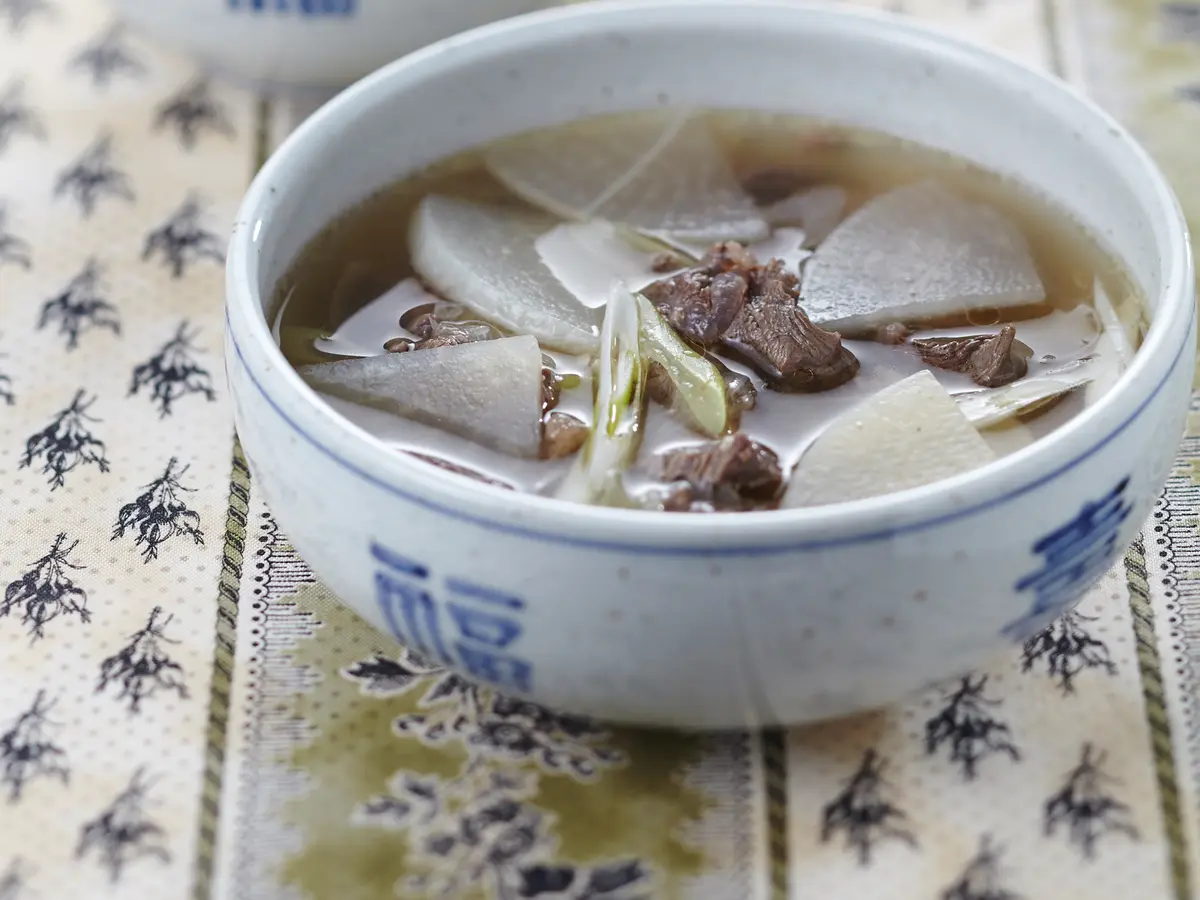
Soegogi Muguk (Korean Beef and Radish Soup)
Soegogi muguk recipe for beginners: a clear, mild Korean beef and radish soup. Learn which beef to buy, how to use daikon and how to keep the broth clear.
75 min
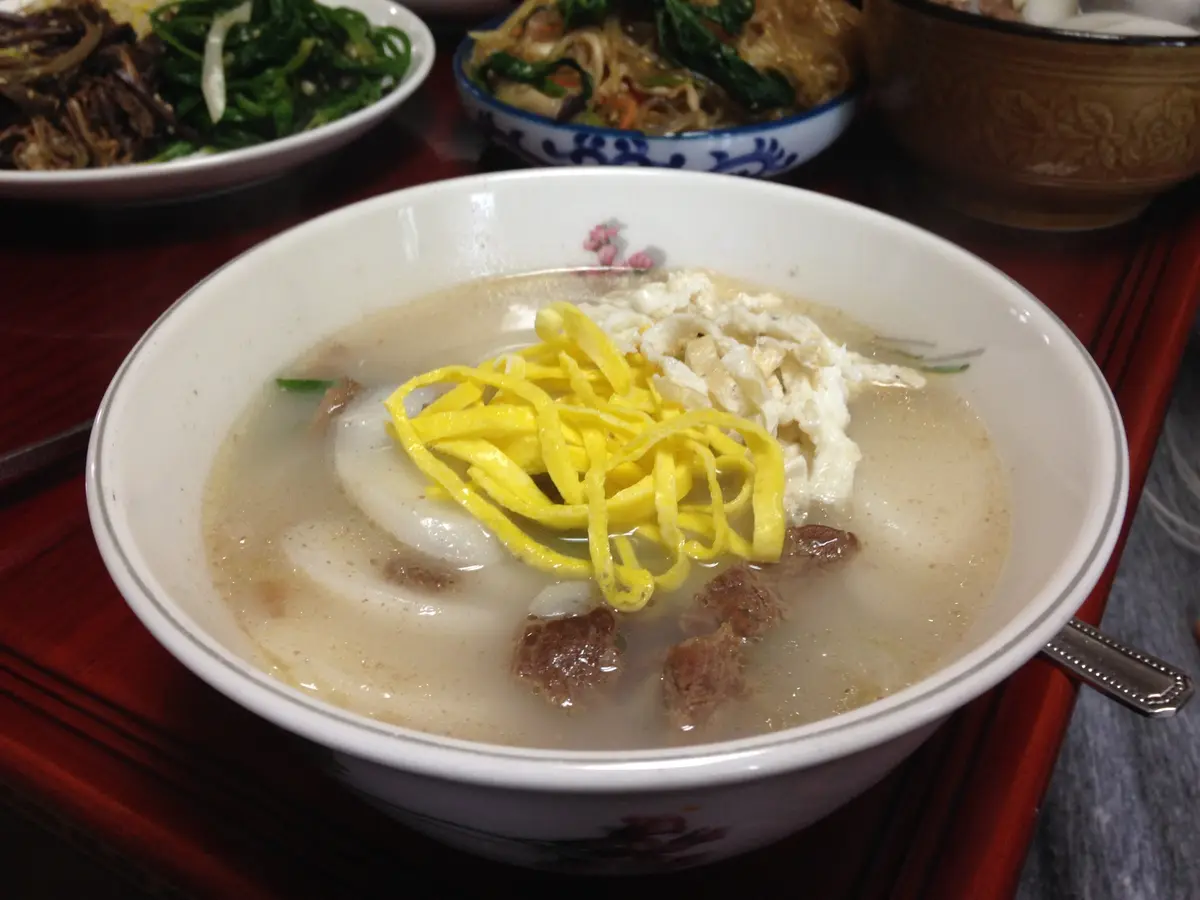
Tteokguk (Korean Rice Cake Soup)
Tteokguk recipe for beginners: Korean rice cake soup with beef broth, egg and seaweed. Learn the Lunar New Year tradition, soaking tips and easy swaps.
85 min
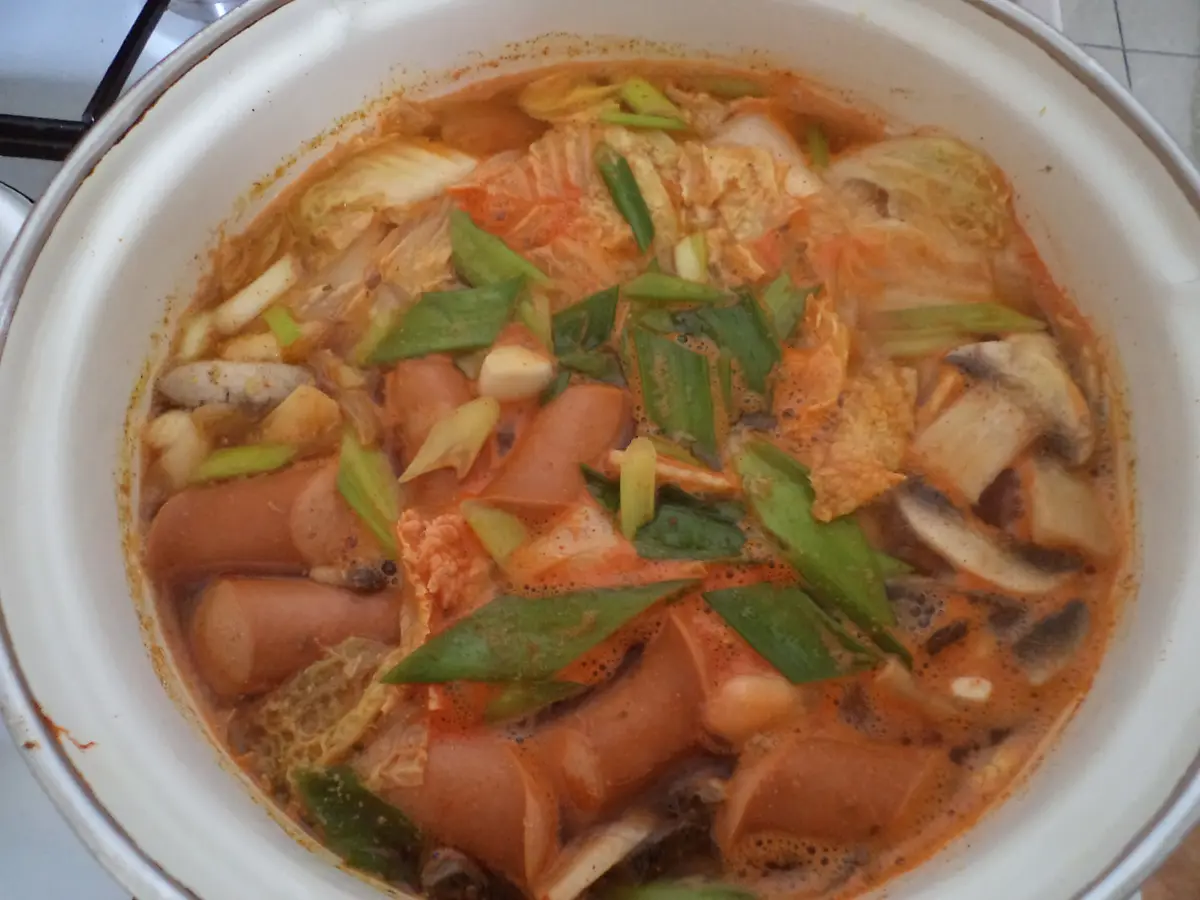
Budae Jjigae (Korean Army Stew with Spam, Ramen and Cheese)
Make budae jjigae, a spicy Korean army stew with kimchi, Spam, sausage, ramen noodles and melted cheese. Easy supermarket ingredients, heat control and fixes.
40 min