Easy Kimchi for Beginners
Prep 30 min · Cook 0 min · Serves 6 ·
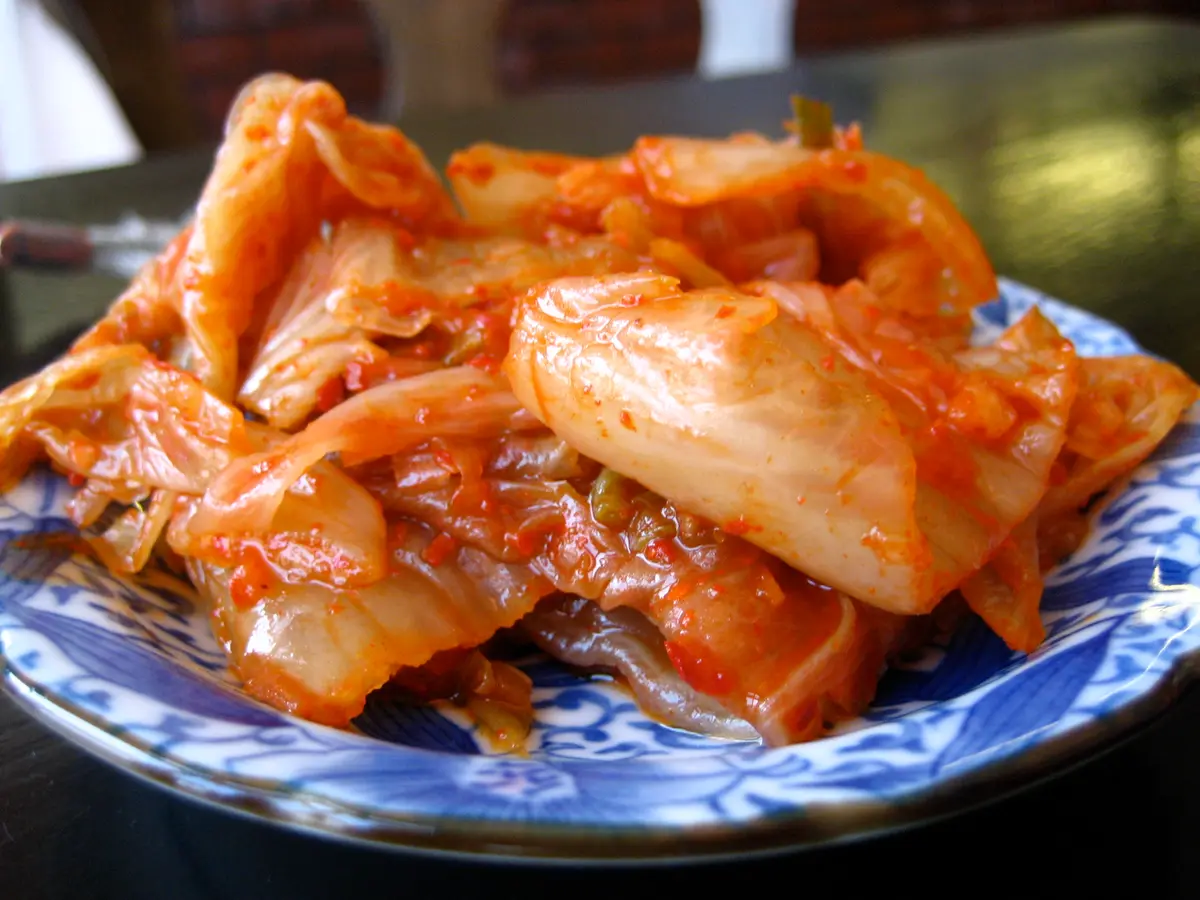
Kimchi can feel intimidating the first time, but the basic version is really just salted cabbage mixed with a seasoning paste — there's no fermentation crock or special tools required for a small batch you keep in the fridge. This recipe skips a few of the more traditional steps to keep things approachable for a first attempt.
Recipe
Easy Kimchi for Beginners
Prep 30 min · Cook 0 min · Serves 6
Ingredients
- 1 medium napa cabbage (about 1kg / 2.2 lbs)
- 1/4 cup coarse sea salt
- 1 tbsp sugar
- 3 tbsp gochugaru (Korean red pepper flakes)
- 2 tbsp fish sauce
- 1 tbsp minced garlic
- 1 tsp minced ginger
- 4 green onions, cut into 1-inch pieces
- 1 small carrot, julienned
Instructions
- 1Cut the cabbage into quarters lengthwise, then into 2-inch pieces. Place in a large bowl, sprinkle with salt, and toss well.
- 2Let the cabbage sit for 1–2 hours, tossing occasionally, until the leaves are noticeably softened and bendable. Rinse 2–3 times in cold water and drain well.
- 3In a separate bowl, mix gochugaru, sugar, fish sauce, garlic, and ginger into a thick paste.
- 4Add the drained cabbage, green onions, and carrot to the paste. Mix everything together by hand until every piece is coated.
- 5Pack the kimchi tightly into a clean jar, pressing down so the liquid rises above the vegetables.
- 6Leave the jar at room temperature for 1–2 days to begin fermenting, then move to the refrigerator. It's ready to eat right away, but improves after about a week.
If you can't find fish sauce, you can leave it out or substitute a splash of soy sauce. Gochugaru doesn't have a good substitute; regular chili powder is both too spicy and the wrong flavor. Fresh kimchi tastes mild and cabbage-forward. As it ferments, it turns tangier and slightly fizzy — that's the sign it's ready for cooking into dishes like kimchi jjigae.
Related Recipes

Dubu Jorim (Korean Braised Tofu)
Make dubu jorim, Korean braised tofu pan-fried until golden, then simmered in a garlicky soy and chili sauce. Easy, cheap, with fixes for crumbly tofu.
45 min

Gamja Jorim (Korean Braised Potatoes)
Make gamja jorim, Korean braised potatoes in a sticky sweet-salty soy glaze. Cheap, easy and lunchbox friendly, with fixes for mushy potatoes and thin sauce.
50 min

Korean Corn Cheese (Baked Sweet Corn with Mozzarella)
Make Korean corn cheese at home with canned corn, mayo and mozzarella, baked until bubbly. Includes fixes for watery corn and a no-oven option.
25 min