Gamja Jorim (Korean Braised Potatoes)
Prep 20 min · Cook 30 min · Serves 4 ·
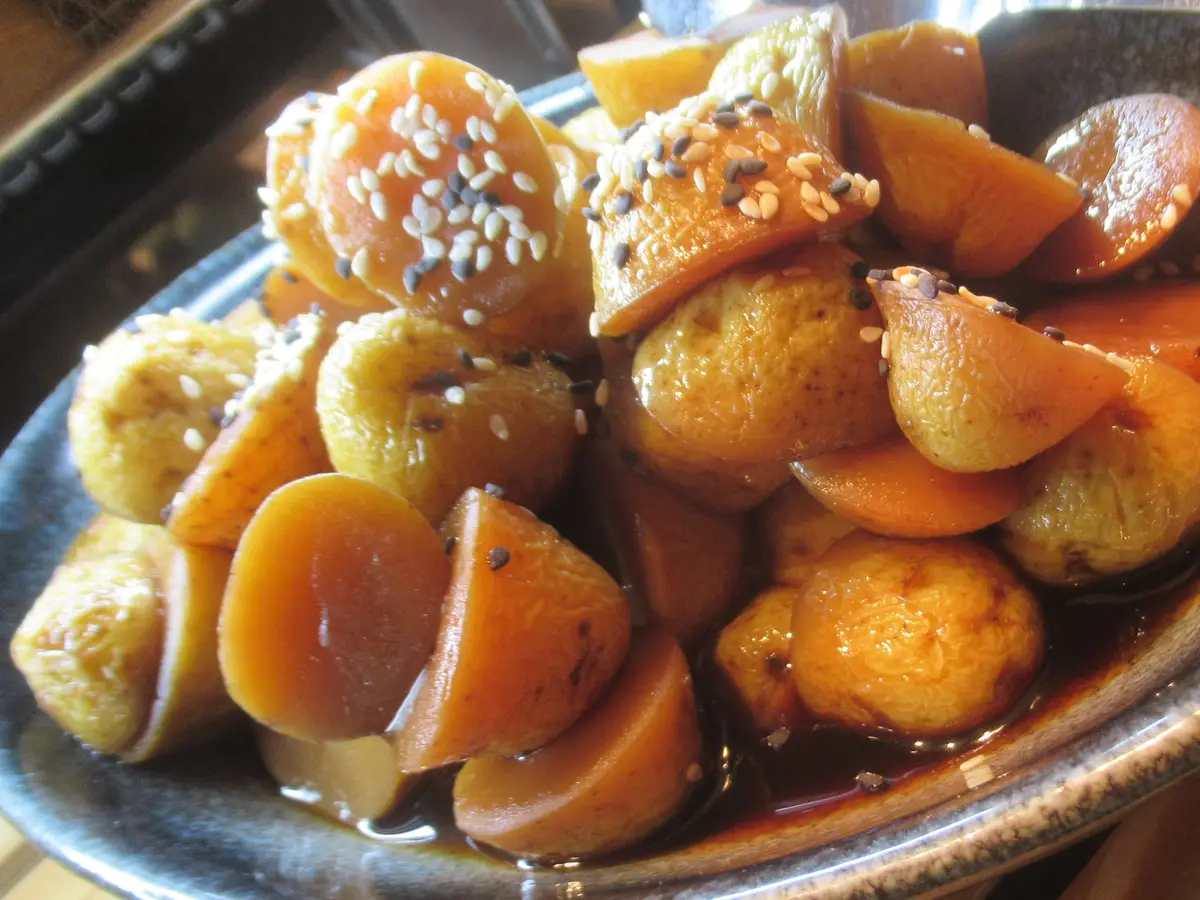
Gamja jorim (pronounced gam-jah jo-rim) is a Korean side dish of potatoes simmered in soy sauce and sugar until the liquid cooks down into a sticky, glossy glaze. Gamja means potato, and jorim means food simmered in a seasoned liquid until most of it reduces. The result is tender potato chunks with a sweet-salty coating, a little garlic and a nutty finish of sesame oil. It is one of the easiest banchan, the small side dishes served with rice, and it costs very little. It also tastes good warm, at room temperature or cold, which makes it a handy lunchbox side. The tricky part is timing. Potatoes that boil too hard fall apart, and a glaze that reduces too early leaves the centers hard. The notes below cover both problems.
Recipe
Gamja Jorim (Korean Braised Potatoes)
Prep 20 min · Cook 30 min · Serves 4
Ingredients
- 1 1/2 lb (680 g) yellow or waxy potatoes (3 to 4 medium)
- 1 1/2 tbsp (22 ml) neutral oil, such as canola
- 3 cloves garlic, minced (about 1 tbsp)
- 1 cup (240 ml) water
- 3 tbsp (45 ml) soy sauce
- 1 tbsp (about 12 g) sugar
- 1 tbsp (about 20 g) rice syrup, corn syrup or honey
- 1 tsp toasted sesame oil
- 1 tsp toasted sesame seeds
- 1 scallion (green onion), thinly sliced
- 1 small green chili, sliced (optional, for mild heat)
- Cold water, for soaking the potatoes
Instructions
- 1Peel the potatoes and cut them into 1-inch (2.5 cm) chunks, as evenly as you can so they finish cooking at the same time. If you use baby potatoes, halve them and leave the skins on if you like.
- 2Put the chunks in a bowl, cover them with cold water and let them soak for 10 minutes. This hands-off wait is counted in the prep time on the recipe card. The soak rinses off surface starch, which helps keep the sauce clearer, and it stops the cut potatoes from darkening.
- 3While the potatoes soak, stir the 1 cup (240 ml) of water, the soy sauce, the sugar and the rice syrup together in a measuring cup until the sugar dissolves. Mince the garlic, and slice the scallion and the chili if using.
- 4Drain the potatoes and pat them dry with a clean towel or paper towels. Water on the surface makes the oil spatter and keeps the potatoes from taking on any color.
- 5Heat the oil in a deep 10- to 12-inch (25 to 30 cm) skillet or wide pot with a lid over medium-high heat for about 1 minute, until the oil shimmers. Add the potatoes and cook for 3 to 4 minutes, stirring every minute, until the edges look slightly translucent and a few spots are light golden. They will not be cooked through yet.
- 6Add the garlic and stir for 30 seconds, until you can smell it. Pour in the soy sauce mixture carefully, because it will sizzle and steam, and bring it to a boil, which takes about 1 to 2 minutes. The liquid will come only about a third of the way up the potatoes. That is right, because the lid will trap steam that cooks the top pieces.
- 7Turn the heat down to medium-low so the sauce simmers gently with small bubbles, then cover the pan. Cook for 10 to 12 minutes, lifting the lid carefully once or twice (the steam is hot) to stir from the bottom so the top pieces get coated. A hard boil breaks up the edges of the potatoes. If the pan looks almost dry before the time is up, add 1/4 cup (60 ml) of water.
- 8Poke the biggest chunk with a knife or skewer. It should go in with a little resistance, close to tender. The potatoes finish cooking in the next step, so do not wait for them to turn fully soft.
- 9Take off the lid, raise the heat to medium-high and add the chili slices if using. Cook for 5 to 8 minutes, folding gently with a spatula or shaking the pan every 30 to 60 seconds, until the sauce thickens into a glossy syrup that clings to the potatoes and the bubbles turn large and slow. Stay close to the pan for the last 2 minutes and stir more often, because sugar scorches fast. Lower the heat if the sauce darkens quickly.
- 10Turn off the heat and stir in the sesame oil, sesame seeds and scallion. Let the potatoes rest for 5 minutes. The glaze tightens as it cools and the potatoes soak up more of it. Be careful when you taste, because hot sugar glaze can burn your tongue.
- 11Serve warm with steamed rice, or let it cool and serve it at room temperature. For a lunchbox, chill it in the fridge first (see the storage notes below).
Choosing the potatoes: Gamja means regular potato, not sweet potato (goguma). Yellow-fleshed or waxy potatoes, such as Yukon Gold, red potatoes or baby potatoes, hold their shape best in a braise. Russet (baking) potatoes are starchy and break down more easily. They still taste good, but cut them a little bigger, about 1 1/2 inches (4 cm), simmer them more gently and check them a few minutes early. Thin-skinned baby potatoes can be halved and left unpeeled.
How to tell the glaze is ready: Look for three signs. The bubbles turn large and slow, the sauce looks like thin syrup and clings to the potatoes, and a spoon dragged across the bottom of the pan leaves a clear trail for a second. Take the pan off the heat when the sauce is a little looser than you want, because it thickens as it cools.
If the sauce is gone but the potatoes are still hard: Add 1/4 cup (60 ml) of water, cover the pan and simmer for 3 to 4 minutes more, then reduce the sauce again with the lid off. If the potatoes are soft but the sauce is still thin, keep the pan uncovered over medium-high heat and stir gently. The sauce thickens fast in the last couple of minutes, so stay near the stove.
If the potatoes fall apart: The usual causes are a hard boil, chunks cut too small, russet potatoes and rough stirring. Keep the simmer gentle, fold the potatoes with a spatula or shake the pan instead of stirring hard, and keep the chunks close to 1 inch (2.5 cm). Broken bits will thicken the sauce a little, and the dish still tastes good.
If it tastes flat or too salty: The potato centers are plain, so the glaze should taste bold on its own. Taste a piece of potato with some sauce rather than the sauce alone. If it is flat, stir in 1 tsp of soy sauce and cook for 1 more minute. If it is too salty, add 1 to 2 tbsp of water and a pinch of sugar and simmer for a minute. Soy sauces differ a lot in saltiness, and low-sodium types may need a bit more.
Ingredient swaps: Rice syrup, light corn syrup or honey give the glaze its shine. Corn syrup is sold in the baking aisle of most US supermarkets, and rice syrup is sold at Korean and other Asian grocery stores. Honey works but burns faster, so lower the heat near the end. With no syrup at all, use 1 extra tbsp of sugar; the glaze will be a little less glossy. Any neutral oil works. No scallion? Use chives.
Skipping the soak: If you are short on time, rinse the cut potatoes in a colander under cold running water for a minute instead of soaking them. The dish still works, but the glaze may be a bit starchier and cloudier.
Choosing a pan: A wide nonstick or well-seasoned pan makes the glazing step much easier, because the sugar in the sauce can stick. A narrow, deep pot also works, but the sauce reduces more slowly there, so add a few minutes to the uncovered step.
Spice level: The dish is not spicy as written. For a little heat, add the green chili. For a gently spicy version, stir 1/2 to 1 tsp of gochugaru (Korean chili flakes) into the sauce in step 3, and add a little more if you like more heat. It also gives the glaze a deeper color.
Dietary notes: Check labels if you avoid gluten, soy, sesame, fish products or animal-derived ingredients. Soy sauce usually contains wheat and soybeans, and brands differ in what else they add. If you avoid gluten, look for a soy sauce made without wheat, and read the full label of the soy sauce and any syrup for wheat and barley, since some rice syrups are made with barley malt. Honey is an animal product, so choose rice syrup or corn syrup if you avoid it. Toasted sesame oil and seeds are common allergens.
Storage: Let the potatoes cool, but get them into an airtight container in the fridge within 2 hours of cooking (1 hour if the room is hotter than 90 F / 32 C). They keep for 3 to 4 days. Eat them cold, or reheat a portion in the microwave with a splash of water, or in a skillet over low heat, until steaming hot. Freezing is not recommended, because cooked potatoes turn watery and grainy after thawing. For a lunchbox, pack chilled potatoes with an ice pack. Without a way to keep them cold, they should be eaten within 2 hours (within 1 hour if it is hotter than 90 F / 32 C).
How to serve it: Gamja jorim is built for a bowl of steamed rice. Set it next to a stew such as Doenjang Jjigae, which can also use up potatoes. Because the glaze is sweet and salty, it goes well with something fresh and green, such as Korean Spinach Side Dish. For a packed lunch, add rice and Gyeran Mari.
Variations: Add 1 small carrot, cut into 1/2-inch (1 cm) pieces, or 1/2 cup of sliced onion with the potatoes in step 5 for color and extra sweetness. Small whole potatoes, called algamja in Korean, can be braised the same way. Potatoes up to about 1 1/4 inches (3 cm) across can stay whole, and larger ones should be halved, as in step 1. Whole ones need a few more minutes covered, so pierce one with a knife before you uncover the pan. The photo on this page shows a version with small whole potatoes and carrot slices; the base recipe above has no carrot.
Related Recipes

Korean Corn Cheese (Baked Sweet Corn with Mozzarella)
Make Korean corn cheese at home with canned corn, mayo and mozzarella, baked until bubbly. Includes fixes for watery corn and a no-oven option.
25 min
Gyeran Jjim (Fluffy Korean Steamed Eggs)
Make gyeran jjim, the fluffy Korean steamed eggs served at Korean barbecue restaurants. Easy 4-egg recipe with egg-to-water ratio, heat tips and fixes.
20 min
Kimchi Pancake (Kimchijeon)
Make crispy kimchi pancake (kimchijeon) with sour, well-fermented kimchi, a thin batter and a tangy dipping sauce. Includes tips to fix soggy pancakes.
25 min