Gyeran Jjim (Fluffy Korean Steamed Eggs)
Prep 8 min · Cook 12 min · Serves 4 ·
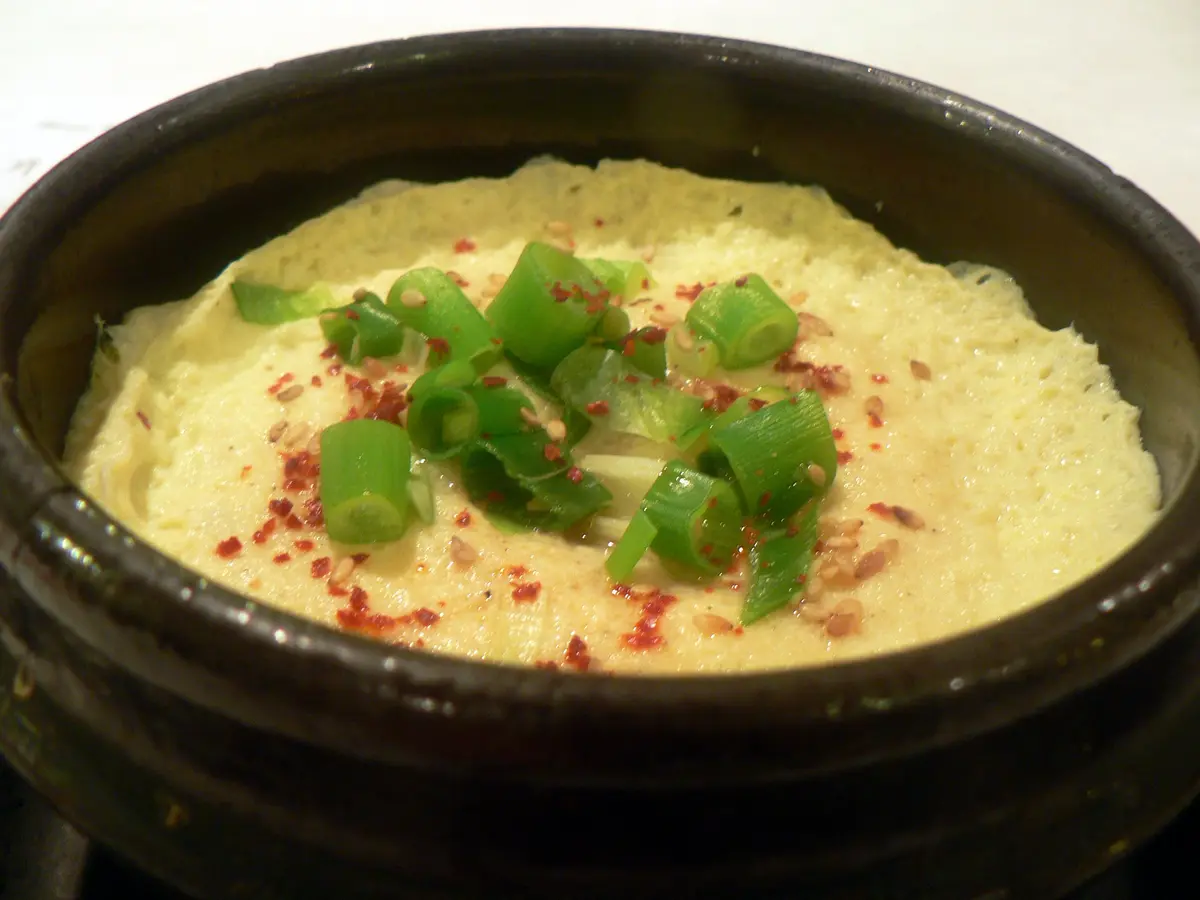
Gyeran jjim (pronounced gyeh-ran jim), or Korean steamed egg, is the soft, savory egg dish that often arrives puffed up and bubbling in a small earthenware pot at Korean barbecue restaurants. Gyeran means egg and jjim means steamed. This version is fluffy and spongy rather than silky: the eggs are whisked with water, stirred over gentle heat until they form soft curds, then covered so the trapped steam lifts them up toward the rim in a soft dome, sometimes nicknamed volcano eggs. It is mild, not spicy, and the base is just eggs, water and salt, so it makes an easy first Korean dish. The notes below explain how to keep the bottom from burning, why the dome sometimes stays flat, and how to make it without a special pot.
Recipe
Gyeran Jjim (Fluffy Korean Steamed Eggs)
Prep 8 min · Cook 12 min · Serves 4
Ingredients
- 4 large eggs (about 200 g without shells)
- 3/4 cup (180 ml) cool water or unsalted stock
- 1/2 tsp (3 g) fine sea salt or table salt
- 2 scallions (green onions), finely chopped (about 1/4 cup / 25 g)
- 2 tbsp (about 15 g) finely minced carrot (optional)
- 1 tsp (5 ml) toasted sesame oil, divided
- 1/2 tsp toasted sesame seeds (optional)
Instructions
- 1Choose a small pot with a lid that holds 2 1/2 to 3 cups (600 to 700 ml) to the brim, such as a Korean earthenware pot (ttukbaegi) or a small heavy saucepan. The egg mixture will measure about 1 2/3 cups (400 ml), so the pot will be a little over half to two-thirds full, which leaves room for the egg to rise. Rub the inside of the pot with 1/2 tsp of the sesame oil, using a paper towel or silicone brush, so the egg does not stick.
- 2Crack the eggs into a bowl and beat them with a fork or whisk for about 1 minute, until no streaks of white remain. Stir in the water (or cooled stock) and the salt until the salt dissolves.
- 3Pour the mixture through a fine-mesh sieve into the oiled pot, or pour it in directly if you have no sieve. Straining catches the stringy bits of egg white and gives a smoother texture. Stir in the carrot (if using) and half of the scallions, and save the rest for the top.
- 4Set the pot over medium-low heat. Stir slowly and constantly, scraping the bottom and sides with a silicone spatula or wooden spoon so nothing sticks. After 3 to 5 minutes the egg will thicken and form soft, wet curds, like a very loose scramble or thick porridge, with some runny egg still between the curds. Stop stirring at this point. A thin metal pot gets there sooner, and a thick earthenware pot or an electric burner can take a few minutes longer.
- 5Quickly smooth the top, scatter the rest of the scallions over it and cover the pot with the lid (or with an upside-down heatproof bowl for a taller dome; see the notes). Turn the heat to low.
- 6Cook covered for 3 to 4 minutes without stirring. You should hear gentle bubbling and see steam escaping from under the lid, and the egg will swell up toward the rim. If it bubbles hard or you smell a scorched, toasty odor, lift the pot off the burner for 15 to 20 seconds, then put it back on the lowest heat.
- 7Turn off the heat and leave the lid on for 2 minutes so the center finishes cooking in the pot's heat. Wearing oven mitts, lift the lid away from your face to let the steam escape. The egg should be puffed and set, with no runny, cloudy yellow liquid when you poke the center with a spoon. If you have an instant-read thermometer, the center should read at least 160°F (71°C), the USDA's safe minimum for egg dishes. If it is not ready, cover and cook on low for 1 to 2 more minutes.
- 8Drizzle the remaining 1/2 tsp sesame oil over the top and sprinkle with the sesame seeds, if using. Serve right away, straight from the pot, set on a trivet or wooden board because the pot stays very hot. The dome will sink slowly as it cools, which is normal. Taste and add a pinch of salt on top if you like.
Names and the volcano style: Koreans have two everyday words for egg, gyeran and dalgyal, so you may also see dalgyal-jjim (달걀찜) or gyeranjjim. The tall, puffed-up style is sometimes called poktan gyeran jjim, meaning "bomb" steamed egg, and English-language recipes often call it volcano eggs. Koreans use bogeul-bogeul for the sound of gentle bubbling. A flat, smooth gyeran jjim is just as normal; the bowl method below makes that version.
Why the dome rises, and why it may stay flat: The dome is steam trapped inside the thickened egg, so the egg must still be soft and partly runny when the lid goes on. If you keep stirring until it looks like finished scrambled eggs, with no runny egg between the curds, there is too little liquid to make steam and the result is flat and dense. Other causes are too much liquid (this recipe uses roughly equal volumes of egg and liquid), heat so low that little steam builds, lifting the lid too often, and a pot much bigger than the mixture, which keeps the dome low. Every puffed egg settles as it cools, so expect the dome to sink a few minutes after the lid comes off.
Heat, sticking and scorching: Gentle heat is the main technique. A hard boil makes the egg tough and watery and can leave holes in it. A thin golden layer on the bottom of the pot is fine, but a dark crust or burnt smell means the heat was too high. A little clear broth at the edge is normal; a lot of liquid around the egg means too much liquid or too much heat. If the bottom scorches, serve from the top and let the pot cool, then soak it in warm water for 15 to 20 minutes before washing. Burners and pots vary, so treat the times in the recipe as a guide and go by how the egg looks.
Choosing a pot: A ttukbaegi (Korean earthenware pot, sold at Korean grocery stores and online) holds heat well and keeps the egg bubbling at the table, but you do not need one. A small heavy saucepan or enameled cast-iron pot with a lid works too; thin metal heats faster, so watch the bottom. In a pot bigger than about 3 cups (700 ml), the egg still puffs but stays below the rim. For a taller dome, cover the pot with an upside-down heatproof bowl, such as a small stainless steel mixing bowl, because the rising egg can press against a flat lid and stick to it. Earthenware does not heat on an induction cooktop, so use a metal pot there. Heat an earthenware pot gradually and never set a hot pot on a cold or wet surface. To halve the recipe, use 2 eggs, 6 tbsp (90 ml) of liquid and a pot of about 1 1/2 cups (350 ml), and check the egg a minute or two sooner.
Seasoning and stock: Water gives the cleanest egg flavor. Cooled, unsalted anchovy-kelp stock (the kind used in Doenjang Jjigae), dashi (Japanese kelp-and-bonito stock) or low-sodium chicken broth adds depth, but let hot stock cool first or it will start to cook the eggs. Packaged stock and instant dashi usually contain salt, so cut the salt to 1/4 tsp and add more at the end if needed. Korean cooks often season steamed egg with salted shrimp (saeujeot), and fish sauce is a common stand-in: use 1 to 2 tsp finely chopped saeujeot with a little of its brine, or 2 to 3 tsp fish sauce, in place of the salt. Brands vary in saltiness, so start at the low end and taste the cooked egg, not the raw mixture. If you use kosher salt, weigh out 3 g, because its crystals are larger.
How it differs from similar dishes: Japanese chawanmushi, a savory steamed egg custard, is a similar dish you may already know. It is usually made with roughly 2 1/2 to 3 parts dashi to 1 part egg and steamed gently in small cups, so it sets as a smooth, delicate custard. This pot-style gyeran jjim uses about equal parts egg and liquid and is stirred at the start, so it is firmer, fluffier and puffed. The line is not strict, since Korean cooks also steam gyeran jjim in a bowl for a smoother texture. Gyeran Mari, the rolled omelette, is a different dish: eggs cooked in thin layers in a frying pan, rolled up and sliced. Gyeran jjim has much more liquid, cooks in a covered pot and is eaten with a spoon.
Steamed in a bowl, or in the microwave: For a smoother custard, pour the strained mixture into a heatproof bowl, cover it with foil or a plate and set it on a rack above about 1 inch (2.5 cm) of gently simmering water in a covered pot. It usually sets in 12 to 18 minutes. For the microwave, fill a deep microwave-safe bowl no more than halfway, cover it loosely with a plate and cook at full power for 2 minutes. Stir, then cook in 1-minute bursts, stirring each time, until set. In a 1,000-watt microwave that is usually 4 to 6 minutes in all. Both methods give less of a dome than the pot. Times vary a lot with the bowl, steamer and wattage, so rely on the center check in the recipe, not the clock.
Add-ins and spice level: As written, it is not spicy. A light sprinkle of gochugaru (Korean chili flakes) on top adds color and a little heat, and thin slices of fresh chili add more. Finely chopped shiitake mushrooms, Korean zucchini (aehobak) or onion can go in with the carrot, but keep the extra vegetables, carrot included, to about 1/4 cup (30 to 40 g) in total and pat wet ones dry. Heavy or watery pieces can sink and keep the egg from rising as high.
Dietary notes: Eggs are not vegan, and this recipe contains sesame. For a vegetarian version, use water or a vegetable or kelp-and-shiitake stock and skip the fish sauce and salted shrimp. Check the labels of any stock, sauce or add-in for fish, shellfish and meat, and for wheat and barley if you are cooking gluten-free. For a sesame-free version, grease the pot with neutral oil and leave out the sesame oil and seeds.
Doneness, safety and storage: The egg should be completely set, with no runny, cloudy yellow liquid in the center. The USDA's safe minimum internal temperature for egg dishes is 160°F (71°C), so check with an instant-read thermometer if you have one. It is best eaten right away, because it turns watery and dense as it sits. Refrigerate leftovers within 2 hours (1 hour if the room is above 90°F / 32°C) and keep them covered in the fridge for up to 2 days. Eat them cold, or reheat at 50% power in the microwave in 20-second bursts until steaming hot all the way through. Freezing is not recommended.
What to serve with it: At a Korean barbecue (KBBQ) meal, the soft egg is a mild contrast to spicy or salty food. Serve it with rice, Beef Bulgogi or Jeyuk Bokkeum, and crunchy sides such as Korean Cucumber Salad, Korean Spinach Side Dish or Kongnamul Muchim. It also sits well next to Doenjang Jjigae. As a light meal, spoon it over rice with a few drops of soy sauce and sesame oil; the recipe then serves about 2. For another egg side dish, try Mayak Eggs.
Related Recipes
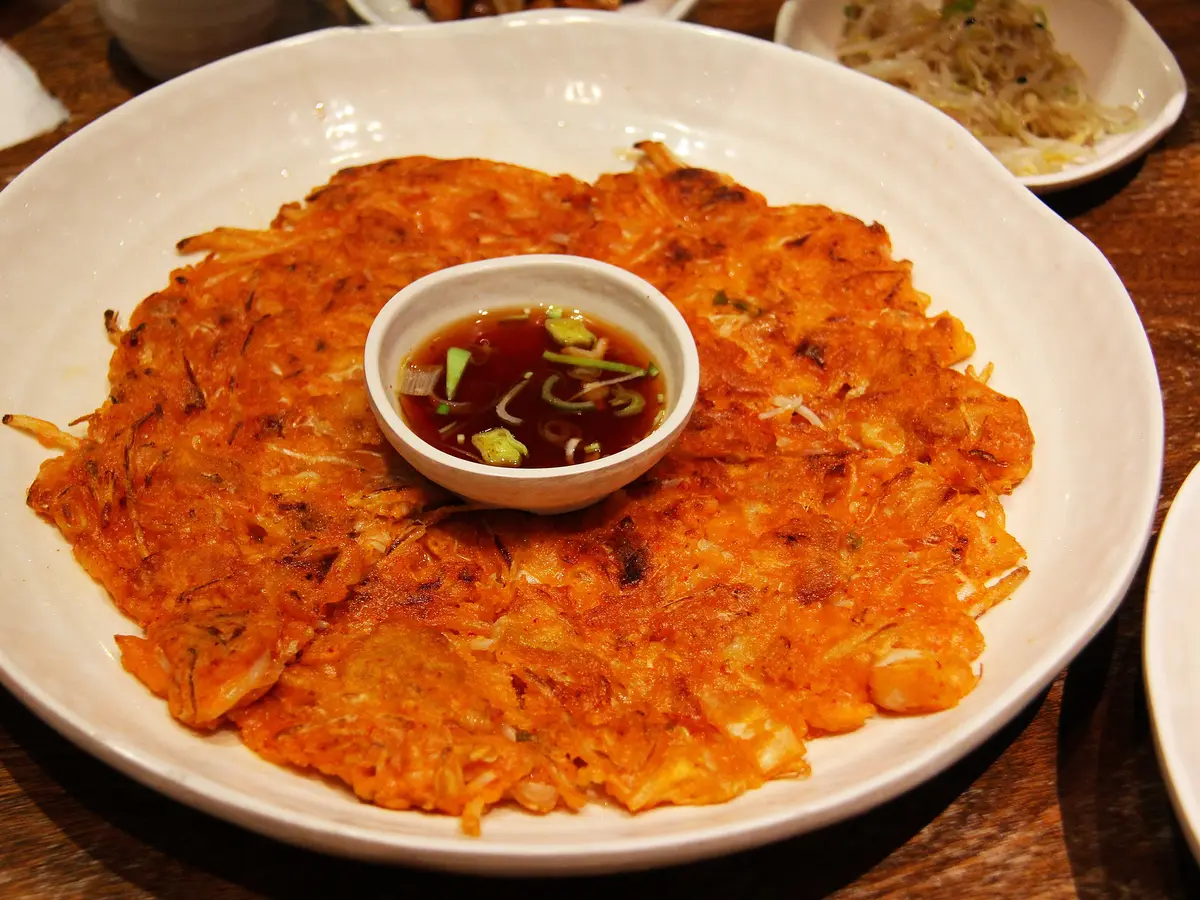
Kimchi Pancake (Kimchijeon)
Make crispy kimchi pancake (kimchijeon) with sour, well-fermented kimchi, a thin batter and a tangy dipping sauce. Includes tips to fix soggy pancakes.
25 min
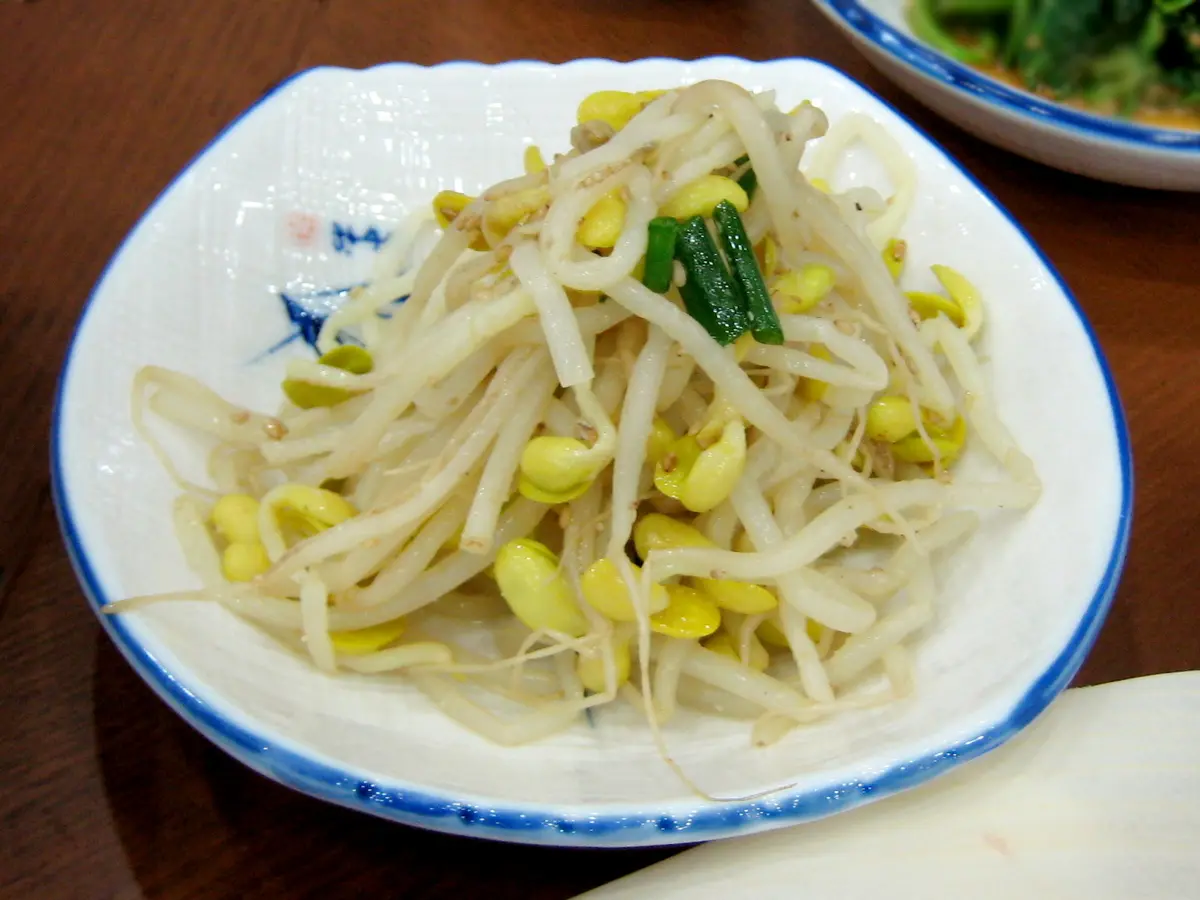
Kongnamul Muchim (Korean Seasoned Soybean Sprouts)
Make kongnamul muchim, a crunchy Korean soybean sprout side dish with sesame oil and garlic. Easy steps, the no-fishy-smell rule, and mild or spicy options.
20 min
Mayak Eggs (Korean Marinated Soft-Boiled Eggs)
Make mayak eggs, Korean soft-boiled eggs with jammy yolks marinated in a garlicky soy-scallion sauce. Step-by-step timing, fridge tips and spice swaps.
22 min