Gyeran Mari (Korean Rolled Omelette)
Prep 10 min · Cook 12 min · Serves 4 ·
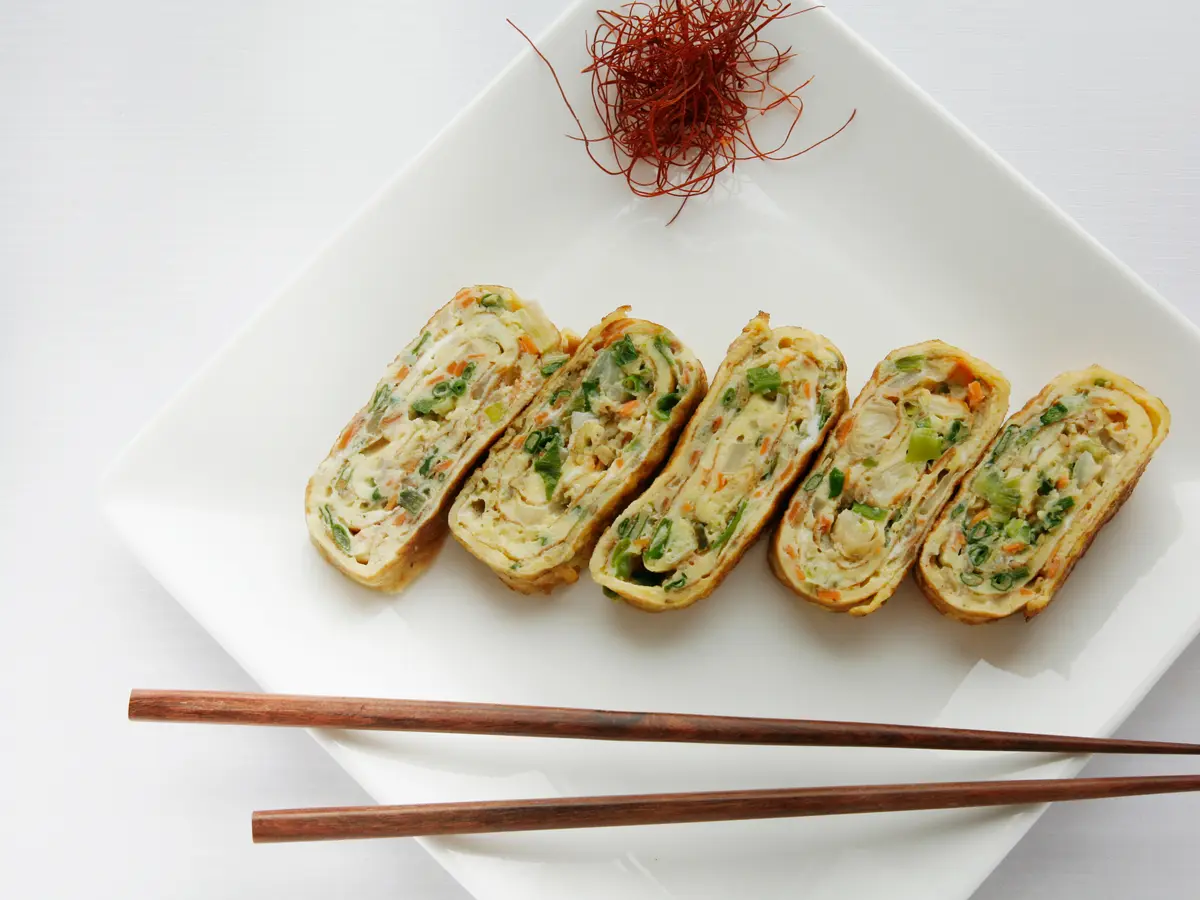
Gyeran mari (pronounced gyeh-ran mah-ree) is a Korean rolled omelette: beaten eggs mixed with finely chopped vegetables, poured into a pan in thin layers and rolled up as each layer sets. Gyeran means egg and mari means rolled. Sliced into thick rounds, it shows a neat spiral inside and is soft and mildly salty, which is why it turns up as a banchan (a small side dish served with rice), in school and office lunchboxes and on the breakfast table. It also suits people who are new to Korean food, because there is nothing spicy or unfamiliar in it: just eggs, salt, carrot and scallion. The only real skill is patience with the heat, and the steps below show exactly when to roll, how to fix a torn layer and how to get it out of a round frying pan in one piece.
Recipe
Gyeran Mari (Korean Rolled Omelette)
Prep 10 min · Cook 12 min · Serves 4
Ingredients
- 5 large eggs (about 250 g without shells)
- 1/4 tsp (about 1.5 g) fine sea salt or table salt
- 1 tbsp (15 ml) milk or water (optional, for a slightly softer roll)
- 2 tbsp (about 20 g) very finely diced carrot
- 2 tbsp (about 15 g) very finely chopped scallion (green onion)
- 1 tbsp (about 10 g) very finely diced onion or red bell pepper (optional)
- 1 to 2 tsp (5 to 10 ml) neutral cooking oil, such as vegetable, canola or avocado oil
- Ketchup, for serving (optional)
Instructions
- 1Crack the eggs into a bowl, add the salt and the milk or water (if using), and beat with chopsticks or a fork for about 1 minute, until no streaks of white remain. For a smoother finish, pour the eggs through a fine-mesh sieve into a second bowl to catch the stringy bits of white.
- 2Stir in the carrot, scallion and onion or bell pepper (if using). Cut the vegetables as small as you can, about 1/8 inch (3 mm); large pieces poke holes in the thin egg layers and make the roll fall apart.
- 3Heat a nonstick frying pan over medium-low heat, about 2 minutes. A rectangular Korean or Japanese omelette pan is ideal, but a round 8- to 10-inch (20 to 25 cm) nonstick pan works. Add about 1/2 tsp of oil and wipe it over the whole surface with a folded paper towel, keeping the towel for later.
- 4Test the heat by dripping in a little egg. It should set slowly with a gentle sizzle, without bubbling or browning. If it browns right away, take the pan off the heat for 30 seconds and turn the heat down to low.
- 5Pour in about one third of the egg mixture and tilt the pan so it covers the bottom in a thin, even layer. Cook until the edges are set and the top is still slightly wet, about 1 to 2 minutes.
- 6Starting from the side farthest from you, lift the edge with a silicone spatula (and chopsticks, if you have them) and fold it toward you in flaps about 2 inches (5 cm) wide, turning the egg over on itself until you have a flat log at the near side of the pan. The wet top acts as glue, so roll while it is still a little runny.
- 7Push the log back to the far side of the pan. Wipe the empty part of the pan with the oiled paper towel, adding a few drops of oil if it looks dry.
- 8Stir the remaining egg mixture so the vegetables have not sunk to the bottom, then pour in about half of it. Lift the log slightly with the spatula and tilt the pan so some raw egg runs underneath; this joins the new layer to the roll.
- 9When the new layer is set at the edges but still a little wet on top, roll the log back toward you, wrapping the new layer around it. Repeat steps 7 and 8 with the rest of the egg, then roll once more.
- 10Press the sides of the roll gently with the spatula to square them off. Turn the roll so the seam faces down and cook for 30 seconds to 1 minute on each side, until the outside is set and lightly golden in places, not brown.
- 11Move the roll to a cutting board. For a neat shape, wrap it in a bamboo sushi mat or a sheet of foil while it is still hot, press it gently into a rectangle and let it rest for 5 minutes.
- 12Unwrap and cut into slices about 3/4 inch (2 cm) thick with a sharp knife, using a gentle sawing motion. Serve warm or at room temperature, with ketchup on the side if you like.
Heat is everything: Most failed rolls are cooked too hot. On high or even medium heat the bottom browns and turns rubbery before the top sets, and dry layers will not stick to each other, so the roll splits into separate sheets when you slice it. Keep the burner at medium-low or low and be ready to lift the pan off the heat for a few seconds whenever the egg starts to bubble. The goal is a pale yellow outside with only a few golden spots. A slow first batch is normal; the second one is always easier.
If a layer tears or the roll looks messy: Keep going. Each new layer of egg covers the one before, so tears in the first layer are hidden inside the finished roll. If a hole appears in a later layer, pour a spoonful of the remaining egg over it before rolling. If the egg runs out before the roll looks thick enough, beat one more egg with a pinch of salt and add it as an extra layer. The roll will still be soft when it comes out of the pan, so do not judge the shape until after the 5-minute rest.
Using a round pan: A round pan makes the layers uneven at the ends, which is fine. Pour each layer, let it cover the whole bottom, and roll from the far side as usual; the rounded ends simply fold in. If you prefer a tidier roll, tilt the pan so the egg covers only a strip about as wide as a rectangular pan, roughly 6 inches (15 cm), and roll within that strip. Squaring the roll with the spatula in the pan and resting it in a mat or foil does most of the shaping.
Why strain and why so little salt: Straining removes the chalaza, the stringy white bits attached to the yolk, and gives a smoother, more even color. It is optional. The salt is kept light because the omelette is usually eaten with rice and other salty side dishes; if you plan to eat it on its own, add another small pinch. Some Korean cooks season the eggs with a little fish sauce or a splash of anchovy broth instead of some of the salt, which adds a savory depth.
Serving ideas: As a banchan, set it out with rice, a bowl of soup or stew such as Kimchi Jjigae or Doenjang Jjigae, and other small dishes such as Korean Cucumber Salad and Easy Kimchi. Its mild flavor balances spicy dishes like Tteokbokki or Jeyuk Bokkeum. Packed into a lunchbox with rice, it holds its shape well and tastes good at room temperature. Ketchup on the side is a very common way to eat it in Korea, especially for children. If you have made our Kimbap recipe, the egg strips there start the same way, as egg cooked gently in a thin layer, just cut into strips instead of rolled.
Storage: Let the slices cool, then refrigerate them in a covered container for up to 3 days. Eat them cold, at room temperature or warmed for 10 to 20 seconds in the microwave; longer heating makes the egg rubbery. For a packed lunch, keep it chilled until shortly before eating, and do not leave it out for more than 2 hours (1 hour on a very hot day above 90°F/32°C). Freezing is not recommended, because the texture turns spongy and watery.
Variations: For gim gyeran mari (seaweed rolled omelette), lay a sheet of gim (roasted seaweed sheet, sold as nori in many stores) over the first layer of egg while the top is still wet, trim it to fit the pan, and roll it up inside to get a dark spiral in every slice. For a cheese version, lay a slice or two of mild melting cheese, such as American or mozzarella, on the second layer before rolling. You can also swap in other finely chopped vegetables, such as zucchini, spinach or mushrooms, or add a few tablespoons of finely chopped ham. Squeeze or pat wet vegetables dry first and keep the total add-ins to about 1/2 cup (about 60 g), because too many make the layers watery and hard to roll.
Related Recipes
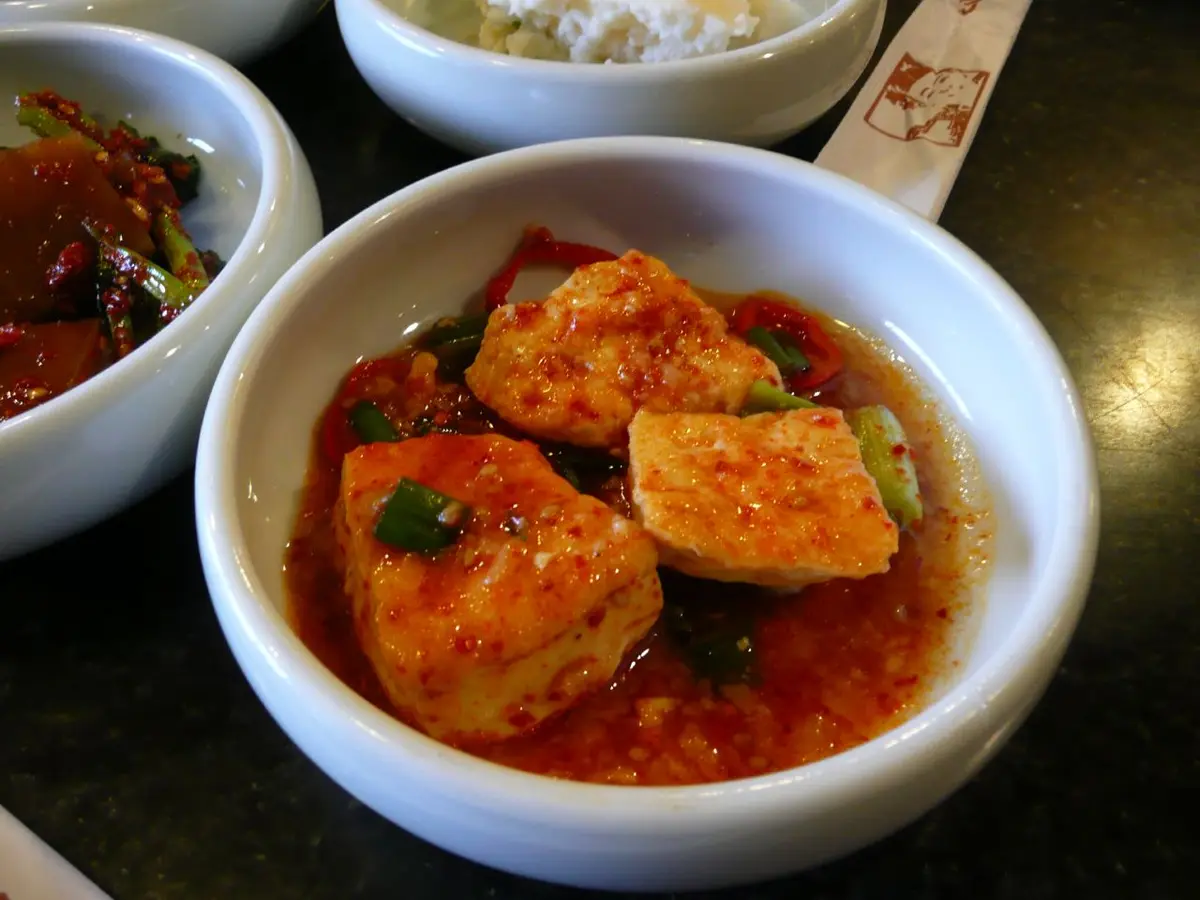
Dubu Jorim (Korean Braised Tofu)
Make dubu jorim, Korean braised tofu pan-fried until golden, then simmered in a garlicky soy and chili sauce. Easy, cheap, with fixes for crumbly tofu.
45 min
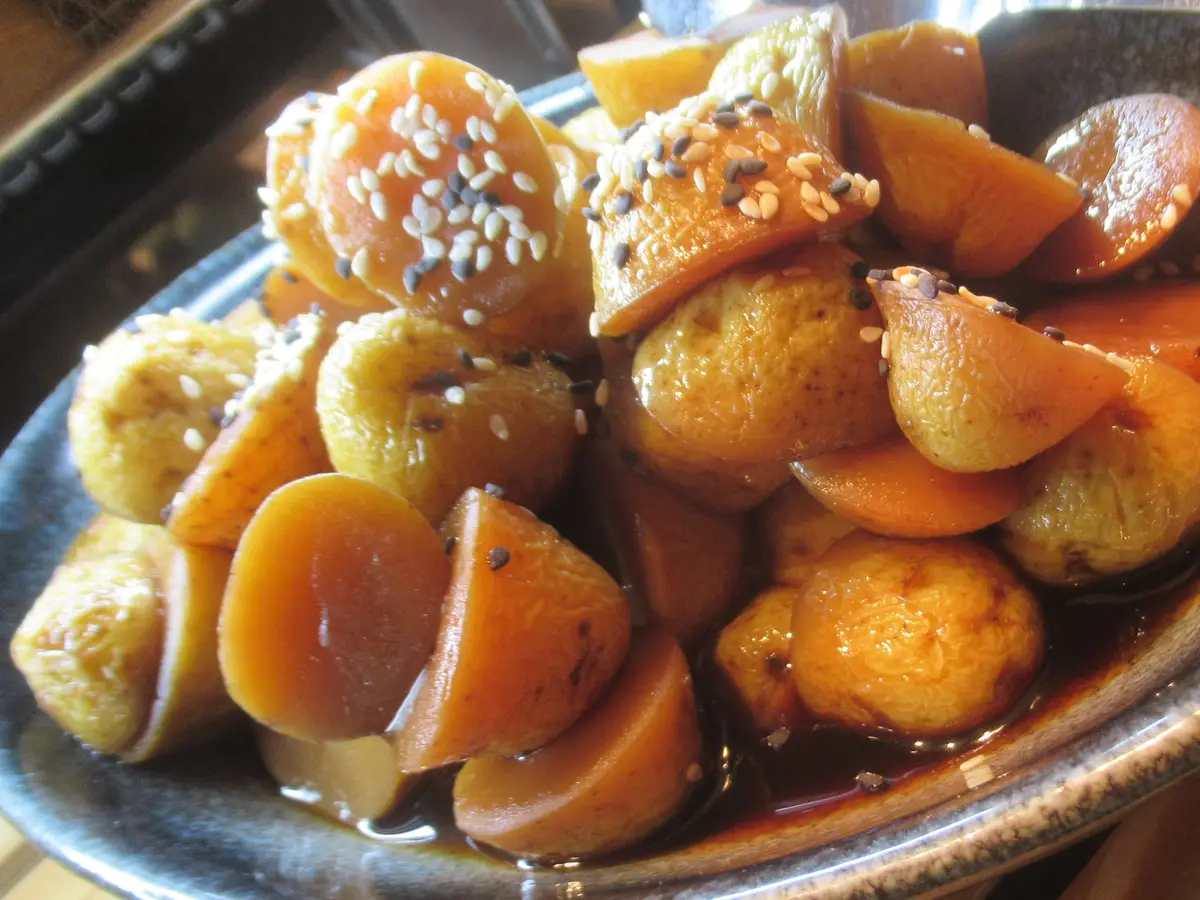
Gamja Jorim (Korean Braised Potatoes)
Make gamja jorim, Korean braised potatoes in a sticky sweet-salty soy glaze. Cheap, easy and lunchbox friendly, with fixes for mushy potatoes and thin sauce.
50 min
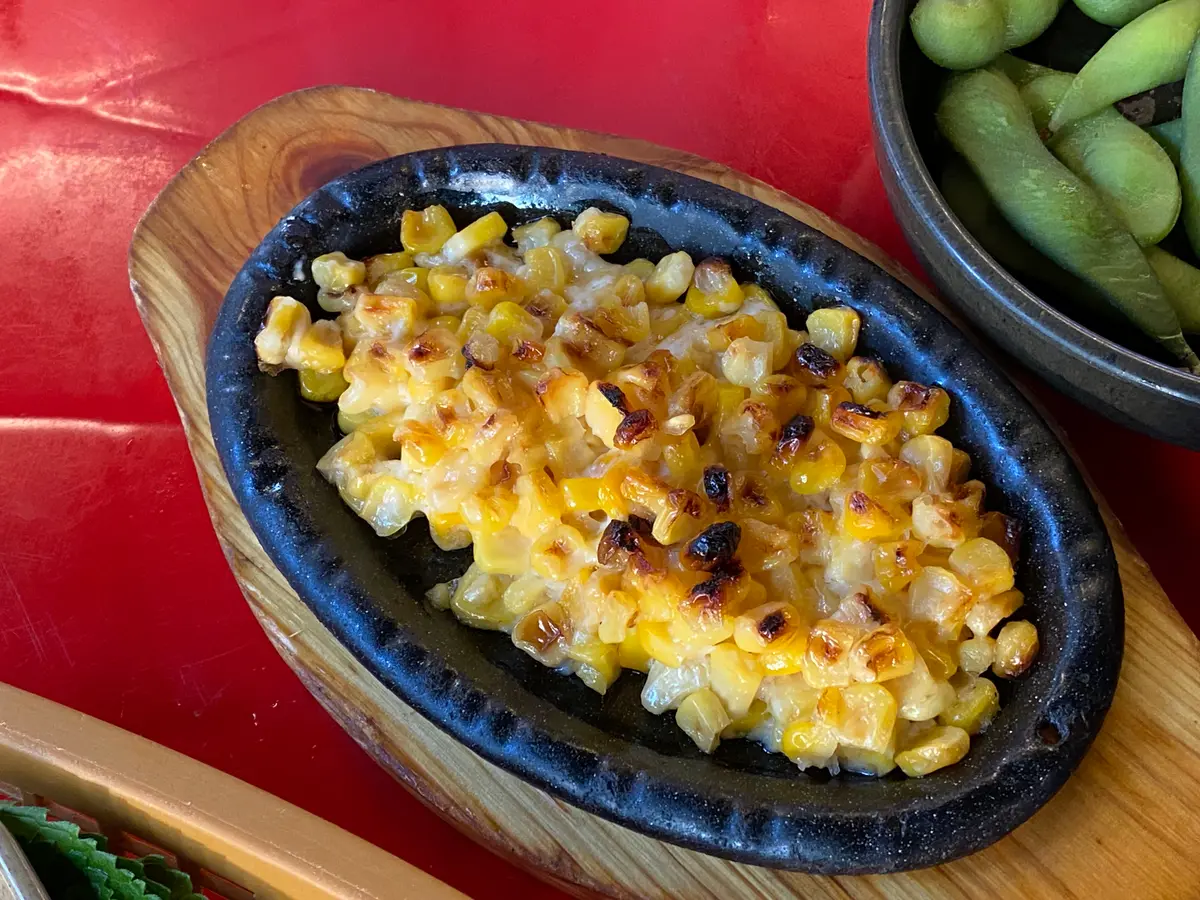
Korean Corn Cheese (Baked Sweet Corn with Mozzarella)
Make Korean corn cheese at home with canned corn, mayo and mozzarella, baked until bubbly. Includes fixes for watery corn and a no-oven option.
25 min