Jeyuk Bokkeum (Spicy Korean Pork Stir-Fry)
Prep 20 min · Cook 15 min · Serves 4 ·
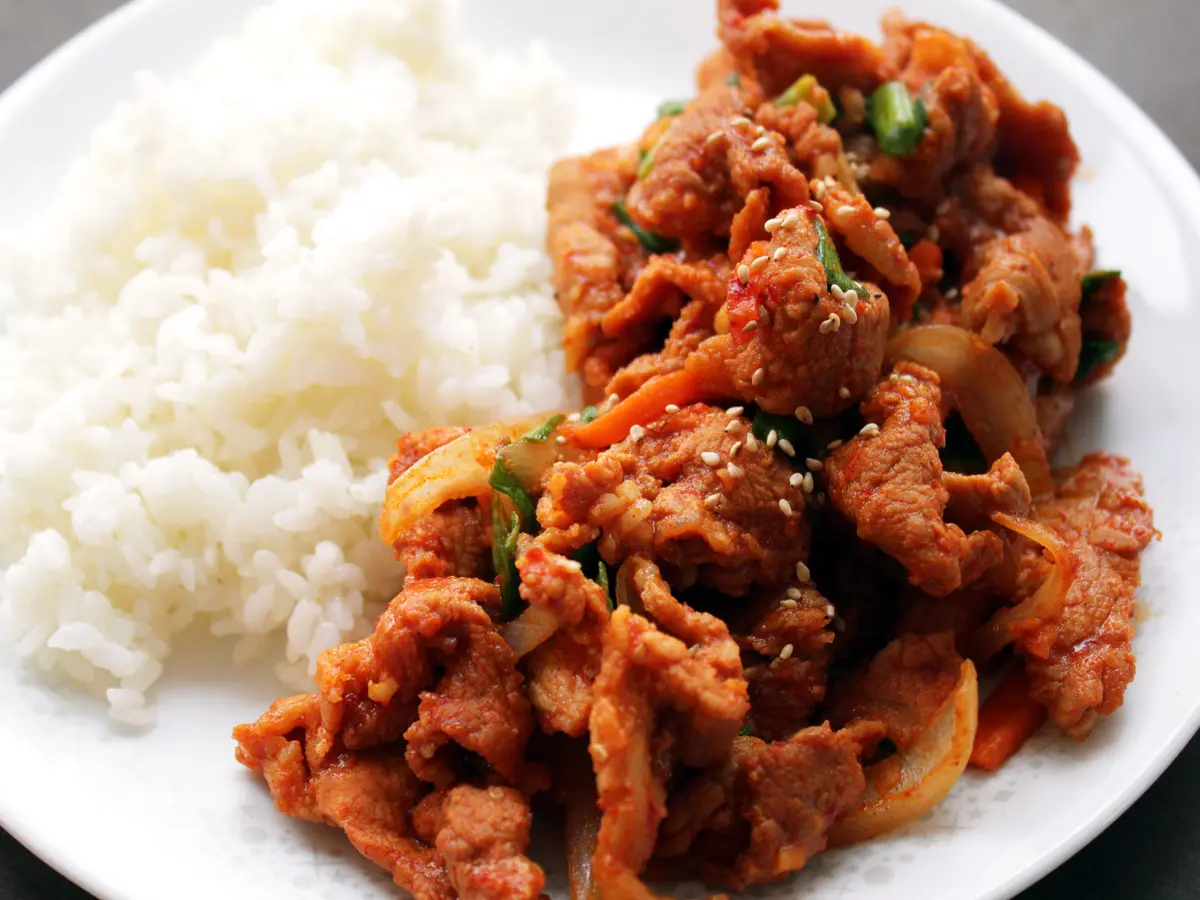
Jeyuk bokkeum (pronounced jeh-yook bok-keum) is a spicy Korean pork stir-fry: thin slices of pork shoulder or belly cooked with onion and often cabbage in a sticky, garlicky sauce built on gochujang, a thick fermented chili paste, and gochugaru, Korean chili flakes. Jeyuk means pork, and bokkeum means a stir-fried dish. It is a staple at casual lunch restaurants in Korea, and Korean restaurants in the US often list it as "spicy pork" or "spicy pork bulgogi." Think of it as the spicier, saucier pork cousin of Beef Bulgogi. Because the sugary sauce burns easily, this recipe sears the pork first and adds the sauce only for the last few minutes, giving you charred edges without burnt sauce. Expect about 20 minutes of prep and 15 minutes of cooking, plus half an hour of freezer time if you are cutting the pork yourself.
Recipe
Jeyuk Bokkeum (Spicy Korean Pork Stir-Fry)
Prep 20 min · Cook 15 min · Serves 4
Ingredients
- 1 1/2 lb (680 g) boneless pork shoulder (pork butt) or skinless pork belly, or pork sold pre-sliced for bulgogi or hot pot
- 1 medium yellow onion (about 150 g), halved and sliced 1/4 inch (6 mm) thick
- 2 cups (about 180 g) green cabbage, cut into 1 1/2-inch (4 cm) pieces, optional
- 1/2 medium carrot (about 30 g), thinly sliced on an angle or cut into matchsticks, optional
- 4 scallions (about 60 g), cut into 2-inch (5 cm) lengths
- 1 jalapeño or other fresh green chili, thinly sliced, optional
- 2 tbsp (30 ml) neutral oil, such as canola or vegetable oil, plus a little more if needed
- 3 tbsp (about 60 g) gochujang (Korean red chili paste)
- 1 tbsp (about 6 g) gochugaru (Korean chili flakes)
- 2 tbsp (30 ml) soy sauce (all-purpose, not dark soy sauce)
- 1 1/2 tbsp (about 19 g) sugar, white or light brown
- 1 tbsp (about 10 g) minced garlic (3 to 4 cloves)
- 1 tsp (5 g) grated fresh ginger
- 1 tbsp (15 ml) mirin or Korean cooking wine (mirim), optional
- 2 tbsp (30 ml) water
- 1/4 tsp (0.5 g) ground black pepper
- 1 tbsp (15 ml) toasted sesame oil
- 1 tsp (about 3 g) toasted sesame seeds, for garnish
- Cooked short-grain rice, for serving
- Lettuce or perilla leaves for wrapping, and ssamjang for dipping, optional
Instructions
- 1Firm up the pork for easier slicing: wrap it and chill it in the freezer for about 30 minutes, until the outside feels stiff but a knife still goes through it easily. If you bought pre-sliced pork, skip this step.
- 2Remove any skin from pork belly. For shoulder, trim off thick, hard pieces of fat or gristle, but leave the thin streaks of fat inside the meat, which keep it juicy. Cut the pork across the grain, where you can see it, into 1/8-inch (3 mm) slices, then cut the slices into bite-size pieces about 2 inches (5 cm) long. Pre-sliced pork only needs cutting into bite-size pieces.
- 3Mix the sauce: whisk the gochujang, gochugaru, soy sauce, sugar, garlic, ginger, mirin (if using), water and black pepper in a small bowl until smooth. Keep the sesame oil aside for the end.
- 4Get everything ready before you turn on the heat, because the cooking moves fast: put the onion, cabbage and carrot (if using) in one bowl, the scallions and chili (if using) in another, and set a plate next to the stove for the cooked pork.
- 5Heat a heavy 12-inch (30 cm) skillet or a wok over high heat for about 2 minutes. Add 1 tbsp of the oil and tilt the pan so it covers the bottom; it should shimmer almost at once. With a nonstick pan, add the oil before heating and use medium-high heat instead.
- 6Add half of the pork and spread it out in an even layer. Leave it alone for about 1 1/2 minutes, until the undersides are browned in spots, then stir and flip the pieces and cook for 1 to 2 minutes more, until no pink remains. Move the pork to the plate.
- 7Cook the rest of the pork the same way, adding the remaining 1 tbsp oil first unless the pan already looks oily, and transfer it to the plate. If more than about 2 tbsp of melted fat is left in the pan (pork belly can release a lot), carefully spoon the extra into a heatproof bowl.
- 8Turn the heat down to medium-high. Add the onion, cabbage and carrot (if using) and stir-fry for 2 to 3 minutes, until the onion softens at the edges and any cabbage is bright but still a little crunchy. If the pan seems dry, add a few drops of oil.
- 9Turn the heat down to medium (electric burners are slow to cool, so also lift the pan off the heat for about 30 seconds). Return the pork and its juices to the pan, scrape in all of the sauce and toss to coat. Cook for 2 to 3 minutes, stirring every 20 to 30 seconds, until the sauce turns thick and glossy and caramelizes in dark red spots on the pork. If it starts to stick, blacken or smell sharp, add 1 to 2 tbsp water, scrape the bottom of the pan and lower the heat a little.
- 10Add the scallions and chili (if using) and toss for about 30 seconds, until the scallions turn bright green and just soften. Taste a piece of pork once it has cooled for a moment: add a splash of soy sauce if it needs salt, or a pinch of gochugaru for more heat.
- 11Turn off the heat, drizzle with the sesame oil and toss once more. Sprinkle with the sesame seeds and serve right away with rice, plus lettuce or perilla leaves and ssamjang if you want to make wraps.
Which pork to buy: Choose a cut with some fat in it; lean slices turn dry and chewy in a hot pan. In the US, look for boneless pork shoulder, also sold as pork butt or Boston butt (it comes from the shoulder, despite the name), or shoulder blade steaks, which are easier to slice. In the UK, pork shoulder steaks are the easiest find. Skinless pork belly gives a richer result with crispier edges. Korean cooks mostly use apdari-sal (front leg and shoulder), moksal (collar) or samgyeopsal (belly). Lean loin or tenderloin works if you pull it off the heat as soon as the pink is gone.
Pre-sliced pork: To skip slicing, look in the meat case at a Korean or other Asian grocery store for pork shoulder already sliced thin, often labeled for bulgogi, or thin pork belly slices sold for hot pot. They are often frozen in rolls: thaw them in the fridge, pull the slices apart and pat them dry so they brown instead of steaming. Hot pot slices cook through in about a minute per batch.
Getting char without burning the sauce: When pork goes into the pan already coated in sauce, the sugar and gochujang touching the hot metal burn before the wet meat has time to brown. Searing the pork alone first and adding the sauce over medium heat at the end avoids that. Sticky, dark red-brown spots are what you want; Korean cooks call this smoky, seared flavor bulmat, literally "fire taste." Black edges and a sharp, acrid smell mean burnt sugar, which tastes bitter, so add a splash of water and lower the heat right away. If the pork gives off a puddle of liquid and simmers instead of sizzling, the pan was too full or not hot enough; keep cooking until the liquid boils off and the pork browns.
Checking doneness: The USDA's safe minimum for whole cuts of pork, such as chops and roasts, is 145°F (63°C) with a 3-minute rest. Stir-fry slices are too thin for a thermometer but heat through in a minute or two, so cook them until no pink remains outside or in the center; cut the thickest piece open if you are unsure. Slices thicker than 1/4 inch (6 mm) are worth checking with an instant-read thermometer. Wash your hands, knife and cutting board in hot, soapy water after handling raw pork.
Making it milder or hotter: This version is medium-spicy, but gochujang heat varies by brand (many tubs print a heat level), so taste the sauce first. For a gentler version, use 1 1/2 tbsp gochujang, skip the gochugaru and fresh chili, and add 2 tsp more soy sauce and 1 tsp more sugar to make up the lost salt and sweetness. For no heat at all, make the soy sauce style often called ganjang jeyuk bokkeum: skip the gochujang, gochugaru and fresh chili, use 4 tbsp (60 ml) soy sauce and 2 tbsp sugar, and keep everything else the same. It tastes close to our Beef Bulgogi. For more heat, add more gochugaru or use a serrano instead of the jalapeño.
Swaps: If you have no gochugaru, leave it out, since the gochujang carries the dish, or add 1 tsp sweet paprika (for color) and a pinch of cayenne (for heat). Do not swap in crushed red pepper flakes one for one, since they are much hotter. Use dry sherry in place of mirin, or skip it and add 1/2 tsp more sugar. Ground ginger (1/8 tsp) can replace the fresh. Zucchini, mushrooms or bell pepper strips can join or replace the cabbage. For gluten-free jeyuk bokkeum, use tamari or a soy sauce labeled gluten-free, and check the gochujang label, since many brands contain wheat.
Making it ahead: Many Korean home cooks marinate the pork instead, which seasons it more deeply but gives less char. Stir the sauce into the raw sliced pork, cover and refrigerate for 30 minutes to 24 hours. Cook it in two batches over medium-high heat, stirring often, until no pink remains, about 5 minutes per batch, adding a spoonful of water whenever the sauce sticks and darkens. Then return all the pork to the pan, add the onion, cabbage and carrot and stir-fry for 2 to 3 minutes, until the onion softens, then finish with the scallions, sesame oil and seeds as in the recipe. Marinated raw pork also freezes well, spread flat in a zip-top bag, for up to 3 months; thaw it in the refrigerator overnight.
Storage: Get leftovers into the fridge, in an airtight container, within 2 hours of cooking; they keep for up to 3 days. Warm them in a pan with a spoonful of water, or covered in the microwave, until steaming hot all the way through (165°F / 74°C).
Ways to serve it: Spooned over short-grain rice, often with a fried egg on top, it becomes jeyuk deopbap, a common Korean lunch (deopbap means rice with a topping). For ssam (lettuce wraps), set out leaf or butter lettuce, plus perilla leaves (kkaennip, often labeled sesame leaves) if you can find them. Lay a leaf in your palm, add a little rice, some pork and a dab of ssamjang, a thick dipping paste made from doenjang (fermented soybean paste) and gochujang, then fold it into one bite. Korean lunch restaurants often serve it with banchan (small side dishes) and a bowl of soup or stew, such as doenjang jjigae (soybean paste stew); at home, Easy Kimchi and a cool Korean Cucumber Salad add a tangy, crunchy contrast. Chopped leftovers make great fried rice; see our Kimchi Fried Rice for the method.
Related Recipes
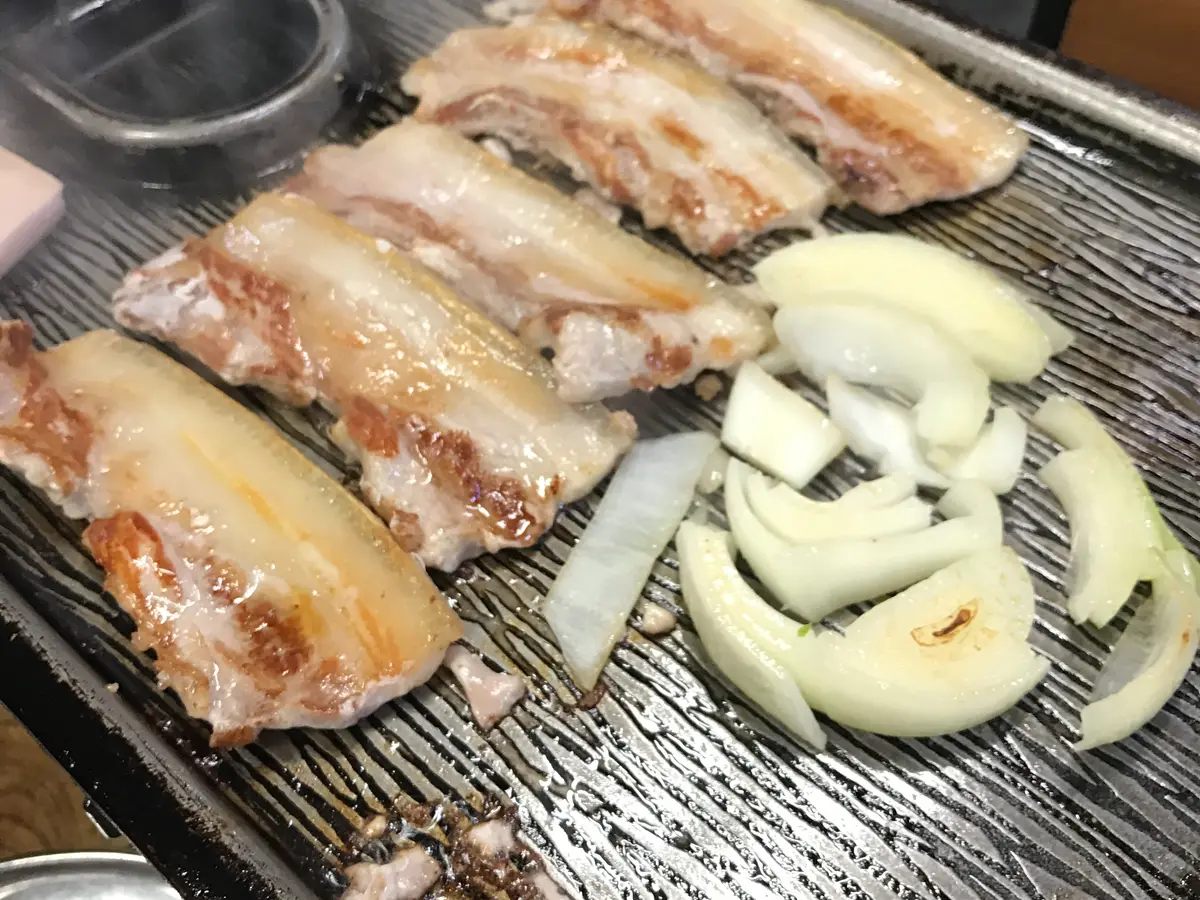
Samgyeopsal at Home (Korean BBQ Pork Belly)
Samgyeopsal at home: Korean pork belly cooked in a skillet, oven or air fryer, with a sesame oil dip, ssamjang and lettuce wraps. Smoke and splatter tips.
55 min
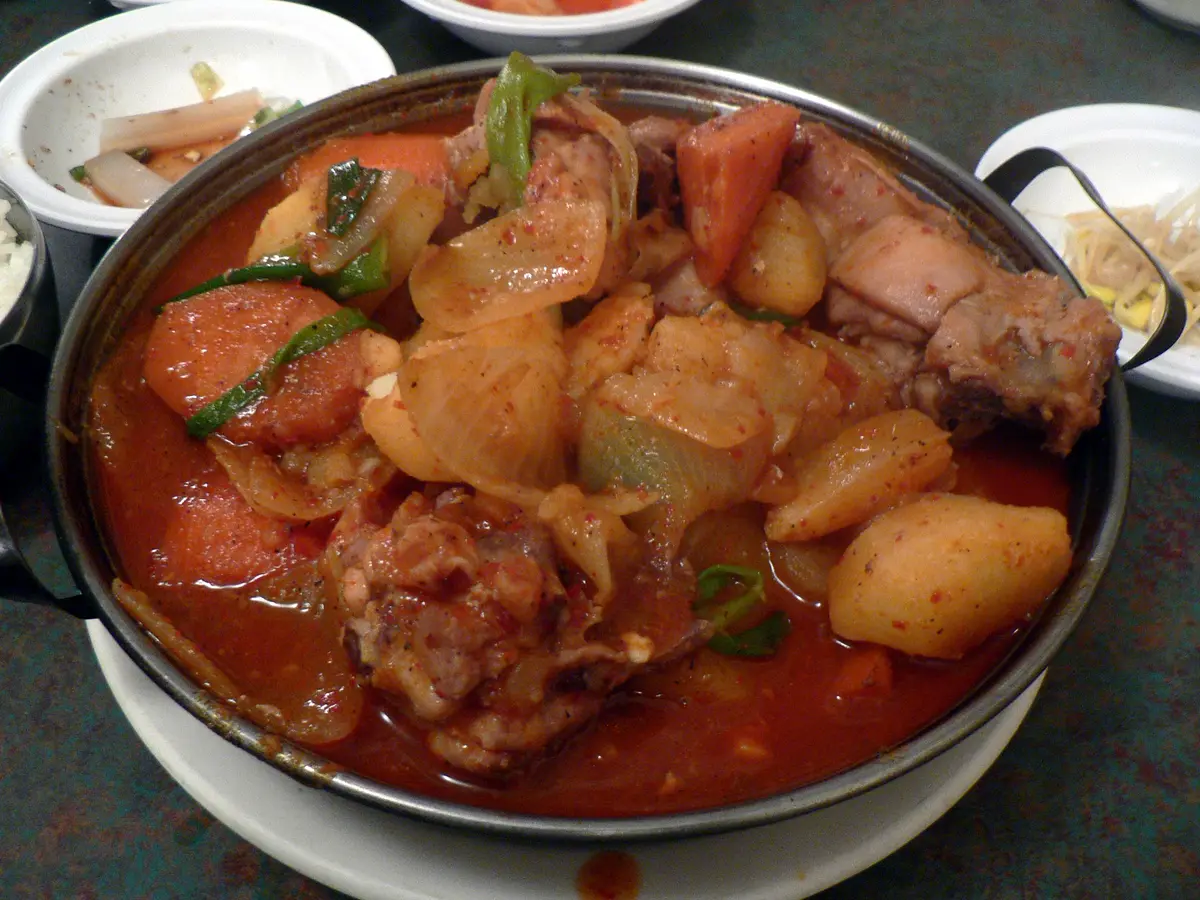
Dakdoritang (Spicy Korean Braised Chicken)
Make dakdoritang (dakbokkeumtang), Korean spicy braised chicken with potatoes in gochujang sauce. One pot, about 75 minutes, plus fixes for greasy sauce.
75 min
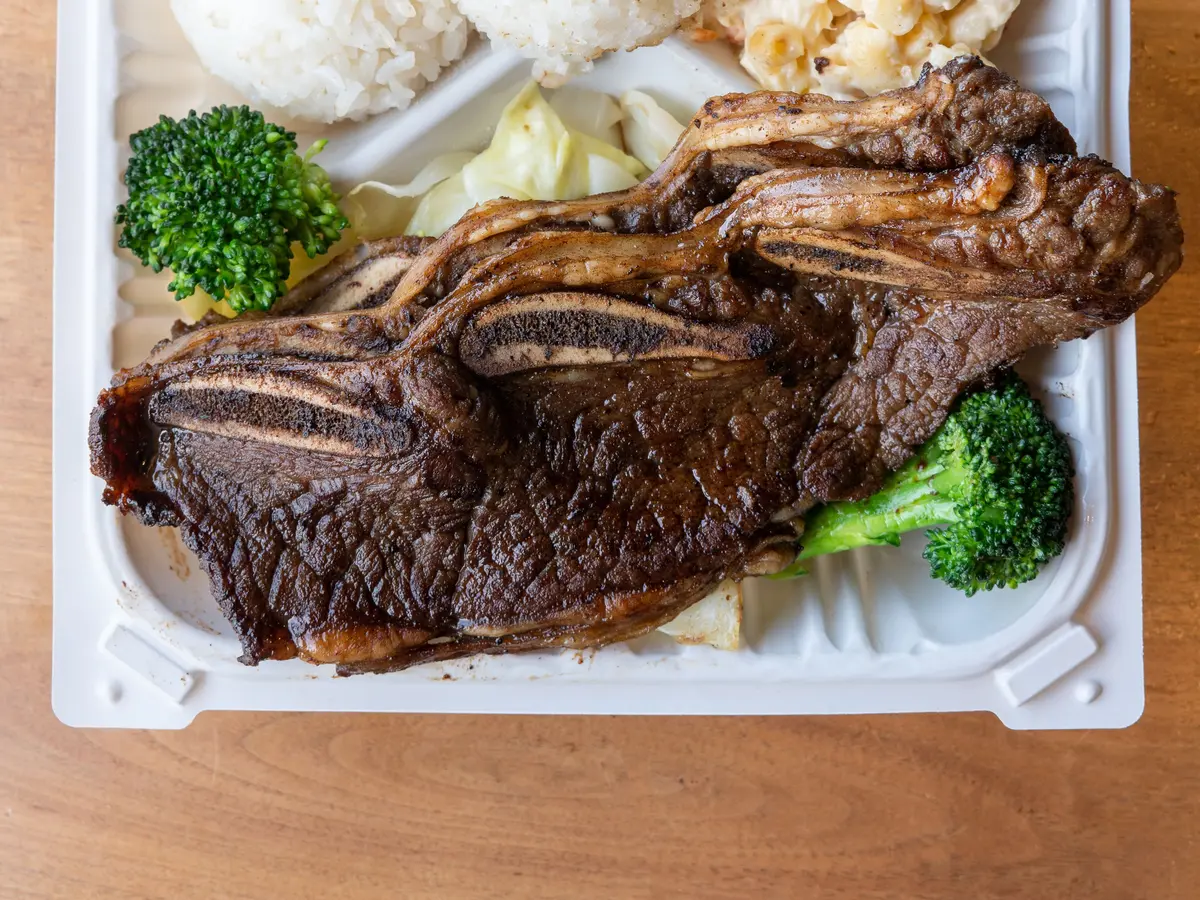
LA Galbi (Korean BBQ Short Ribs)
Korean short ribs recipe (LA galbi): flanken-cut beef in a sweet soy, garlic and pear marinade, cooked on a grill, pan or broiler. Buying and doneness tips.
290 min