Kimchi Pancake (Kimchijeon)
Prep 10 min · Cook 15 min · Serves 4 ·
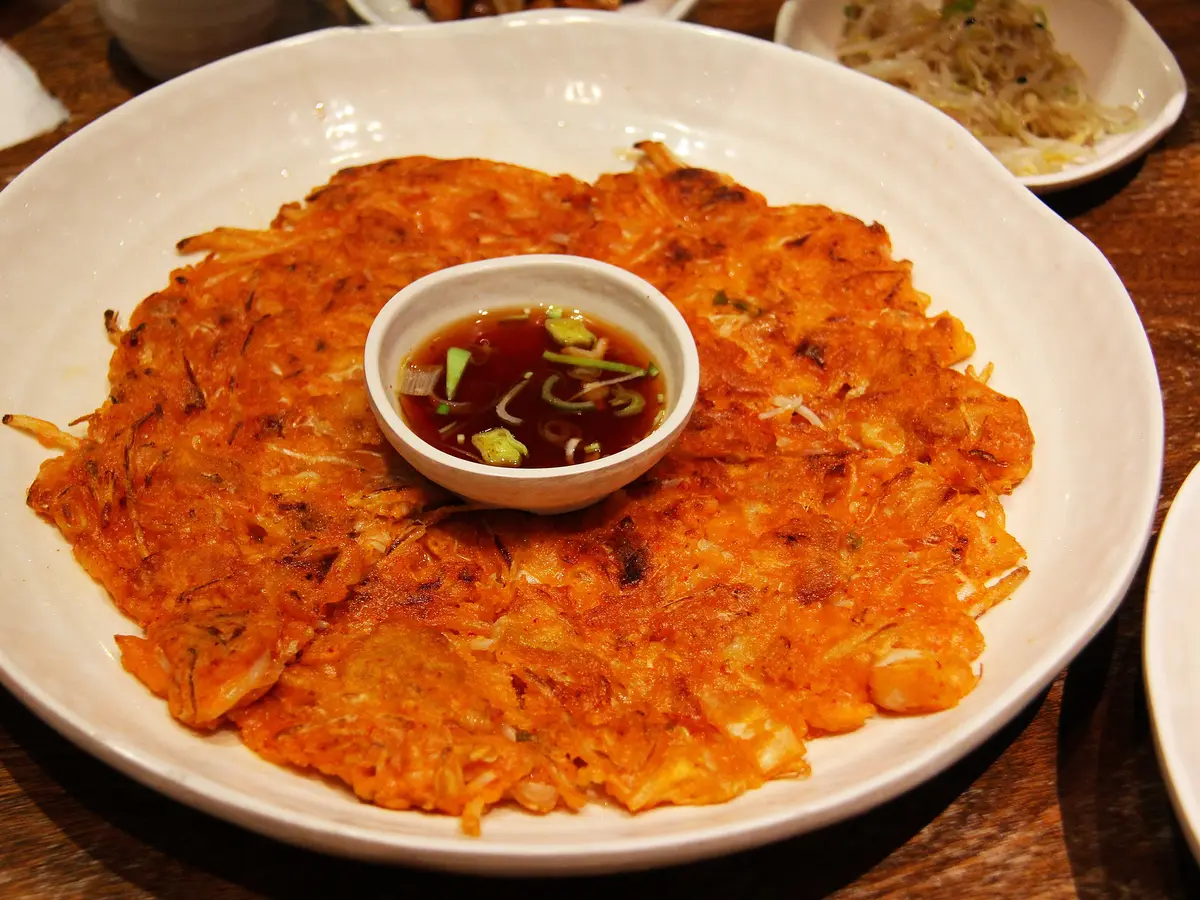
Kimchijeon (pronounced kim-chee-jun) is a savory Korean pancake studded with chopped kimchi. Jeon is the Korean word for foods coated in batter and pan-fried, and this one is the classic way to use up the last cup of kimchi in the jar. It works best with older, sour kimchi, the kind that has fermented in the fridge for a few weeks and tastes sharp and a little fizzy. The sourness gives the pancake its deep, tangy flavor, and the red kimchi juice turns the batter a pretty orange. A good kimchijeon has crisp, lacy edges and a soft, chewy middle. Unlike a scallion pancake, it carries a lot of moisture, so the batter needs a few small adjustments. The notes below explain how to pick the right kimchi, how to keep the pancake crisp instead of soggy, and how to flip it without a mess.
Recipe
Kimchi Pancake (Kimchijeon)
Prep 10 min · Cook 15 min · Serves 4
Ingredients
- 1 cup (125 g) all-purpose flour
- 2 tbsp (about 18 g) potato starch or cornstarch, for a crisper crust
- 3/4 cup (180 ml) ice-cold water
- 2 tbsp (30 ml) kimchi brine (the red juice from the jar)
- 1 1/2 cups (about 225 g) well-fermented, sour napa cabbage kimchi, squeezed lightly and cut into 1/2-inch (1 cm) pieces
- 1/2 small yellow onion (about 60 g), thinly sliced
- 2 scallions (green onions), sliced into 1-inch (2.5 cm) lengths
- 1/2 tsp (2 g) sugar, plus more to taste if the kimchi is very sour
- 1/2 tsp (about 1 g) gochugaru (Korean chili flakes), optional
- 4 tbsp (60 ml) neutral oil such as canola or vegetable oil, divided
- For the dipping sauce: 2 tbsp (30 ml) soy sauce
- For the dipping sauce: 1 tbsp (15 ml) rice vinegar
- For the dipping sauce: 1 tbsp (15 ml) water
- For the dipping sauce: 1/2 tsp (2 g) sugar
- For the dipping sauce: 1/2 tsp toasted sesame seeds, optional
Instructions
- 1Stir the soy sauce, rice vinegar, water, sugar and sesame seeds together in a small bowl for the dipping sauce. Set it aside so the sugar can dissolve.
- 2Cut the kimchi into small pieces, about the size of a postage stamp or smaller. Large pieces tear the batter and make the pancake hard to flip. Press the pieces gently in your hand to squeeze out the loose liquid, but do not wring them dry. Save the juice from the jar.
- 3In a mixing bowl, whisk the flour, potato starch and sugar. Pour in the ice-cold water and the 2 tbsp of kimchi brine, then whisk just until no dry flour is left. A few small lumps are fine. The batter should be thinner than American pancake batter, about like heavy cream.
- 4Stir in the kimchi, onion, scallions and gochugaru. Mix gently. The batter should just barely hold the kimchi together. If it looks like a thick dough, add 1 to 2 tbsp more cold water. If it looks like kimchi floating in soup, whisk in 1 tbsp of flour.
- 5Heat a 10-inch (25 cm) nonstick or well-seasoned cast-iron skillet over medium-high heat. Add 1 1/2 tbsp of the oil and swirl it to coat the whole pan. The oil is ready when a drop of batter sizzles right away.
- 6Pour in half of the batter and quickly spread it into a round about 1/4 inch (6 mm) thick. Spread the kimchi pieces out so they lie in one layer, with small gaps for the oil to reach the batter.
- 7Cook without moving it for 3 to 4 minutes, until the edges look golden and lacy and the top looks mostly set. Lower the heat to medium if the kimchi begins to darken too fast, because the sugar in the kimchi browns quickly.
- 8Flip the pancake with a wide spatula. If it feels too big to flip, slide it onto a plate, cover it with a second plate, turn them over together, then slide it back into the pan. Drizzle about 2 tsp more oil around the edge.
- 9Press the pancake lightly with the spatula and cook the second side for 3 to 4 minutes, until deeply golden and crisp. The kimchi bits at the edge should look a little caramelized.
- 10Move the pancake to a wire rack or a cutting board, not a plate with a lid, so steam does not soften the crust. Wipe out any burnt bits from the pan, then cook the second pancake the same way with the remaining oil (use 1 1/2 tbsp in the pan to start) and batter.
- 11Cut into squares or wedges with a knife or kitchen scissors and serve hot with the dipping sauce.
Choosing the kimchi: Older, sour kimchi makes the best kimchijeon. If your kimchi is fresh and mild, the pancake tastes flat. Kimchi that has fermented in the fridge for 3 to 4 weeks or longer is ideal; it tastes tangy and a little fizzy, and the brine adds the flavor that a plain batter lacks. If your kimchi is young, leave the jar on the counter for a day or two to sour a bit, or add 1 tsp of rice vinegar to the batter. If it is very sour, add an extra pinch of sugar to balance it. Kimchi is already salty, so this recipe has no added salt in the batter. Taste the first pancake and add a pinch of salt to the second batch only if needed.
How this differs from Pajeon: Pajeon is mostly scallions held together by a little batter, and it does not release much water. Kimchi is wet, salty and sugary, so kimchijeon needs a squeezed-out filling, just enough batter to hold the kimchi together, and careful heat. If you have made Pajeon before, keep the same ice-cold water and hot pan, but use less batter per piece of kimchi and watch the browning closely.
Why the pancake turns soggy: Kimchi releases liquid as it cooks. The three fixes are to squeeze the kimchi lightly, to use only 2 tbsp of brine in the batter, and to cook it in enough oil. Jeon is shallow-fried, and the oil is what makes the crust. A pan that is not hot enough also leaves the pancake pale and greasy, so wait for the batter to sizzle when it touches the pan. Do not put a lid on the pan, and do not stack hot pancakes.
For extra crunch: Use the potato starch. Keep the pancake thin, about 1/4 inch (6 mm), because a thick one stays doughy in the middle. After the second side is done, flip it once more for 30 to 60 seconds so the first side crisps again. Let it rest on a wire rack for a minute before cutting.
If it falls apart: A pancake that breaks usually has too many large kimchi pieces or was flipped too soon. Chop the kimchi smaller, wait until the edges are golden and the pan side feels firm, and use the plate method if you are nervous about flipping. A thin pancake is also easier to turn than a thick one.
Spice level: Kimchi spice varies a lot by brand and by how it is made. The cooked pancake is usually milder than the raw kimchi. For less heat, rinse the kimchi pieces under cold water for a few seconds before squeezing, skip the gochugaru and use water instead of brine. For more heat, add a sliced fresh chili or 1/2 tsp more gochugaru.
Vegetarian and dietary notes: Many kimchi brands are made with fish sauce, salted shrimp or other seafood, and some soy sauce and batters contain wheat. For a vegetarian or fish-free version, read the kimchi label and look for fish, shrimp and meat. If you need a gluten-free version, use a gluten-free all-purpose flour blend, check that the kimchi has no wheat or barley, and use tamari or a soy sauce labeled gluten-free in the dipping sauce. The texture will be a little different, so add the water gradually.
Variations: For a heartier, restaurant-style version, add 1/2 cup (about 70 g) of thinly sliced pork belly or finely chopped bacon, cooked in the pan first, or a handful of canned tuna, drained. For a cheesy version, sprinkle 1/2 cup (about 50 g) of shredded mozzarella over the pancake right after the first flip and cook for 1 to 2 minutes, until it melts. Thin zucchini or mushroom slices can replace some of the onion. Korean pancake mix (buchimgaru) also works: use it in place of the flour and starch, skip the sugar, and add water until the batter is the same thickness.
Storage and reheating: Kimchijeon is best fresh from the pan. Leftovers keep in an airtight container in the fridge for up to 2 days. Reheat in a lightly oiled skillet over medium heat for 2 to 3 minutes per side, or in an air fryer at about 350 F (175 C) for 3 to 5 minutes, until crisp. The microwave warms them but makes them soft. To freeze, cool the pancakes, separate them with parchment paper and freeze for up to 1 month; reheat from frozen in a skillet over medium-low heat.
What to serve with it: Kimchijeon is a classic pairing with a cold drink, and in Korea it is especially popular on rainy days with makgeolli (milky rice wine). It also goes well with a bowl of rice and a stew such as Doenjang Jjigae or Sundubu Jjigae. For a Korean snack table, serve it next to Tteokbokki and Pajeon. If you have more kimchi to use up, try Kimchi Fried Rice.
Related Recipes
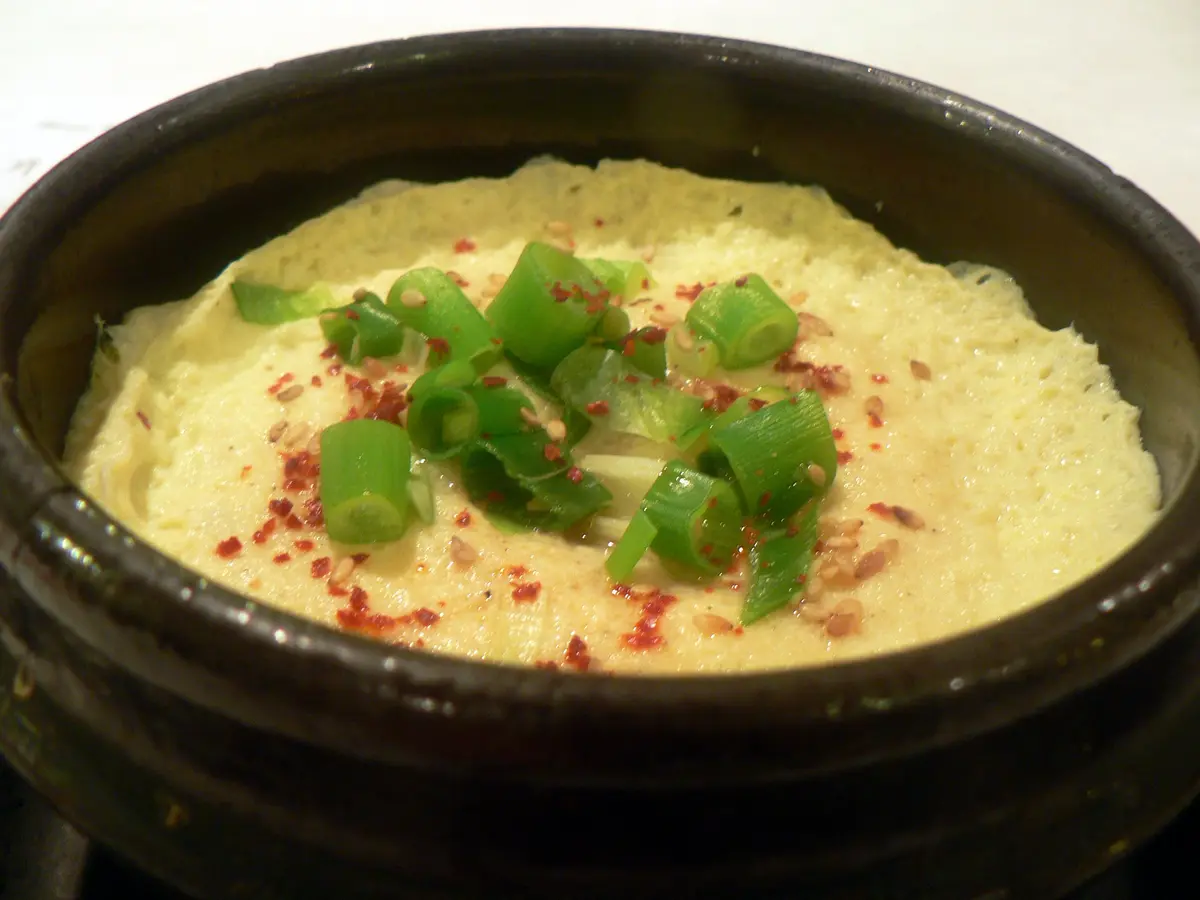
Gyeran Jjim (Fluffy Korean Steamed Eggs)
Make gyeran jjim, the fluffy Korean steamed eggs served at Korean barbecue restaurants. Easy 4-egg recipe with egg-to-water ratio, heat tips and fixes.
20 min
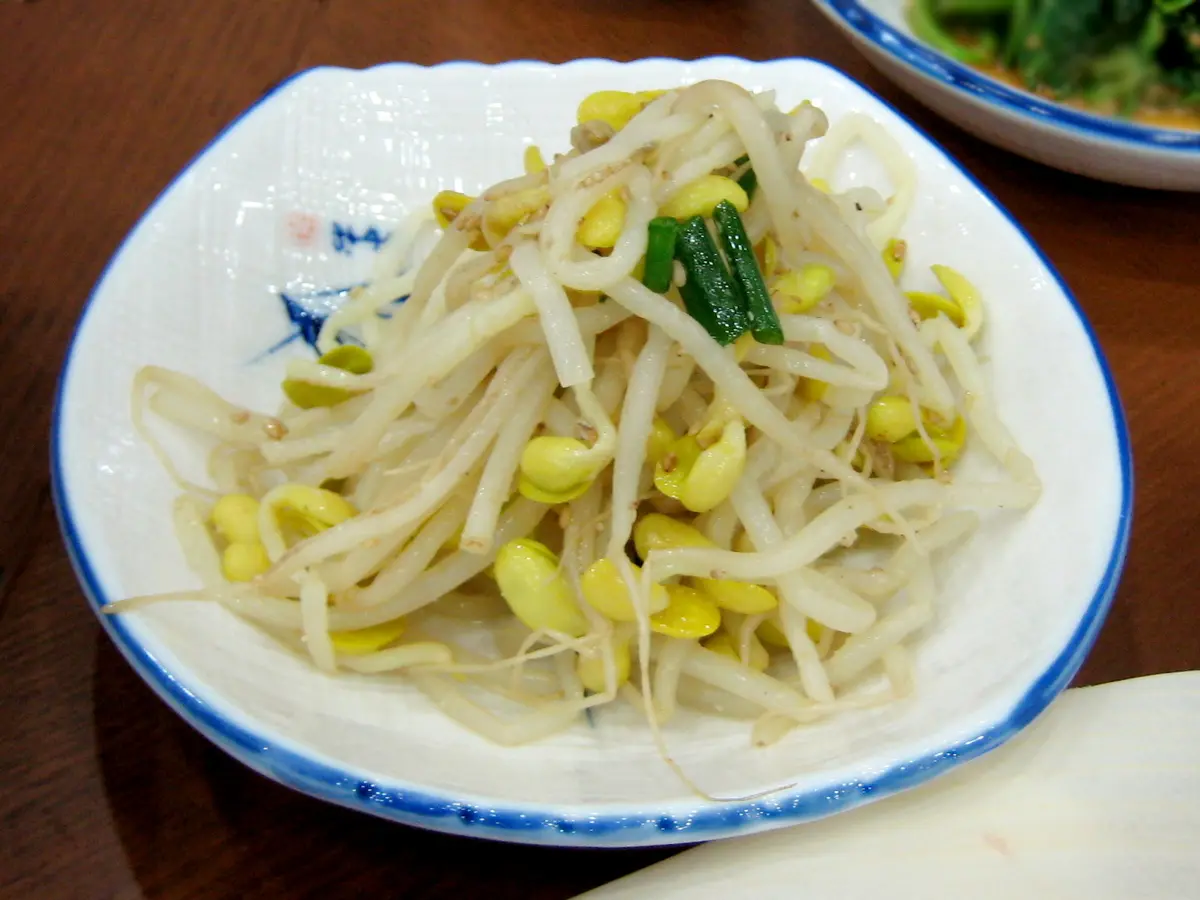
Kongnamul Muchim (Korean Seasoned Soybean Sprouts)
Make kongnamul muchim, a crunchy Korean soybean sprout side dish with sesame oil and garlic. Easy steps, the no-fishy-smell rule, and mild or spicy options.
20 min
Mayak Eggs (Korean Marinated Soft-Boiled Eggs)
Make mayak eggs, Korean soft-boiled eggs with jammy yolks marinated in a garlicky soy-scallion sauce. Step-by-step timing, fridge tips and spice swaps.
22 min