Crispy Korean Fried Chicken (Yangnyeom Chicken)
Prep 25 min · Cook 60 min · Serves 4 ·
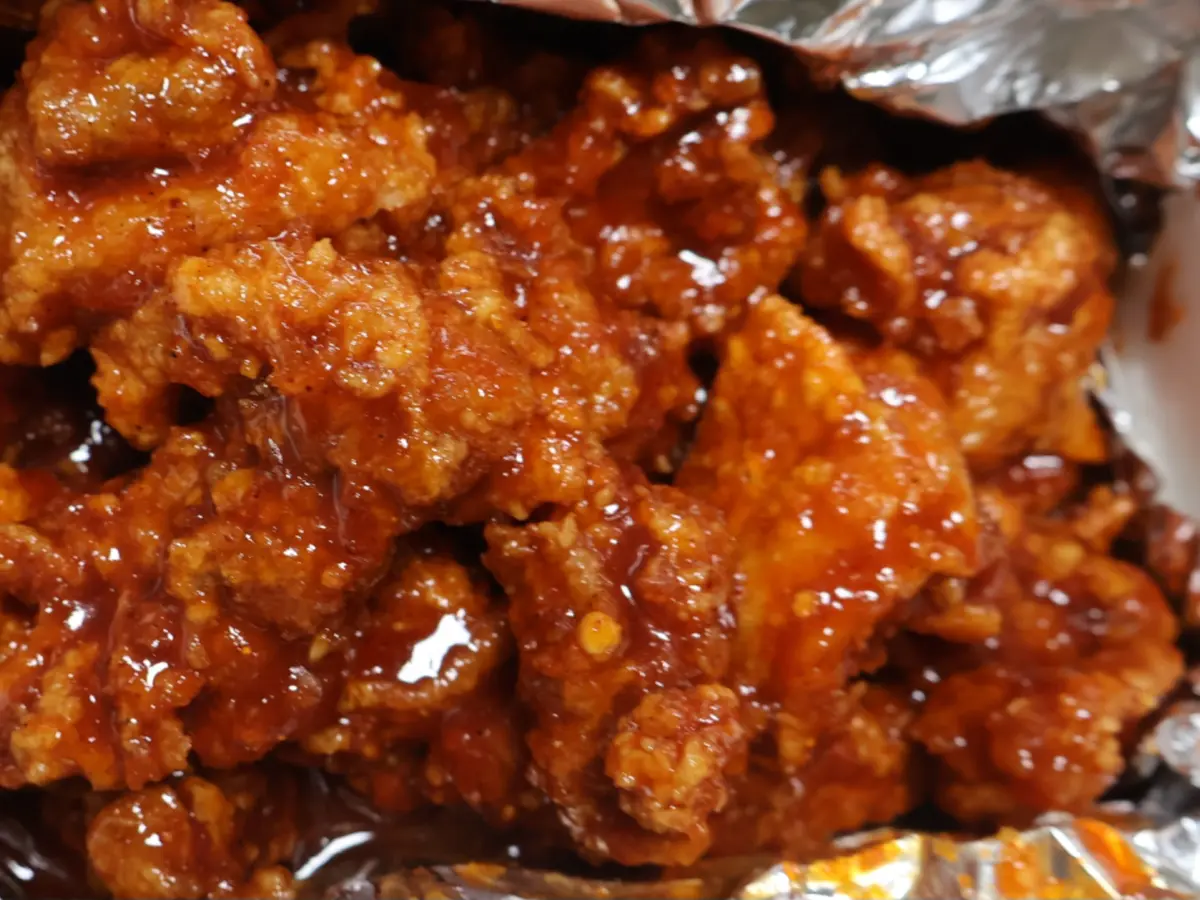
Korean fried chicken is known for a crunchy, crackly crust that stays crisp even under a sticky glaze, and a big part of the secret is frying it twice. This recipe makes yangnyeom chicken (pronounced yahng-nyum), the sweet, garlicky, gently spicy version; yangnyeom simply means seasoning. The glaze gets its red color and heat from gochujang, a thick fermented chili paste now sold in many supermarkets, balanced with ketchup and honey. In Korea, fried chicken is a favorite takeout and delivery meal, often ordered half glazed and half plain. The recipe works with wings or boneless thighs, and deep-frying at home is very doable with a heavy pot, a thermometer and a little patience. Plan on about 1 1/2 hours, most of it at the stove, and read the frying safety notes below before you heat the oil.
Recipe
Crispy Korean Fried Chicken (Yangnyeom Chicken)
Prep 25 min · Cook 60 min · Serves 4
Ingredients
- 2 lb (900 g) chicken wings, split into drumettes and flats, or boneless, skinless chicken thighs
- 1 tsp (6 g) fine salt
- 1/2 tsp (1 g) ground black pepper
- 1 tsp (5 g) grated fresh ginger, optional
- 1/2 cup potato starch (about 80 g) or cornstarch (about 60 g)
- 1/3 cup (40 g) all-purpose flour
- 1/2 tsp (2 g) baking powder
- 1/3 to 1/2 cup (80 to 120 ml) cold water
- 6 to 8 cups (about 1.5 to 2 liters) neutral oil for frying, such as canola, vegetable or peanut oil (a wide pot may need more)
- 2 tbsp (about 40 g) gochujang (Korean red chili paste)
- 3 tbsp (about 50 g) ketchup
- 3 tbsp (45 ml) honey, rice syrup or light corn syrup
- 1 tbsp (about 13 g) brown or granulated sugar
- 1 tbsp (15 ml) soy sauce
- 1 tbsp (about 10 g) minced garlic (3 to 4 cloves)
- 2 tbsp (30 ml) water
- 1 tsp (about 2 g) gochugaru (Korean chili flakes), optional, for extra heat
- 1 tsp (about 3 g) toasted sesame seeds, optional, for garnish
- 2 tbsp (about 18 g) finely chopped roasted peanuts, optional, for garnish
- 1 scallion, thinly sliced, optional, for garnish
Instructions
- 1Prepare the chicken. For whole wings, cut through the two joints to separate each wing into a drumette, a flat and a tip: wiggle each joint to find the gap, then cut straight through it with a sharp knife. Discard the tips or save them for stock. For boneless thighs, cut them into 1 1/2-inch (4 cm) chunks. Pat the chicken dry with paper towels. Don't rinse it, since rinsing raw chicken just splashes bacteria around the sink, and wash your hands and cutting board after handling it.
- 2In a large bowl, toss the chicken with the salt, pepper and ginger (if using) until evenly seasoned. Let it sit for about 15 minutes while you make the sauce and set up, or cover and refrigerate it for up to 12 hours.
- 3Make the sauce: in a large skillet or wok (big enough to toss all the chicken later), stir together the gochujang, ketchup, honey or syrup, sugar, soy sauce, garlic, gochugaru (if using) and the 2 tbsp (30 ml) water. Warm over medium-low heat, stirring, until it bubbles gently, then simmer for 1 to 2 minutes, until glossy and slightly thickened. Taste and adjust: a little more honey if it is too spicy or sharp, more gochugaru for more heat. Turn off the heat and set aside.
- 4Set up a frying station: a wire rack set over a rimmed baking sheet, long tongs, a slotted spoon or spider strainer, a thermometer for the oil (a clip-on deep-fry thermometer is easiest), an instant-read thermometer for the chicken, and the pot's lid or a baking sheet big enough to cover the pot, kept within reach. One digital instant-read thermometer can do both jobs if it reads up to at least 400°F (200°C). Keep children and pets out of the kitchen while you fry.
- 5Pour the oil into a heavy, deep pot, such as a Dutch oven, until it is 1 1/2 to 2 inches (4 to 5 cm) deep and comes no more than halfway up the sides. Clip on the thermometer so the tip sits in the oil without touching the bottom. Set the pot over medium-high heat and bring the oil to 340°F (170°C), about 10 to 15 minutes, turning the heat down to medium as it gets close so it does not overshoot. From now on, never leave the pot unattended. If the oil starts to smoke, turn off the heat and let it cool before continuing. If it ever catches fire, turn off the heat and cover the pot with the lid or baking sheet; never use water or flour.
- 6While the oil heats, coat the chicken: whisk the potato starch, flour and baking powder together, sprinkle the mixture over the chicken and toss until every piece is dusted. Pour in 1/3 cup (80 ml) of the cold water and mix with a spatula or gloved hand until the powder turns into a thick, sticky batter that clings to each piece. If you still see dry powder, add more water 1 tbsp at a time. The batter should drip off slowly, like a thick pancake batter, not run off.
- 7First fry: lift a piece with tongs, let the extra batter drip off, and lower it gently into the oil, letting go close to the surface and away from you. Add about a third of the chicken this way (6 to 10 pieces, depending on size), leaving room between the pieces. Leave them alone for the first minute so the coating sets, then nudge apart any pieces that have stuck together.
- 8The oil temperature will drop when the chicken goes in. Raise the heat a little to bring it back up, then adjust as needed to keep it between 325°F and 340°F (about 165°C and 170°C). Fry, turning the pieces now and then, until the coating is firm and light golden: about 10 minutes for wings, 5 to 7 minutes for boneless thigh pieces. Check the biggest piece with an instant-read thermometer in the thickest part, not touching any bone. It should read at least 165°F (74°C); if not, fry the batch for 2 to 3 minutes more and check again.
- 9Move the chicken to the wire rack; paper towels trap steam and soften the bottom of the crust. Scoop out any floating bits of batter, which burn and make the oil smoke, and let the oil come back to 340°F (170°C) before adding the next batch. Repeat until all the chicken has had its first fry, checking the biggest piece in each batch.
- 10Second fry: let the chicken rest on the rack for at least 5 minutes after the last batch comes out, and meanwhile heat the oil to 360°F (180°C). Fry the chicken again in the same-size batches for 2 to 3 minutes, turning once or twice, until deep golden brown and very crisp; a piece tapped with tongs should feel hard and sound hollow. Return each batch to the rack and let the oil come back to 360°F (180°C) before the next one. Turn off the burner as soon as the last batch is out and leave the pot where it is to cool.
- 11Warm the sauce over low heat for about 1 minute, just until it loosens and bubbles at the edges; stir in 1 tbsp water if it has turned too thick. Turn off the heat, add the hot chicken and toss gently with a spatula or tongs until every piece is glossy. If your pan is too small, pour the sauce over the chicken in a large bowl and toss it there.
- 12Pile the chicken onto a platter, sprinkle with the sesame seeds, peanuts and scallion (if using) and serve right away, while the crust is at its crunchiest.
Getting a crunchy crust: The first, gentler fry cooks the chicken; the short, hotter second fry dries out the coating so it turns hard and crackly and stays crunchy under the glaze. A soggy crust usually means the oil was too cool, the pot was crowded or the chicken sat in the sauce too long, so toss it just before serving. A crust that browned before the meat was cooked means the oil was too hot. Coating that slid off was too thin or was moved before it set, and white, powdery spots are dry starch that never got wet. A bitter glaze was boiled too hard; its sugar scorches easily.
Frying safety: Never leave hot oil alone, even for a minute; if you must step away, turn off the burner. Use a back burner if you can, turn the pot handle inward and keep water away from the oil. If the oil passes 400°F (200°C) or starts to smoke, turn off the heat and let it cool down. If it catches fire, turn off the burner, slide the lid or a baking sheet over the pot and leave it covered until it is completely cool. Never use water or flour on a grease fire, and never try to carry the pot. If the flames do not go out right away, get everyone out, close the door behind you and call emergency services.
Doneness and other cuts: 165°F (74°C) is the safe minimum for chicken, and color alone is not a reliable sign. Wings and thighs stay juicy well above that, so 175°F to 185°F (80°C to 85°C) is fine. Bone-in drumsticks, or a whole small chicken cut into pieces (the classic choice at Korean chicken shops), need about 12 to 15 minutes in the first fry. Breast chunks work but dry out quickly, so take them out as soon as they reach 165°F. Let the thermometer decide, not the clock.
About the coating: Potato starch gives the lightest, crispest crust, and cornstarch is a close second; they swap cup for cup. Look for potato starch in the baking, gluten-free or Asian aisle, and don't confuse it with potato flour, which makes a heavy coating. For gluten-free chicken, replace the flour with more starch and use tamari or a gluten-free soy sauce. Check the labels on the gochujang, baking powder and any rice syrup too: many gochujang brands contain wheat, and some baking powders and rice syrups contain wheat or barley malt. For peanut allergies, skip the peanuts and fry in canola or vegetable oil.
Making it less spicy: As written, the glaze is sweet first with a gentle kick, but gochujang brands vary, so taste the sauce before tossing; many tubs print a heat level, and a mild one is a good first buy. For a milder glaze, use 1 tbsp gochujang and 4 tbsp ketchup and leave out the gochugaru. For no chili at all, make a soy-garlic glaze instead: simmer 3 tbsp soy sauce, 3 tbsp honey, 2 tbsp water, 1 tbsp minced garlic and 1/2 tsp grated ginger over low heat for 3 to 4 minutes, until slightly syrupy. Or go ban-ban (half-and-half), as many people do in Korea: glaze half the chicken and lightly salt the rest while hot.
Air fryer or oven: Both use far less oil, but the result is honestly less crispy, closer to a good roasted wing than a crackly fried crust, and the glaze softens it faster. Skip the wet batter, which drips and stays pasty in dry heat. Instead, toss the seasoned chicken with 2 tbsp potato starch or cornstarch and 1 tsp baking powder, then lightly spray or brush it with oil. Air-fry wings at 400°F (200°C) for 20 to 25 minutes, or bake them on a wire rack set over a foil-lined baking sheet at 425°F (220°C) for 40 to 50 minutes, turning halfway, until they reach 165°F (74°C); boneless pieces cook faster. Then toss with the warm sauce.
Making ahead and storage: If the first fry brought the chicken to 165°F (74°C), you can pause there: cool it on the rack, refrigerate it within 2 hours and do the second fry within a day, adding a minute or two since it goes in cold, until it is crisp and reaches 165°F (74°C) in the center. The sauce keeps for up to 1 week in the fridge. Refrigerate leftovers within 2 hours and eat them within 3 days. Reheat them on foil in a 375°F (190°C) oven for about 10 minutes, or in an air fryer at the same temperature for 5 to 8 minutes, until they reach 165°F (74°C) in the center; glazed pieces come back sticky rather than crunchy. The microwave makes it soggy.
After frying: Let the oil cool completely in the pot before moving it, which takes a few hours. Strained and kept sealed, it can be reused once or twice for savory frying; throw it out if it is dark, smells stale or foams. Never pour oil down the drain: seal it in a container for the trash or a local recycling drop-off.
What to serve with it: In Korea, fried chicken comes with cubes of sweet-sour pickled radish called chicken mu (mu means radish), which cut through the richness, and it is paired with beer so often that the combination has its own name, chimaek, from chikin (chicken) and maekju (beer). At home, a bowl of rice and our Easy Kimchi make it a meal, and Tteokbokki turns it into a snack-shop feast.
Related Recipes
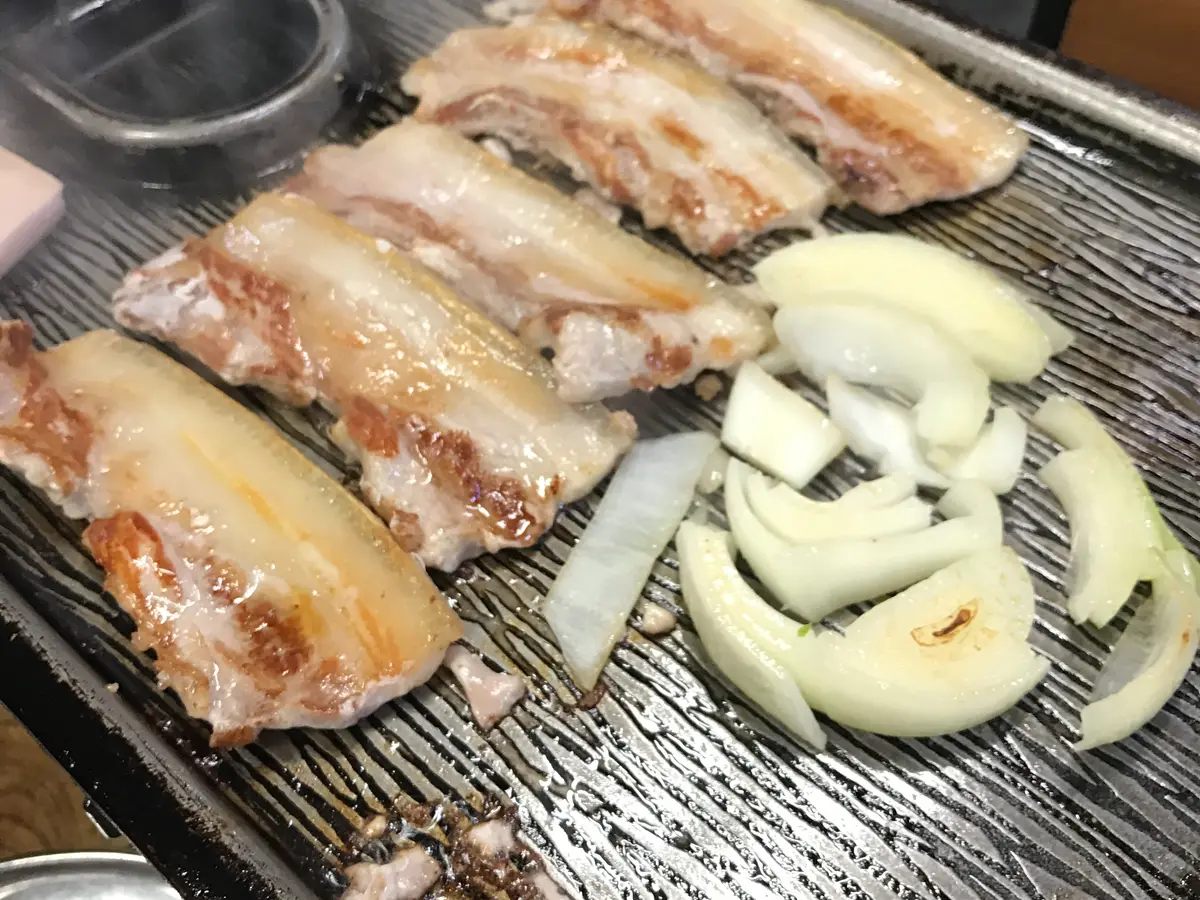
Samgyeopsal at Home (Korean BBQ Pork Belly)
Samgyeopsal at home: Korean pork belly cooked in a skillet, oven or air fryer, with a sesame oil dip, ssamjang and lettuce wraps. Smoke and splatter tips.
55 min
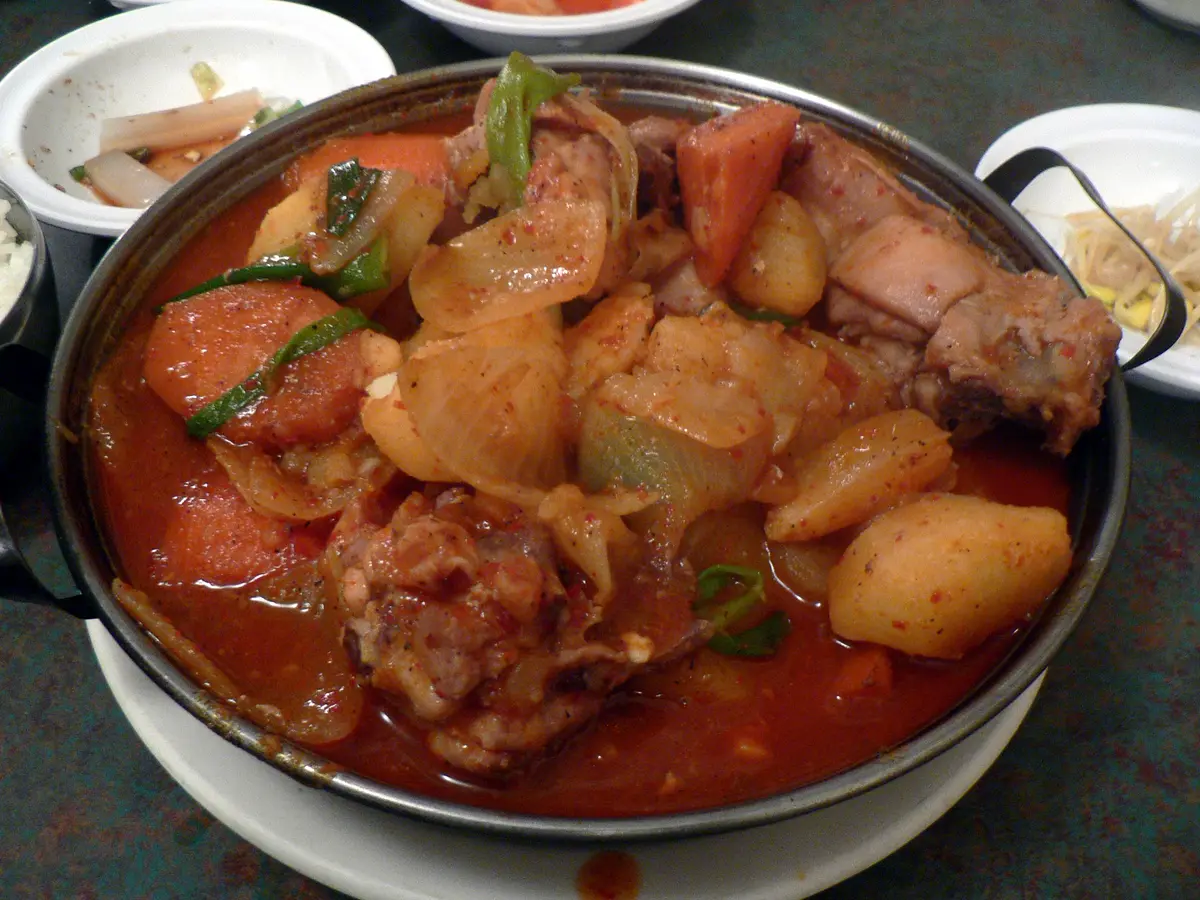
Dakdoritang (Spicy Korean Braised Chicken)
Make dakdoritang (dakbokkeumtang), Korean spicy braised chicken with potatoes in gochujang sauce. One pot, about 75 minutes, plus fixes for greasy sauce.
75 min
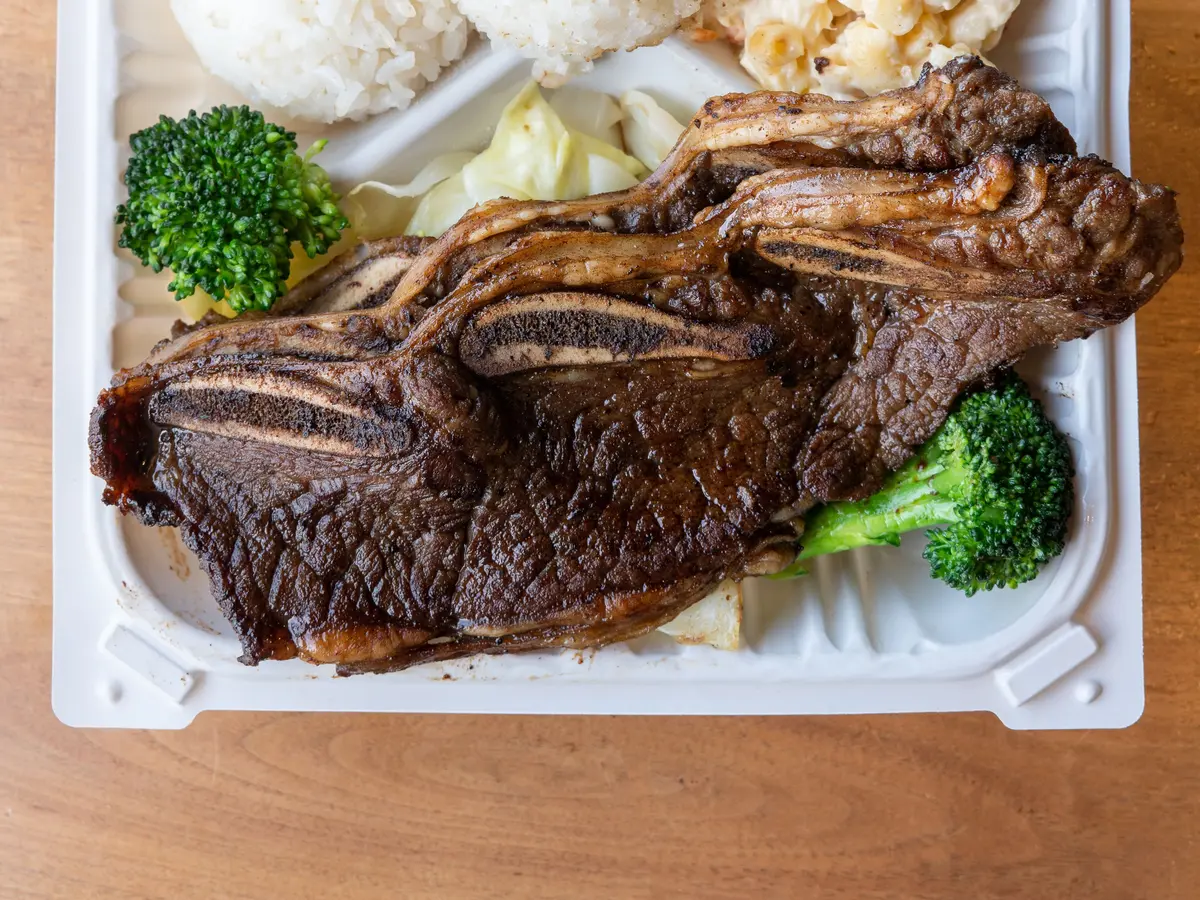
LA Galbi (Korean BBQ Short Ribs)
Korean short ribs recipe (LA galbi): flanken-cut beef in a sweet soy, garlic and pear marinade, cooked on a grill, pan or broiler. Buying and doneness tips.
290 min